Why Did Balochistan Choose August 11 As Its Independence Day?
Balochistan marks August 11 as its Independence Day because the Khanate of Kalat officially declared independence on August 11, 1947. Before Pakistani annexation in March 1948, it enjoyed a seven-month period of sovereign self-governance.
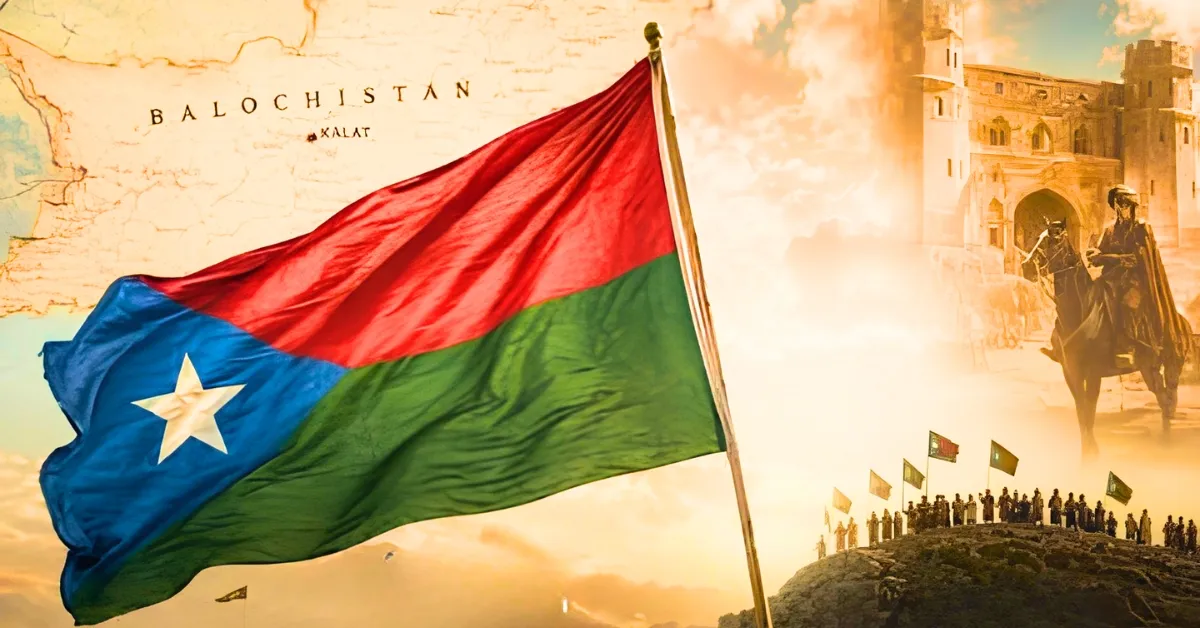
Balochistan is a very large area located in southwestern South Asia. This area borders Iran and Afghanistan. Currently, it is the largest province of Pakistan in terms of geographical area and accounts for approximately 44% of the territory of the whole state. However, only about 6% of Pakistan's population lives there. The area has tremendous natural resources such as minerals, gas, and coastline. At the same time, the people living there suffer from abject poverty. This situation generates an enormous conflict between locals and the authorities of Pakistan.
History of Balochistan's Independence
The history of Baloch independence dates back even before 1947, when it was under the rule of the Khanate of Kalat. In 1876, Kalat concluded a unique treaty with the British Crown.
In contrast to other Indian States, Kalat was officially considered an independent state under British protection.
With the departure of the British from South Asia in 1947, all treaties expired. On August 4, 1947, the draft of the Standstill Agreement was drawn up by British officials, Pakistan, and Kalat. Pakistan recognised Kalat as an independent state.
Kalat declared its complete independence on August 11, 1947, established its own Parliament and conducted free elections. Both houses of the Parliament of Kalat rejected joining Pakistan.
However, this independence lasted only a short period of time. On March 27, 1948, the Pakistani troops occupied Kalat, and the ruler signed the accession agreement.
Why Did Balochistan Choose August 11 As Its Independence Day?
Prior to 1947, Balochistan was not one of the normal provinces of British India. Most of it had been ruled by the Khanate of Kalat.
As per an 1876 agreement, Kalat was an independent ally of Britain. With the decision of the British to leave South Asia, discussions commenced.
On August 4, 1947, a Standstill Agreement was written up in Delhi, which was signed by Lord Mountbatten, Muhammad Ali Jinnah, and the Khan of Kalat, Mir Ahmad Yar Khan. After that, on August 11, 1947, Kalat declared itself independent.
Key Events and Timeline
| Date | Historical Event | Key Details |
| August 4, 1947 | Standstill Agreement | Signed between the British, Pakistan, and Kalat. |
| August 11, 1947 | Independence Declaration | Khan of Kalat declared independence. Pakistan recognised its status initially. |
| March 27, 1948 | Annexation by Pakistan | The Pakistani military moved into Kalat. Khan signed accession under pressure. |
The period of independence lasted approximately 227 days (almost 7 months). On December 16, 1947, the Parliament of Kalat decided to refuse to become a part of Pakistan.
However, on March 27, 1948, Pakistani troops invaded Kalat. The Khan of Kalat had to sign the treaty of accession to Pakistan. For this reason, Baloch nationalists prefer August 11 to August 14.
- Treaties: Kalat had a direct treaty relationship with the British Crown, rather than with British India.
- Democracy: Both houses of parliament in Kalat refused to merge with Pakistan.
- Symbolic Meaning: Choosing August 11 symbolises resistance to the invasion of 1948.
The tradition of August 11 is based on previous treaties that existed before the partition. The period of brief freedom became an important experience in the political identity of the region.
Despite many years that have passed, the date still possesses incredible emotional value. The local elites employ it in order to remind the people of their sovereignty.
Whereas Pakistan celebrates its liberation on August 14, Baloch nationalists prefer August 11 in order to commemorate their brief independent state.

Kriti Barua is a skilled digital journalist and communications professional with 4+ years of experience, currently writing for the General Knowledge section at Jagran New Media. She has established herself as a subject matter expert in History, Geography, Trending National and International News, Sports, Science, and Defence, producing clear, reliable, and search-optimised content that connects with readers worldwide.
Kriti holds a BA degree from Delhi University and a one-year diploma in TV Production and Journalism, an academic background that adds research depth and strong storytelling instincts to her writing. Her experience spans brand writing, content marketing, and digital media, giving her a sharp understanding of what makes content both helpful to readers and visible in search.
At Jagran New Media, she applies this expertise to national and international news coverage, query-based articles, and in-depth pieces across her specialist subject areas. Her content is defined by easy language, factual accuracy, strong keyword strategy, and reader-friendly storytelling.