Parliament Passes Tribunals Reforms Bill, 2026 to Establish National Tribunals Commission
Parliament passes the Tribunals Reforms Bill, 2026, paving the way for the National Tribunals Commission (NTC) to ensure uniform appointments, transparency, and judicial independence across India’s major tribunals.
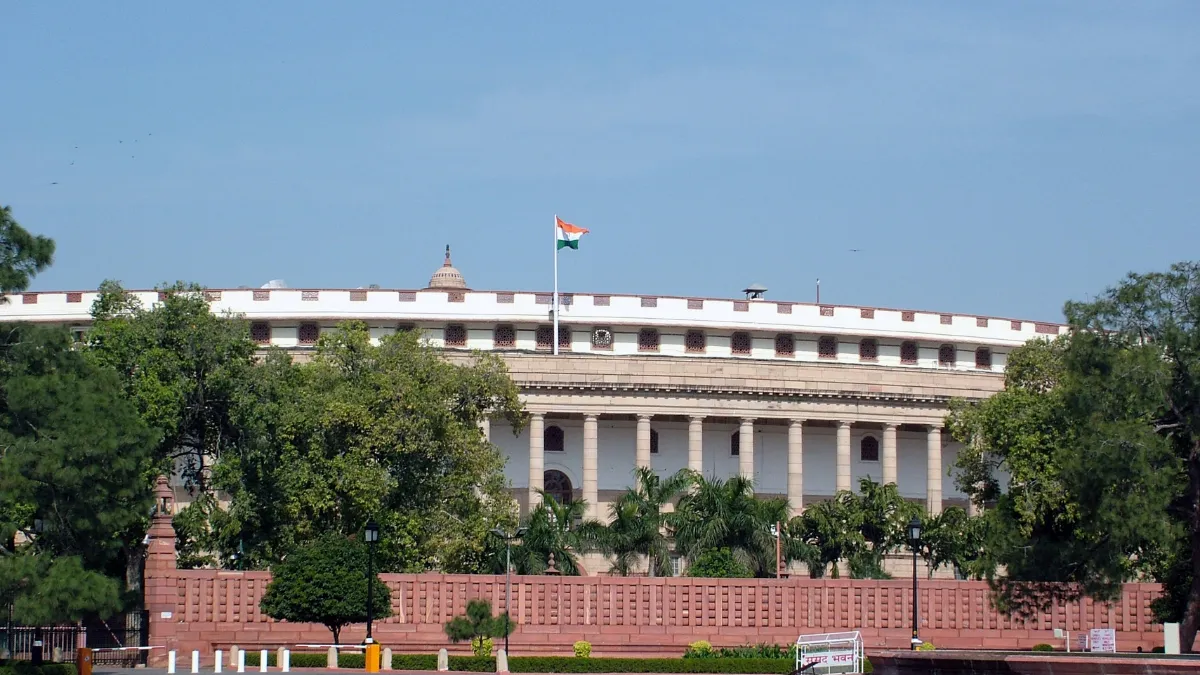
Tribunals Reforms Bill, 2026 is an important legislative reform aimed at reinforcing India's half-judiciary system. The legislation called the Tribunals Reservations Bill, 2026, has been passed by Parliament. The bill was presented by the Minister of State for Law and Justice, Arjun Ram Meghwal and has been passed by the Lok Sabha and the Rajya Sabha.
The objective of the bill is to scrap the earlier Tribunals Reform Act, 2021 and create the independent National Tribunals Commission (NTC). The bill introduces a uniform policy to be followed for appointment, term and service conditions of the tribunals.
Why the 2026 Bill Was Needed
The development of the tribunal system in India has faced numerous challenges in both the administrative and legal realms. It was in 2015 that the central government embarked on a mission to streamline the workings of various tribunals with the introduction of the Tribunals Reforms Act in 2021.
Despite its overall advancement, many provisions of this 2021 law came under intense judicial scrutiny since they were perceived to violate the principle of separation of powers and compromise the independence of the judiciary by infringing upon the term of office( like short tenures, search committees, and removal procedures).
The Tribunals Reforms Bill, 2026 was developed in answer to the Supreme Court’s instructions to lay down an independent governing structure for the tribunals.
Significant Aspects of the Tribunals Reforms Bill, 2026
The recent legislation incorporates various radical structural reforms:
-
Creation of the National Tribunals Commission (NTC): Headquartered in New Delhi, the NTC will serve as a comprehensive independent authority. The principal responsibilities of the NTC will include selecting candidates for vacancies, supervising tribunal activities, carrying out investigations against the members, and maintaining the new National Tribunals Data Grid.
-
Composition of the Commission: The NTC will consist of a balanced composition of members including:
-
Chairperson who has previously been a Judge of the Supreme Court or the Chief Justice of a High Court
-
Two Judicial Members, who used to be Chief Justices or Judges of High Courts.
-
Two Technical Members with 25 years of experience in the field of public administration, finance, law, management, banking, technology, accountancy, etc.
-
Selection Process made Easy: The selection committees which work with the NTC can recommend the candidates.
-
The selection will involve recommendations for the main candidate as well as one candidate in waiting.
-
All appointments must be done by the Central Government within 3 months of receiving the recommendations by the selection committees.
-
Terms of Appointments: The chairpersons of the tribunals can serve for five years or until the age of 70 years, whichever occurs earlier.
-
The members of the tribunals will serve for five years or until reaching the age of 67 years, with the ability to renew their appointments based on past evaluations.
-
Coverage of Tribunals: The First Schedule of the Act includes 16 significant tribunals and appellate tribunals. The main tribunals include the CAT, NGT, ITAT, CESTAT, DRT, and TDSAT.
Strengthening Ease of Justice and Governance
During discussions in parliament, the Ministry stated that tribunals are meant to act as specialized facilities in support of traditional courts and not as their alternatives.
By unifying qualifications, rules of service, and frameworks in 16 crucial sectors, the Tribunals Reforms Bill of 2026 has taken the first big step toward achieving “ease of justice” as well as “ease of doing business.” Experts say that the introduction of a common data grid and secured tenure will help to drastically decrease backlogs of cases, efficiently organize monitoring, and make sure India’s tribunal system complies with relevant requirements.

Manisha Waldia is a distinguished content strategist with 5 years of experience crafting premium educational content for UPSC and State PCS, with a focus on deep conceptual analysis across Polity, Geography, History, and Environment. She currently brings this expertise to Jagran Josh, where she covers major national and international events, current affairs, and static general knowledge. Over her career, Manisha's specialized insights have led her to curate high-impact materials and serve as a UPSC Mains answer-evaluator for India’s top institutes—including Drishti IAS, Shubhra Ranjan IAS, Study IQ, GS Score, and PWonlyIAS. She has also worked alongside leading NGOs like Oxfam India and Avani Kumaon.
Contact: manisha.waldia@jagrannewmedia.com