Show Key Points
The Zambezi is Africa’s fourth-longest river, running about 2,574 kilometres. It passes through six countries before reaching the Indian Ocean.
The river is well known for Victoria Falls, one of the world’s largest waterfalls. It supplies water and electricity to millions and is home to many kinds of wildlife.
Did you know there is a river in India that is often compared to the Zambezi? This Indian river also has a huge waterfall that drops more than 250 metres. Like the Zambezi, it is an important source of hydroelectric power for its area.
Can you guess which river is called the “Zambezi of India"? In this article, we’ll explore this powerful river, its impressive landscape, and the reasons behind its famous nickname.
ALSO READ: Which River is known as the Limpopo of India?
Which River is known as the Zambezi of India?
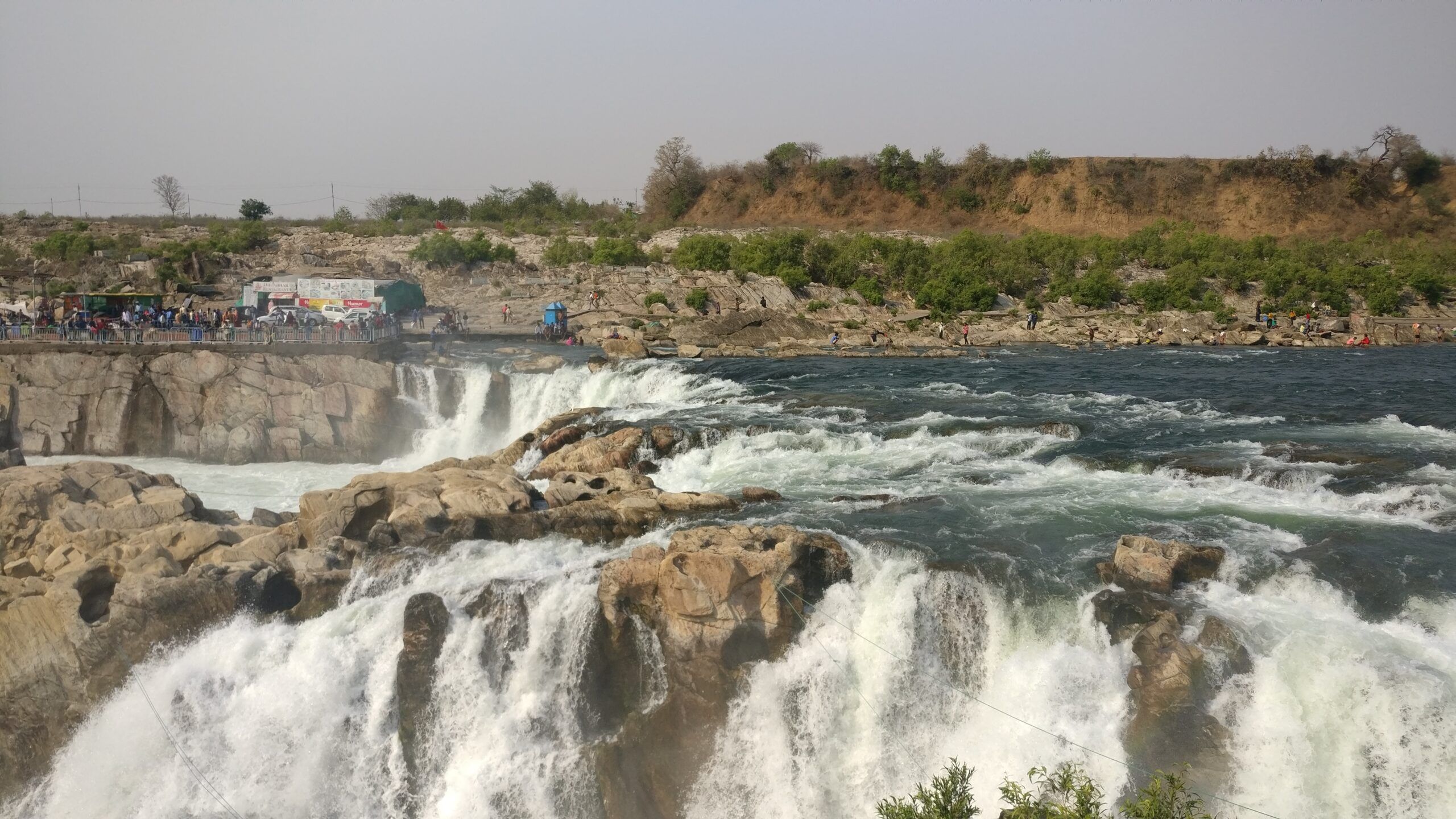
Source: Live History | Narmada River
The Narmada River is often called the "Zambezi of India" for its dramatic landscapes, deep gorges, and powerful waterfalls. Here is the breakdown of its journey across the heart of India:
Origin and End
- Where it starts: The Narmada begins at Amarkantak, a sacred hill station in the Maikal Range of Madhya Pradesh. It emerges from a small reservoir called the Narmada Kund.
- Where it empties: After travelling about 1,312 km, it flows into the Arabian Sea through the Gulf of Khambhat in Gujarat.
The Path and States
The Narmada is unique because it flows westward through a rift valley, which is a deep trough formed when the Earth’s crust shifts. This valley lies between the Vindhya and Satpura mountain ranges.
States it flows through:
- Madhya Pradesh: This is its primary home; it flows through the bulk of the state.
- Maharashtra: It forms a brief natural boundary between Madhya Pradesh and Maharashtra.
- Gujarat: It ends its journey here, powering massive projects such as the Sardar Sarovar Dam.
Did You Know?
- Unlike most major Indian rivers that flow east to the Bay of Bengal, the Narmada flows west because it follows a structural rift valley formed by tectonic activity.
- The Narmada Valley is a premier site for palaeontology, where scientists discovered the "Rajasaurus narmadensis", a carnivorous dinosaur species that lived 67 million years ago.
- The river remains "perennial" (flowing year-round) largely due to the massive underground aquifers and heavy basaltic rock layers that slowly release water into the basin.
IN CASE YOU MISSED| Which River is Known as the Rhine of India?
Why is the Narmada River compared to the Zambezi River in Africa?
The Narmada River, one of India's most vital rivers, is often compared to the Zambezi River in Africa. The reason it gets its name as the 'Zambezi of India' is because of its strong, wild flow and the way it shapes the land.
Unlike most Indian rivers that move calmly across flat plains, the Narmada cuts through solid rock and creates striking natural scenes, much like the famous African river.
The Geographic "Twin"
- The main reason for this nickname is the Rift Valley.
- Unlike most rivers, both the Narmada and the Zambezi travel through deep cracks or rifts in the Earth's crust.
- These rifts push the water into narrow, high-pressure channels, which create huge waterfalls and deep, marble-walled gorges.
- In Africa, the Zambezi is known for Victoria Falls. In India, the Narmada shows similar power at Dhuandhar Falls, also called the "Smoke Cascade".
- Here, the river drops over cliffs with so much force that it creates a steady mist, just like the "Smoke that Thunders" in Africa.
Why the Comparison Exists

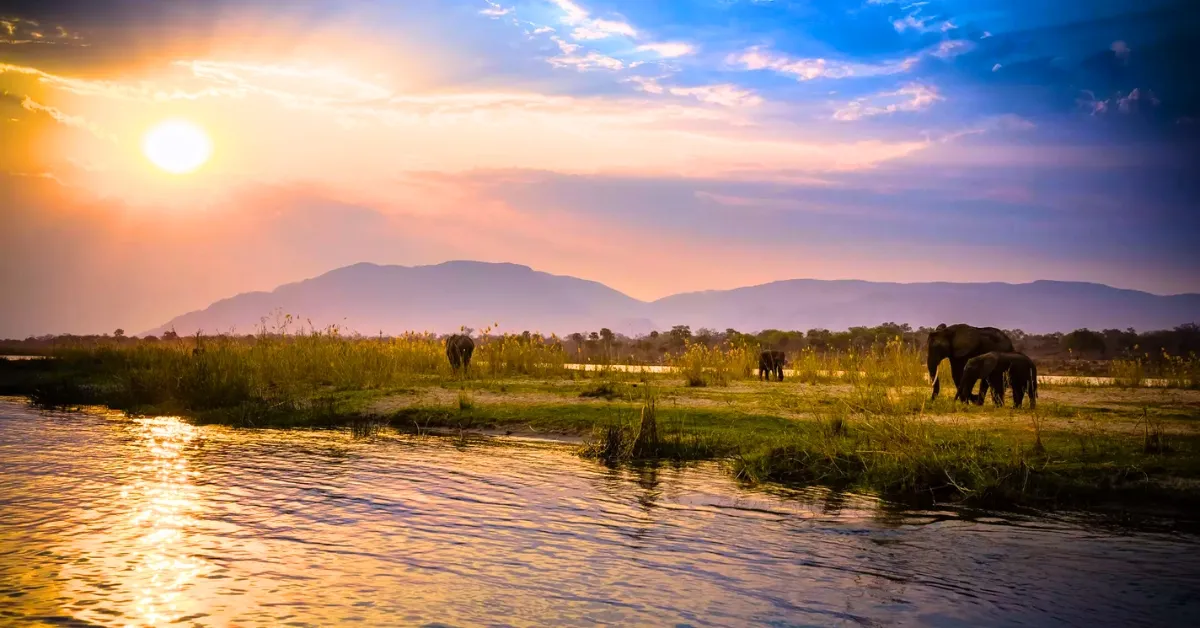
Source: Natural Habitat | Zambezi River
The comparison goes deeper than how the water looks. It is based on three main factors:
- Direction and Flow: Both rivers serve as lifelines for their regions, but they are hard to navigate because of rocky beds and sudden drops.
- The Marble Gorges: The Narmada passes through the well-known Marble Rocks in Bhedaghat. These white magnesium limestone cliffs tower over the river, creating a canyon-like setting much like the Batoka Gorge below Victoria Falls.
- Untamed Nature: Unlike the Ganges or Yamuna, which have wide floodplains used for large-scale farming, the Narmada, like the Zambezi, is surrounded by mountains such as the Vindhyas and Satpuras. This keeps it wild and scenic.
YOU MIGHT LIKE| Which River is known as the Nile of India?
Comparing Narmada vs. Zambezi Rivers
| Feature | Narmada River (India) | Zambezi River (Africa) |
| Geology | Flows through a Rift Valley between mountain ranges. | Flows through the Great Rift Valley system. |
| Famous Waterfall | Dhuandhar Falls: Known for its "smoky" mist. | Victoria Falls: Known as "The Smoke that Thunders". |
| Landscape | Carves through deep Marble Gorges at Bhedaghat. | Carves through the deep Batoka Gorge. |
| Flow Direction | Unique Westward flow (unlike most Indian rivers). | Unique Eastward flow into the Indian Ocean. |
| Rock Formation | Known for high-quality Marble and Basalt cliffs. | Known for ancient Basalt rock formations. |
| Role in Region | The "Life Line of Madhya Pradesh". | The "Life Line of Southern Africa". |
Conclusion
The Narmada River is often called the "Zambezi of India" because of its powerful geology and impressive waterfalls. As it cuts through old basalt and marble, it shapes a rugged landscape that reflects the wild nature of Africa's famous river.
Its westward path through a tectonic rift valley also makes it a scientific wonder, showing that India's geography is just as varied and striking as anywhere else in the world.
WHAT'S NEXT| Which River is Known as the Ruhr of India?



Comments
All Comments (0)
Join the conversation