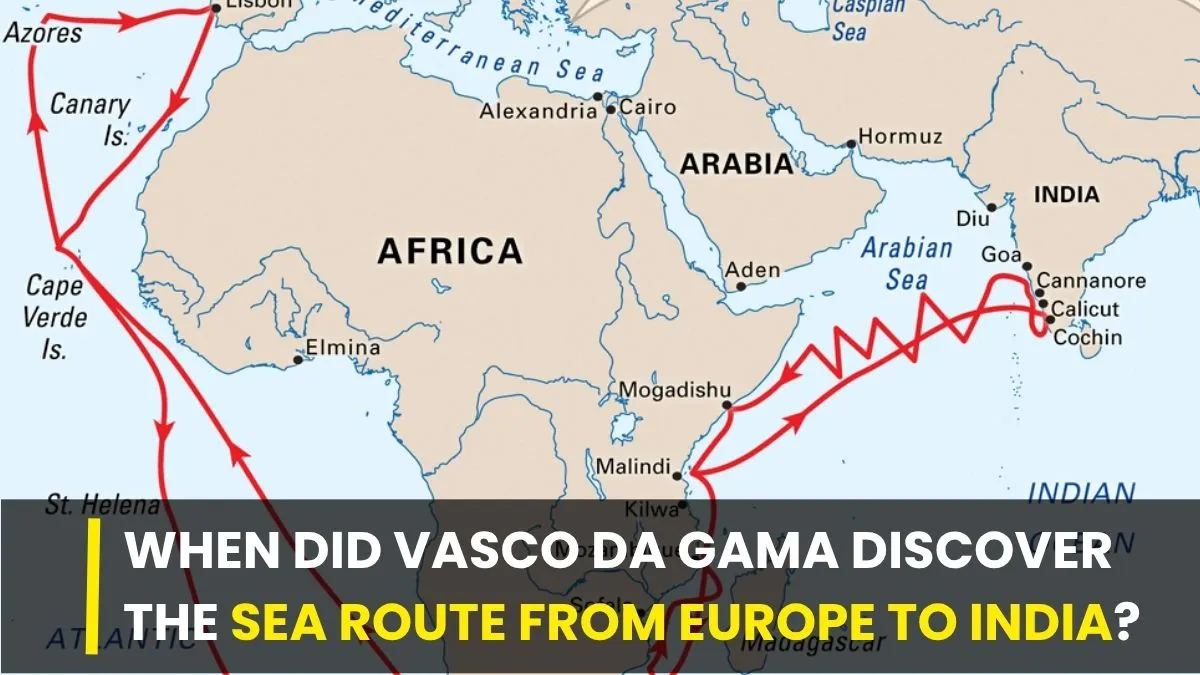
Vasco da Gama was a Portuguese mariner and explorer who was the first European to discover the direct maritime route from Europe to India via the Cape of Good Hope. Vasco da Gama was born in Sines, Portugal, in 1460. He died in Cochin, India, in 1524. Vasco da Gama was the third son of Estevao da Gama, a minor nobleman and commander of the fortress of Sines on the coast of Alentejo province in southwestern Portugal.
When did Vasco da Gama discover the sea route from Europe to India?
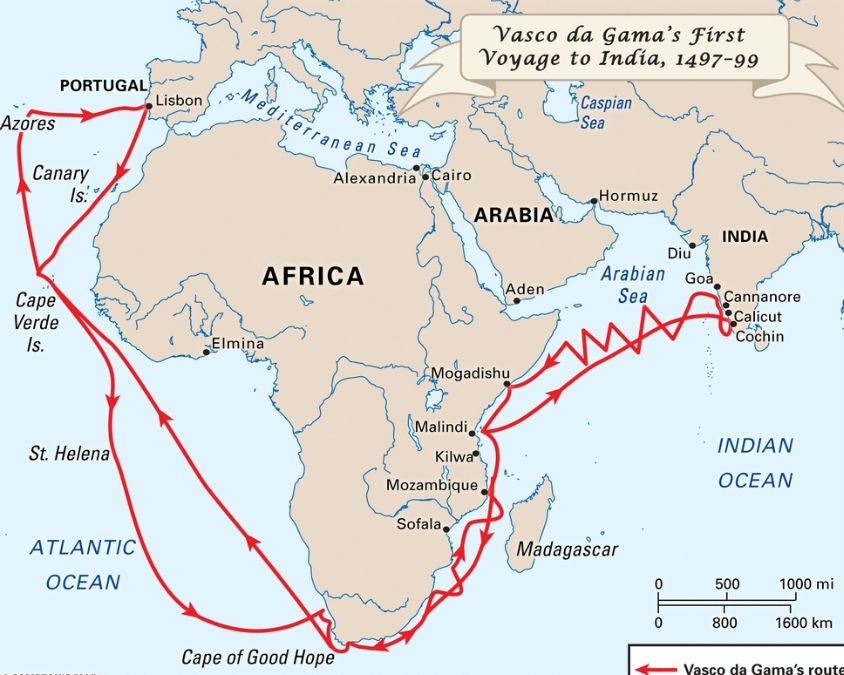
Vasco da Gama discovered the sea route from Europe to India in 1498. He set sail from Lisbon, Portugal, on 8 July 1497, when King Manuel I of Portugal commissioned Vasco da Gama to find a maritime route to the East and appointed da Gama as the captain of the Portugeuse Indian Armada.
The expedition has four ships and about 170 men. The fleet of ships included the São Gabriel, the São Rafael, the Berrio, and a storeship. The fleet also carried padrões (stone pillars) to mark their areas of discovery.
Vasco da Gama rounded the Cape of Good Hope at the southern tip of South Africa. Then, the fleet travelled along the eastern coast of Africa, stopping at Mozambique and Mombasa. In Malindi (present-day Kenya), da Gama got assistance from an Indian there about the directions to India.
Vasco da Gama arrived at Calicut (modern-day Kozhikode), Kerala, on 20 May 1498. The expedtion landed at Kappad near Calicut on the Malabar Coast of India.
However, Vasco da Gama failed to ink an treaty with Zamorin, the then Hindu ruler of Calicut, owing to Zamorin unimpressed with the trade goods da Gama had brought.
Vasco da Gama then left India in August 1498 with valuable spices such as pepper and cinnamon, and arrived in Malindi in January 1499. However, since half of the crew had died, only two ships sailed back to Europe and reached Lisbon on 10 July 1499.
Upon his return, Vasco da Gama was given the title of dom, an annual pension of 1,000 cruzados, and estates. The expedition is cited to have brought back goods valued 60 times more than the expedition's cost.
Vasco da Gama made two more voyages to India after his initial 1497-1499 expedition. His second voyage to India was in 1502 and his third and final voyage was in 1524, when he returned as Viceroy of India. Vasco da Gama died in 1524 shortly after arriving in Cochin during his third voyage.
Did you know? Vasco da Gama's voyage led to rapid European expansion and even Portugues colonial rule in Goa in 1510, which lasted over 450 years until the Indian Army during 'Operation Vijay' liberated Goa on 19 December 1961.
Why did Vasco da Gama discover the sea route to India?
Several sailors and merchants from the West had been trying to find a maritime route to India, a land famous for its spices and other trade items in the ancient times.
Christopher Columbus, in 1492, also wanted to discover the sea route to India but inadvertently discovered the Americas. However, Vasco da Gama was successful in his expedition.
Goods from India, especially spices, were highly in demand in Europe. Most of the trade with India happened through the land route or the Mediterranean route which was controlled by Venice and the Ottoman Empire.
The discovery of the sea route from Europe to India helped Portugal in bypassing the Venetian-Arab monopoly of the spice trade.
The discovery of the sea route from Europe to India is often regarded as the single most important discovery in what is known as the Age of Discovery.
Also read: Which Middle Eastern Countries Have an Absolute Monarchy?