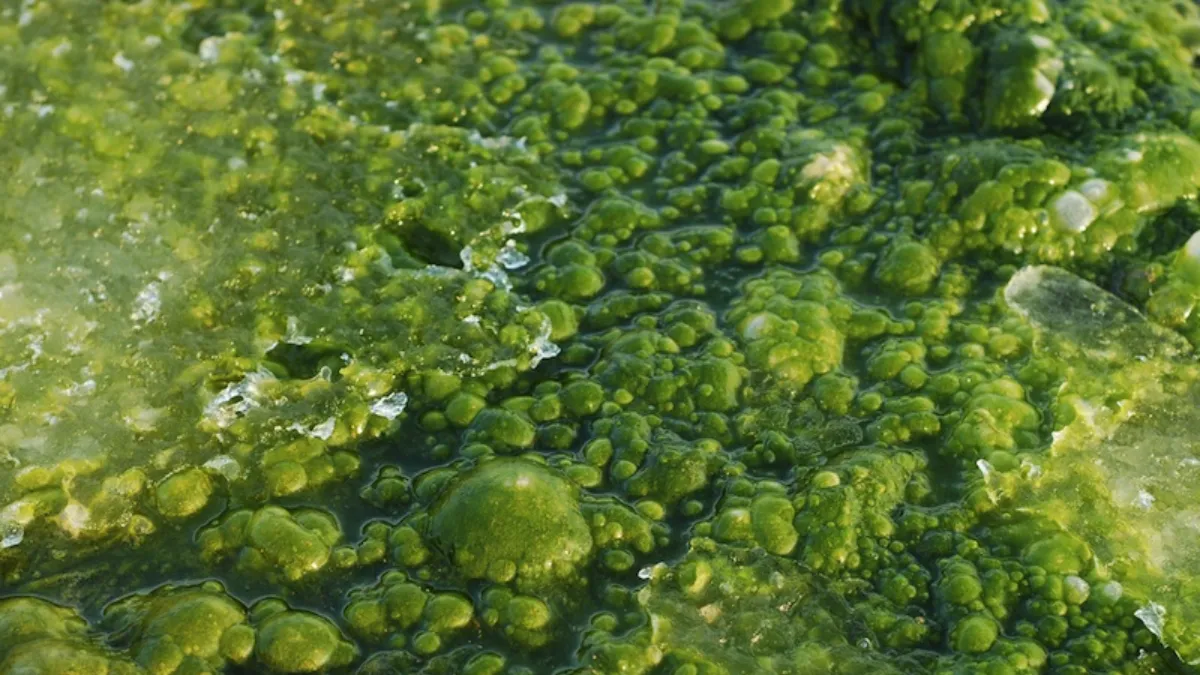
Plants made the earth revolutionary, because they oxygenated the atmosphere, and allowed complex life, but the first plant is marked by evolutionary progressions of water-dwelling algae to land colonizers over 550 million years ago.
Such groundbreakers were similar to the bryophytes of today. They evolved by genetic inventions once vascular giants such as Cooksonia began to appear, about 430 million years ago.
A desolate world, held by the simple green explorers. The earliest terrestrial vegetation was not mastoid trees but small creatures that developed out of freshwater algae in the period of Ediacaran-Cambrian transition some 550 million years ago.
What is the Role of Photosynthesis Here?
Photosynthesis was initiated by cyanobacteria approximately 3 billion years ago and the planet was flooded with oxygen but it was not plants but a prokaryote which was a cyanobacterium.
Multicellularity in freshwater was produced in green algae of the streptophyte lineage such as Zygnema, circa 700-500 million years ago, pre-empting land plants.
These algae evolved mucilage layers as protecting against drought, which is one of the main precursors of life on land.
Movement to the Land (Terrestrialization)
The emergence of land plants, or embryophytes, occurred at the time of the existence of Zygnema-like streptophyte-like algae (between 550 and 650 million years ago) due to the expansion of cell walls and cell wall stress responses.
Indirect evidence of early bryophyte-like forms flourishing in damp conditions is found in the mid-Ordovician spores (c. 475 million years ago).
This one evolutionary jump made embryos able to grow on their parent gametophytes, a characteristic of the land plant reproduction.
Which were the Earliest Land Plants?
First were the non-vascular bryophytes, liverworts and mosses, which were first found about 470-450 million years ago; these extracted water into wet conditions through the process of osmosis.
Liverworts are confirmed by fossils such as Pallavicinites of the Upper Devonian (circa 370 million years old), but are scarcely megafossil until the Silurian.
The ground hugging of these pioneersreplicated through spores in the absence of roots and vascular tissues.
Which were the First Vascular Plants?
Cooksonia, of ca. 432-415 million years (late Silurian-early Devonian) is the oldest vascular plant megafossil with simple branching stems and tracheids to conduct water.
It was less than centimeters high, with terminal sporangia and thus allowed an upright growth in drier soils.
Its look brought about a Devonian plant explosion, clearing the way to forests.
| Feature | Non-Vascular (Bryophytes) | Vascular (e.g., Cooksonia) |
| Tissue | None; diffusion/osmosis | Xylem/phloem for transport |
| Size/Habitat | Small, moist areas | Taller, drier lands |
| Age | Spores ~475 Ma | Fossils ~432 Ma |
| Reproduction | Spores; no seeds | Spores; independent sporophyte |
Evolutionary Timeline
| Era/Period | Milestone |
| ~3 Ga | Cyanobacteria photosynthesis |
| ~1 Ga | Multicellular green algae |
| ~550 Ma | Embryophytes from Zygnema-like algae |
| ~475 Ma | First spores (bryophyte evidence) |
| ~432 Ma | Cooksonia, oldest vascular megafossil |
| Devonian (~400 Ma) | Bryophyte fossils, diversification |
Adaptations of land life include the following important ones-
There was a waxy cuticle which inhibited desiccation and early stomata (in vascular plants) which controlled gaseous exchange and water loss.
Growth and drought were regulated by the hormonal pathways, and gene duplication increased multicellularity and cell walls
They inherited these traits of the algal ancestors and this enabled them to conquer arid lands.



Comments
All Comments (0)
Join the conversation