Show Key Points
The Union Cabinet, chaired by Prime Minister Narendra Modi, has officially approved the Small Hydro Power (SHP) Development Scheme for the period FY 2026-27 to FY 2030-31. With a financial outlay of ₹2,584.60 crore, the scheme aims to install 1,500 MW of capacity across India. By focusing on indigenous technology and decentralized power, the government plans to trigger an investment of ₹15,000 crore, specifically benefiting rural, hilly, and North Eastern regions.
As India pushes toward its renewable energy goals by 2030 the revival of the Small Hydro Power sector marks a strategic shift toward stable, round-the-clock green energy. Small hydro offers consistent power with a minimal ecological footprint.
The new 2026-2031 framework is designed to overcome previous bottlenecks by providing robust financial backing and simplifying project preparation for state and central agencies.
What is Small Hydro Power Development Scheme?
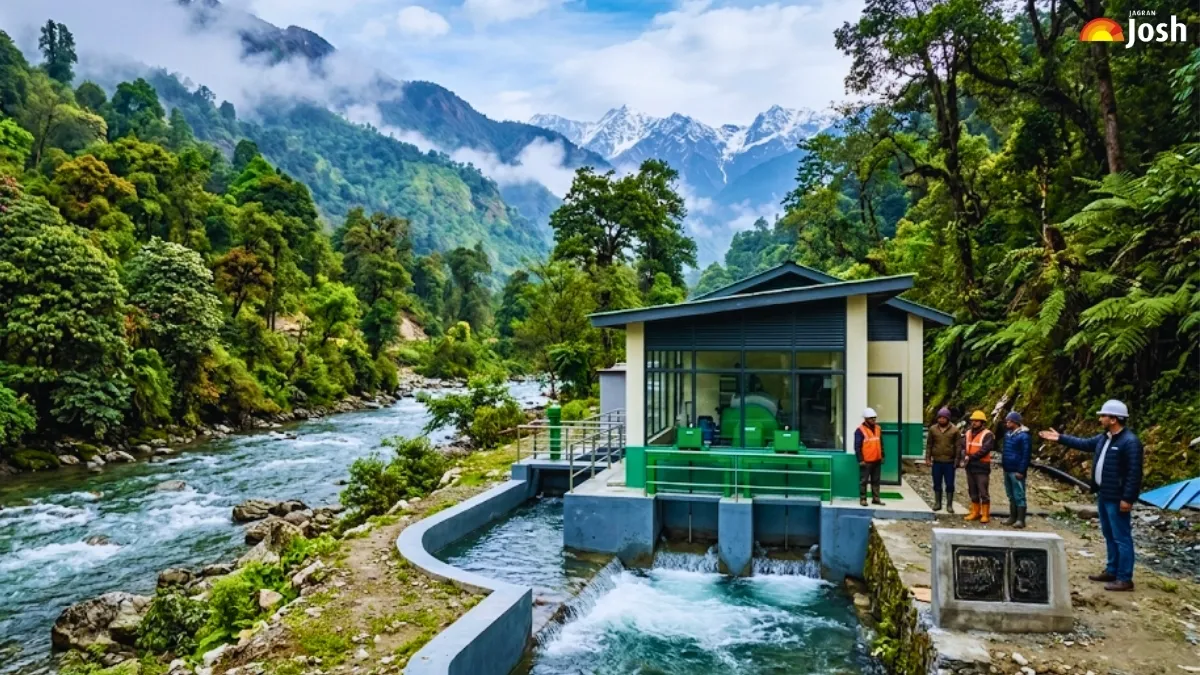
The Small Hydro Power (SHP) Development Scheme is a specialized program by the Ministry of New and Renewable Energy (MNRE) to promote hydroelectric projects with a capacity between 1 MW and 25 MW. These projects are typically "run-of-the-river," meaning they use natural water flow without the need for large, environmentally disruptive dams. The scheme provides Central Financial Assistance (CFA) to make clean energy generation viable in difficult terrains.
Objectives:
-
Targeted Capacity Addition: To achieve an additional 1,500 MW of clean energy by 2031.
-
Regional Development: To prioritize power generation in the North Eastern States and International Border Districts.
-
Atmanirbhar Bharat: To ensure 100% indigenous sourcing of all plant machinery and equipment.
-
Energy Security: To provide reliable, decentralized power to remote and rural areas where grid connectivity is weak.
-
Sustainable Growth: To exploit hydro potential without causing large-scale deforestation or community displacement.
Features:
-
Decentralized Generation: Reduces the need for massive transmission infrastructure and slashes transmission losses.
-
Long Asset Life: Projects are built to last, with operational lifespans ranging from 40 to over 60 years.
-
DPR Incentive: A dedicated ₹30 crore fund to help agencies prepare Detailed Project Reports (DPRs) for 200 future sites.
-
Economic Catalyst: Expected to generate 51 lakh person-days of employment during the construction phase.
-
Eco-Friendly: Minimal land acquisition requirements compared to large-scale hydro or thermal projects.
Targets:
-
New Capacity: Approx. 1,500 MW to be installed by FY 2030-31.
-
Investment: Attracting ₹15,000 crore in total sector investment.
-
Project Pipeline: Preparing 200 new DPRs to ensure continuous growth beyond the scheme's duration.
-
Indigenous Mandate: Achieving a 100% Made in India supply chain for SHP machinery.
Subsidies:
The scheme provides substantial Central Financial Assistance (CFA), tiered to favor high-priority and difficult-to-access regions such as Northeast and Himalayn States of India
| Region / Category | Financial Assistance (CFA) | Maximum Cap |
| NE States & International Border Districts | ₹3.6 Crore per MW OR 30% of project cost | ₹30 Crore per project |
| All Other States | ₹2.4 Crore per MW OR 20% of project cost | ₹20 Crore per project |
The Small Hydro Power (SHP) Development Scheme (2026-2031) represents a significant step toward India's sustainable energy future by empowering remote and hilly regions with decentralized, clean power through targeted targets, substantial subsidies and a focus on indigenous technology. This initiative is poised to drive significant socio-economic growth and environmental benefits over the next five years.



Comments
All Comments (0)
Join the conversation