Show Key Points
The Kingdom of Saudi Arabia is the largest Arab country in the Middle East, with an area of 2.24 million sq km(nearly ⅔ the size of India), and is the 14th largest country in the world.
It is the homeland of Arab, and Islam took root here only in the 7th century. It is bordered by Jordan and Iraq to the north, Kuwait, Qatar, Bahrain to the northeast, the United Arab Emirates to the east, Oman to the southeast, and Yemen to the south.
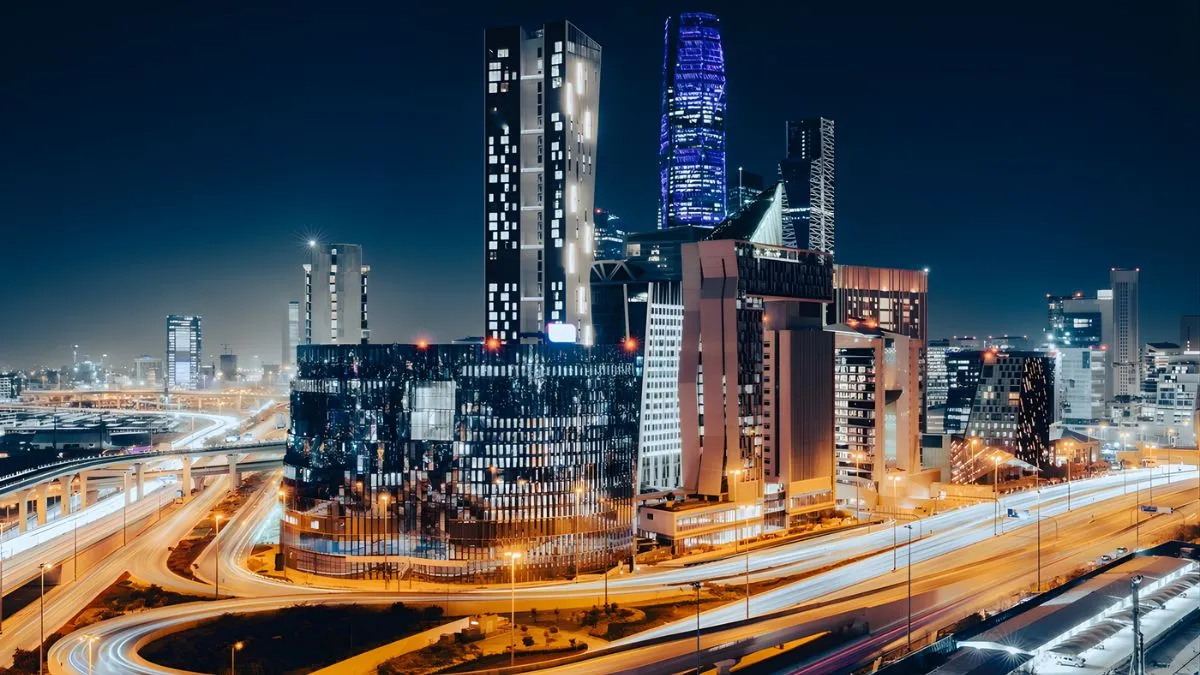
The capital of Saudi Arabia is Riyadh, which serves as the country's administrative, economic, and cultural centre.
Let’s explore in detail more about Saudi Arabia and its capital city, Riyadh.
About Saudi Arabia
The Kingdom of Saudi Arabia is the largest country in the Arabian Peninsula, and is located in the southwest corner of the Asian continent. This country is at the crossroads between Europe, Asia, and Africa.
What is the Capital of Saudi Arabia?
Riyad is the capital of Saudi Arabia, which is the hub of cultural and economic activity, and also plays an important role in Saudi Arabia’s administrative
It is one of the richest capitals in the world due to Saudi Arabia's fertile oil fields, a significant factor in the city's rapid expansion and development.
In Riyadh, we can see a combination of both historical and traditional culture with modern achievements.
What is the History of Saudi Arabia?
Saudi Arabia has been the homeland of Arabs, where Islam took birth here only n 7th century. Makkah and Madina, the two holiest cities in Islam, are located here.
Saudi Arabioa is owes the present formation to the king Abdulaziz Al-Saud (1882-1953), who established the modern kingdom in1932.
Since 1953, Saudi Arabia has been ruled by the sons of King Abdulaziz. The present ruler king of Saudi Arabia is King Salman bin Abdulaziz Al Saud, ascended to the throne in January 2015.
What is the History of Riyadh?
Riyadh is one of the ancient cities with a deep-rooted history. Currently, Riyadh is in the twelfth century of the Hijra, which contains a group of towns (Mi’kal, Muqran, Al-Awd, and others).
The present region in which the capital of Saudi Arabia is located witnessed the first human presence nearly a quarter of a million years ago.
The oldest written historical reference to the city of Riyadh was established date back to 715 BC, referring to a city that had existed at that time called Hajr, which was the capital of the province of Al-Yamamah that comprised Al-Aarid, Al-Hotat, Al-Hariq, Sudair, Al-Mahmal, Al-Kharj, Al-Aflaj, etc.
“Hajr” was known to be related to the name of the Tasm tribe.
What are the Origins of the name “Riyadh”?
A famous historian of Saudi Arabia, Hamad Al-Jasir, said, “Riyadh” began to be called in the eleventh century of Hijra, based on the reference of Ibn Bishr, who says in his history: “In 1049 Hijri / 1639 the Judge of Riyadh died.”
The name of “Hajr” became faded, and was only referred to as a small part of the old city, and later to a well of water on the west bank of the Batha valley in the city of Riyadh.
The new name of Riyadh encompassed the remnants of the city of Hajr, and its surrounding land and orchards.
8 Unknown Facts About Riyadh
Riyadh, a city known for its vibrant blend of history and modernity, attracts approximately 5 million tourists annually.
This appeal is partly due to its ancient and modern architecture, creating a perfect aesthetic mix.
Key Facts about Riyadh:
-
Diverse Population: Nearly 40% of the capital's inhabitants are expatriates from around the globe, contributing to a culturally rich environment.
-
Historical Roots: Originally named Hajr, the city boasts centuries of history. Its current name, Riyadh, translates fittingly to a meaning akin to "Garden."
-
Wealth and Significance: Based on Gross Domestic Product, Riyadh ranks among the world's top 100 wealthiest cities.
-
Religious Hub: The city is home to an impressive number of mosques, estimated to be 4,000 or more.
-
Educational Milestone: Riyadh houses King Saud University, which holds the distinction of being one of the kingdom's first and oldest universities.
-
Masmak Fortress Landmark: The Masmak Fortress, notable for its 1902 invasion, still features a spear impaled on its front door by one of the attacking soldiers.



Comments
All Comments (0)
Join the conversation