Raksha Bandhan During the 1905 Bengal Partition: What Was Its Connection With the Swadeshi Movement?
Rabindranath Tagore made use of Raksha Bandhan in the context of Hindu-Muslim unity against British Rule during the 1905 partition of Bengal. The festival gained prominence as part of the Swadeshi Movement and the national movement of India.
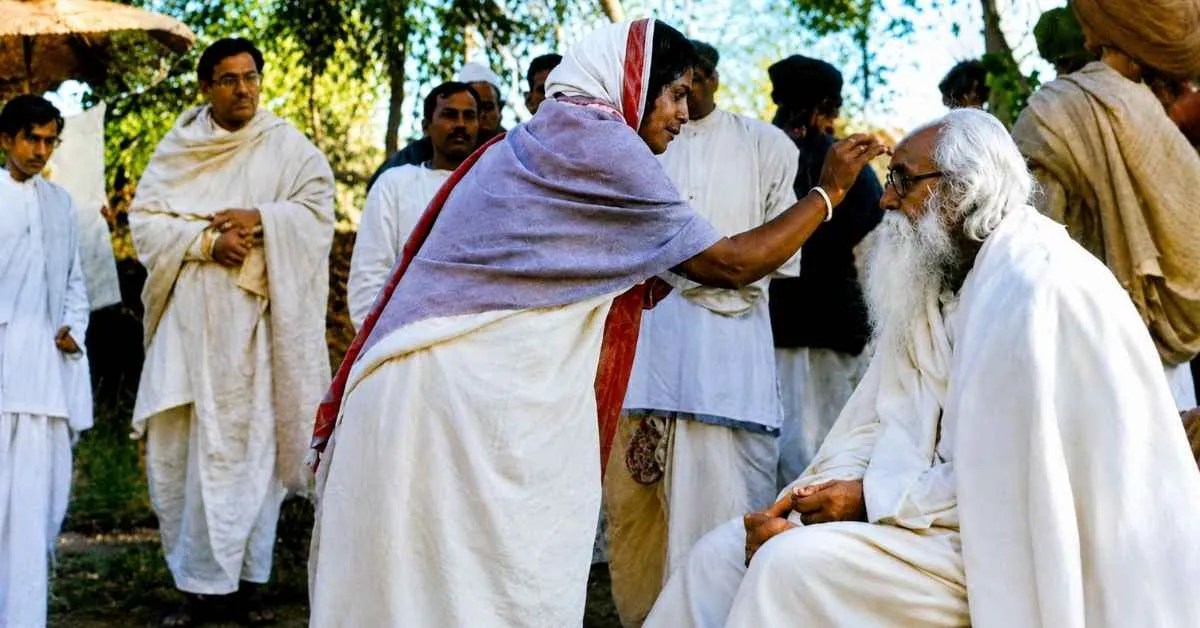
Raksha Bandhan has been observed as being about the relationship between siblings but during the Partition of Bengal in 1905. The traditional festival took on a more significant role. The British government sought to divide Bengal along religious lines.
The leaders of the nationalist movement had made Raksha Bandhan a symbol of the unity between Hindus and Muslims against colonial policies. Rabindranath Tagore and fellow freedom fighters led the people in tying rakhis without any regard for religion in order to protest against the partition.
The use of age-old custom played an important role in the Swadeshi Movement in which Indian products were encouraged as substitutes for foreign goods. It is through understanding this historical incident that it shows the contribution of cultural practices in India's struggle for independence.
What led to the partition of Bengal by the British in 1905?
In July 1905, Viceroy Lord Curzon proclaimed the partitioning of the Bengal Presidency, known as the center of Indian nationalism. The official argument put forth was that the partition of Bengal was necessary in order to gain efficiency in administration due to the vastness in size and population of the province.
While it was the official argument of the British that splitting of Bengal was done to improve administration, Indians viewed it as a typical "Divide and Rule" tactic. In fact, partition aimed at keeping apart the Muslim-dominant East Bengal from the Hindu-dominant West Bengal in order to stop the growing nationalist spirit.
How did Rabindranath Tagore use Raksha Bandhan as a symbol of unity?
Tagore’s contribution towards the Anti-Partition movement. Rabindranath Tagore played an important role in opposing the partition. He felt the need for a basic emotional aspect in traditional modes of protest so as to communicate with the general public.
The Rakhi-Tying ceremony in Bengal. Tagore urged both Hindus and Muslims to tie rakhis to each other’s wrists to signify mutual protection and brotherhood. The streets of Kolkata were reverberating with patriotic songs of the occasion like Banglar Mati Banglar Jol.
What is the connection of Raksha Bandhan to the Swadeshi Movement?
Cultural mobilisation for political struggle. This festival became a wonderful instrument for mass mobilization, transforming a home ceremony into a public political act of resistance to Lord Curzon.
Bringing attention to the boycott of foreign goods and promoting local production. The emotional support from the Rakhi celebration directly impacted the Swadeshi Movement. People pledged to use only local cloth and salt instead of English Manchester cloth and imported goods.
How did Hindus and Muslims join together for the Raksha Bandhan Campaign?
-
Public Demonstration of Communal Unity: In the year marking the partition (on October 16, 1905), a large number of people took to the streets barefoot, bathed in the Ganges, and sang patriotic songs in which the custom of tying yellow colored threads (known as rakhis) started crossing the boundaries of communities.
-
Importance of Mutual Support: Many renowned Muslim public figures took part in these events and confirmed the failure of the British policy, which was aimed at sowing discord among communities.
Impact of the Raksha Bandhan Movement on India's Freedom Struggle
Emergence of mass Nationalism. This campaign caused the transition from petitions from the upper classes to mass mobilization involving all parts of society including common people, farmers, and students in the fight for freedom.
Impact on Later Nationalist Movements. The use of religious festivals as a means of protest opened a way for leaders like Mahatma Gandhi to use this principle on a national scale in the Non-Cooperation and Civil Disobedience Movement.
Key Facts About the 1905 Bengal Partition and Raksha Bandhan for Competitive Exams
-
The partition of Bengal was announced in July 1905 and came into force on October 16 of 1905 and was revoked in 1911 due to widespread protests leading to the amalgamation of Bengal and transferring Britain's capital in India from Calcutta to Delhi.
- The region of partition was undivided Bengal (including present-day West Bengal, Bangladesh, Bihar, and Odisha). The focus of the protests was on Calcutta (Kolkata), Dhaka, Barishal, and other districts of Eastern and Western Bengal where protests against the partition took place.
-
Rabindranath Tagore led the cultural and spiritual resistance by organizing mass rakhi-sending events.
-
Surendranath Banerjee was a veteran moderate leader who spearheaded the anti-Partition movement and the launching of the Swadeshi movement.
-
Bipin Chandra Pal, Aurobindo Ghosh, and Bal Gangadhar Tilak (Lal-Bal-Pal): These leaders promoted the militant nationalist approach and spread the ideas of Swadeshi outside Bengal.
-
Ashwini Kumar Dutta was a well-known nationalist figure from Barishal (East Bengal) who concentrated on involving the local population and students in Swadeshi bands.
-
Rabindranath Tagore played an important role in the establishment of Rakhi Bandhan as a public ritual promoting communal harmony, and he also created songs of national significance like Banglar Mati Banglar Jol, which became the basis for India and Bangladesh's national anthems.
-
The Swadeshi Movement was formally initiated in Calcutta on August 7, 1905 promoting the boycott of British products and the development of local industries such as Bengal Chemical and the native textile industry.
-
The Raksha Bandhan Movement of 1905 serves as a reminder of the way art, culture, and togetherness can fight against colonial oppression.

Manisha Waldia is a distinguished content strategist with 5 years of experience crafting premium educational content for UPSC and State PCS, with a focus on deep conceptual analysis across Polity, Geography, History, and Environment. She currently brings this expertise to Jagran Josh, where she covers major national and international events, current affairs, and static general knowledge. Over her career, Manisha's specialized insights have led her to curate high-impact materials and serve as a UPSC Mains answer-evaluator for India’s top institutes—including Drishti IAS, Shubhra Ranjan IAS, Study IQ, GS Score, and PWonlyIAS. She has also worked alongside leading NGOs like Oxfam India and Avani Kumaon.
Contact: manisha.waldia@jagrannewmedia.com







![[लिंक] Rajasthan Computer Instructor Admit Card 2026 LIVE: बेसिक और वरिष्ठ कंप्यूटर अनुदेशक एडमिट कार्ड जारी, SSO ID से डाउनलोड करें हॉल टिकट](https://img.jagranjosh.com/images/2026/August/1982026/Computer-instructor-admit-card-2026.jpg)