Show Key Points
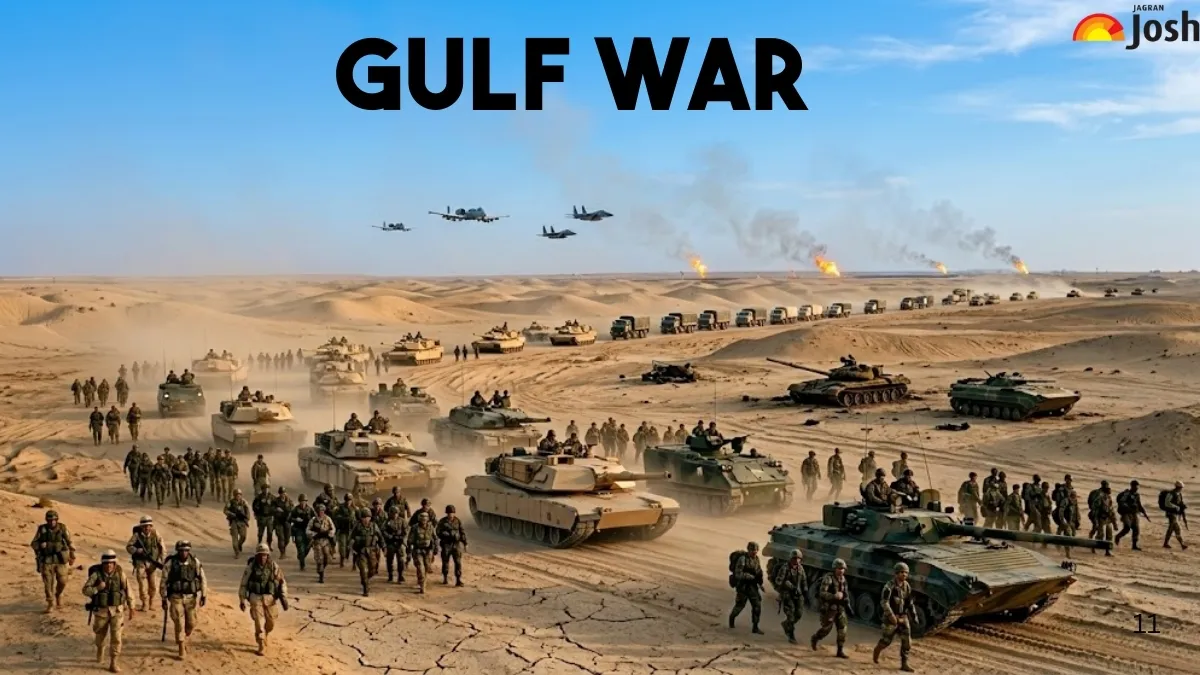
The Gulf War (1990–1991) was triggered by Iraq President Saddam Hussein's invasion of Kuwait over oil disputes and war debts after the end of the Iran-Iraq War (1980–1988) A US-led Coalition of 35 nations launched Operation Desert Storm to liberate Kuwait, marking a new era of military dominance while Iran remained officially neutral, the conflict fundamentally shifted the US-Iran dynamic and reshaped Middle Eastern power structures for decades to come.
What is the Gulf War?
Gulf War (1990–1991) conflict sparked by Iraq's invasion of Kuwait. It was the first major international crisis of the post-Cold War era. It established the United States as the sole global superpower and set the stage for the 2003 Iraq War and current US-Iran tensions.
Historical Background
The Debt-Power Paradox: After the end of the Iran-Iraq War (1980–1988), Iraq possessed the world's fourth-largest army, yet its treasury was empty. Iraq president Saddam Hussein could neither afford to pay his soldiers nor demobilize them into a collapsed civilian economy.
The Financial Trap: Iraq emerged from the war with $80 billion in international debt. President Saddam Hussein demanded that Kuwait and Saudi Arabia forgive the $30 billion they had loaned him, arguing that Iraq had acted as a "shield" for the Arab world against Iranian revolutionary expansion.
Iraq’s President Saddam Hussein’s assertion that Kuwait was a "rightful" province of Iraq.
Economic Warfare & Oil: Tensions peaked when Iraq accused Kuwait of "economic warfare" through overproduction of oil (which lowered global prices) and slant-drilling into the shared Rumaila oil field.
The 1979 Geopolitical Conflict: The Islamic Revolution and the 1979 Hostage Crisis transformed Iran from a primary US ally into a "pariah state." This led the US to adopt a "the enemy of my enemy is my friend" policy, providing Iraq with intelligence and credits throughout the 1980s to prevent an Iranian victory.
The Causes of Gulf War:
-
The Debt Dilemma: Iraq’s financial ruin following the eight-year Iran-Iraq War.
-
The Oil Dispute: Accusations against Kuwait regarding overproduction and "slant-drilling."
-
Historical Claims: Saddam Hussein’s assertion that Kuwait was a "rightful" province of Iraq.
-
The Invasion of Kuwait: The lightning-fast occupation on August 2, 1990.
-
The Invasion (Aug 2, 1990): Detail the 100,000-strong Iraqi force that took Kuwait City in hours.
-
Iraq President Saddam’s focus on "Slant Drilling" accusations (Iraq claimed Kuwait was stealing Iraqi oil) and the desire to control 20% of the world’s oil reserves.
-
UN Resolutions: Mention UN Security Council Resolution 660, which demanded immediate withdrawal.
The Major Players
-
Iraq and the Ba'athist Regime: Saddam Hussein’s military objectives and strategy.
-
The United States: Leading "Operation Desert Shield" and "Operation Desert Storm."
-
The Coalition of the Willing: The roles of the UK, France, Saudi Arabia, and Egypt.
-
The United Nations: The diplomatic mandate and Resolution 678.
-
Iraq under Saddam Hussein: His goal was to become the "Leader of the Arab World."
-
Coalition Forces: A massive alliance of 35 countries led by General Norman Schwarzkopf.
-
Role of Arab States: Crucially, nations like Saudi Arabia and Egypt joined the US, fearing Saddam would next invade the Saudi oil fields.
-
Operation Desert Shield: The five-month buildup of troops in Saudi Arabia to deter further Iraqi aggression.
-
Operation Desert Storm: The 42-day air campaign that crippled Iraqi infrastructure.
-
Air and Ground Campaigns: The ground war lasted only 100 hours before the Iraqi army collapsed.
The United States and the Gulf War
The US involvement wasn't just about sovereignty; it was about global stability and long-term strategy.
-
Energy Security: Protecting the flow of oil to the global market.
-
The Bush Doctrine: Establishing the "New World Order" post-Cold War.
-
Military Dominance: The first major showcase of "smart bombs" and modern air superiority.
-
Public Perception: Turning the "Vietnam Syndrome" around through a decisive victory.
Role Of Iran in Gulf War:
While Iran did not join the fighting, its fingerprints and interests were everywhere.
-
The "Enemy of My Enemy": Why Iran remained neutral despite its hatred for Saddam Hussein.
-
The Refugee Crisis: Iran’s role in hosting hundreds of thousands of fleeing Iraqis and Kuwaitis.
-
The Air Force Mystery: Why Iraqi pilots flew their jets to Iran for "safekeeping" (and why Iran kept them)..
Connection of US and Iran to the Gulf War:
-
US Support for Iraq (1980–88): This is a critical link. During the Iran-Iraq war, the US actually provided intelligence and aid to Iraq to prevent an Iranian victory.
-
Setting the Stage for Tension: The "flip-flop" of the US supporting Saddam in the 80s and then attacking him in the 90s created deep cynicism in both Tehran and Baghdad.
-
Regional Competition: The war began the "dual containment" policy, where the US tried to keep both Iran and Iraq weak simultaneously.
The Gulf War changed military technology and Middle Eastern borders forever. We still feel the effects today in the form of high oil prices, the Syrian Civil War, and the ongoing US-Iran proxy battles.



Comments
All Comments (0)
Join the conversation