Show Key Points
Deserts are among the most extreme environments on Earth. They cover about a third of the planet's land. Although many people picture deserts as hot and sandy, they actually come in many different types.
The world's largest desert is the cold Antarctic Desert. In contrast, the Carcross Desert in Canada is the smallest. Death Valley is often called the hottest desert, while Antarctica's icy plains are the coldest.
Some deserts are known for their striking beauty, not just their heat or cold. Have you ever wondered which desert is the most colourful? In this article, we'll explore this amazing place and discover what gives its sands such vibrant colours.
ALSO READ: Which River is Known as the Lifeline of the Thar Desert?
Which is the Most Colourful Desert in the World?
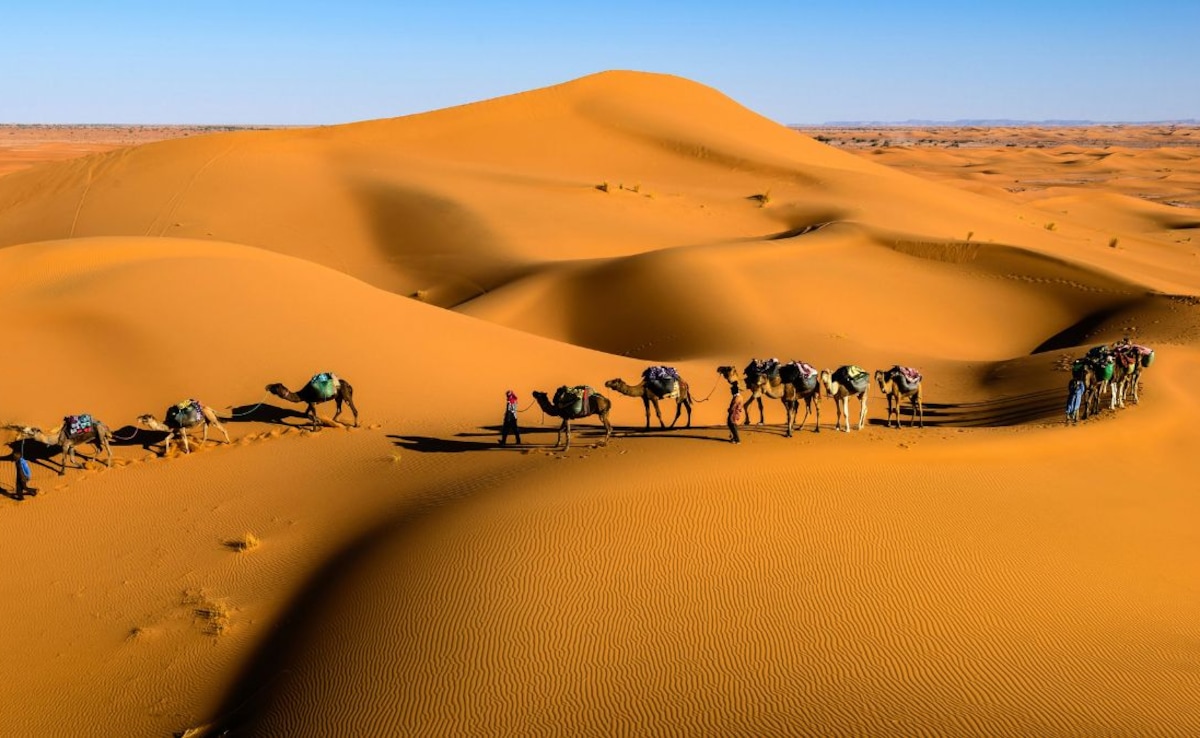
The Thar Desert, also known as the Great Indian Desert, is often called the most colourful desert in the world.
Covering more than 200,000 square kilometres, it lies mostly in Rajasthan and stretches into Gujarat, Punjab, Haryana, and parts of Pakistan.
Many call it the most colourful desert not only because of its golden sand dunes, red sandstone hills, and white salt marshes in the Rann of Kutch but also because of its lively culture. The Thar is a subtropical desert with rolling dunes and rugged limestone ridges.
Its scenery changes from the 'Golden City' of Jaisalmer to the pink and red tones of Jodhpur, all brought to life by bright turbans, detailed handicrafts, and festivals that fill the desert with colour.
7+ Lesser-Known Facts About the Thar Desert
- With a density of 83 people per square kilometre, it is the most densely populated desert on Earth, compared to the global desert average of just 7 people per square kilometre.
- Geologically, the Thar is relatively young. Most scientists estimate it to be between 4,000 and 10,000 years old, whereas the Namib Desert is over 55 million years old.
- Unlike many major deserts that rely on rare oasis water, the Thar is unique because it receives 90% of its annual rainfall from the seasonal Indian Monsoon (July–September).
- The Luni is the only major river in the desert. Interestingly, its water is fresh for the first 100 km but becomes increasingly saline as it flows toward the Rann of Kutch.
- The region was once under the sea. In the Akal Wood Fossil Park near Jaisalmer, you can find 180-million-year-old fossils of sea shells and ferns from the Jurassic period.
- The intense heat from the Thar Desert helps draw the moisture-filled winds of the South-West Monsoon across the Indian subcontinent.
- The Pokhran region within the Thar Desert was the site of India's first nuclear tests (Smiling Buddha) in 1974 and again in 1998, due to its remote, stable geography.
- It is home to the Great Indian Bustard, one of the heaviest flying birds in the world, which is now critically endangered and found almost exclusively in this ecosystem.
IN CASE YOU MISSED: Which Desert Is Called the Great Indian Desert?
Why is the Thar Desert called the Most Colourful Desert in the World?

The Thar Desert is often called the "Most Colourful Desert in the World" because of its mix of varied landscapes and lively human presence. While the Sahara is known for its endless sand, the Thar stands out with its rich natural and cultural colours.
1. Geological Diversity
The "colour" of the Thar begins with its ground. It is not just yellow sand; the desert is a mosaic of different terrains:
- The Golden Sands: The dunes near Jaisalmer contain high amounts of yellow Jurassic limestone, giving the landscape a shimmering gold appearance.
- The White Salt Desert: To the south lies the Great Rann of Kutch, a massive salt marsh that turns a blinding, ethereal white under the moonlight.
- The Red Rock Formations: In areas like Jodhpur, the desert is defined by deep red rhyolite and sandstone cliffs.
2. The "Human" Palette
Most deserts have little colour beyond the natural landscape. In the Thar, however, people choose to brighten the beige surroundings with bold, vivid colours.
- The region is known for its 'Colour Cities': Jodhpur, called the Blue City; Jaipur, the Pink City; and Jaisalmer, the Golden City.
- Because there is little natural greenery, people in the region wear bright neon pinks, deep reds, and saffron yellows, often using Leheriya and Bandhani fabrics, to stand out against the sand.
3. Biological Adaptations
The Thar is the most densely populated desert in the world, which means it teems with life that adds to its visual richness.
- Flora: After a brief rain, the desert undergoes a "green burst" where Khejri trees and shrubs bloom rapidly.
- Fauna: It is home to the Peafowl (India's national bird), which adds iridescent blues and greens to the scrubland, and the Chinkara (Indian Gazelle) with its reddish-buff coat.
The Science of the "Colour"
The colours in the landscape are shaped by how rocks break down over time. Red shades appear when iron oxide (haematite) coats the sand grains.
Yellow and golden tones come from weathered limestone and quartz, which settled over millions of years from old riverbeds and the Tethys Sea.
List of Top 10 Most Colourful Deserts in the World
The world has many other 'painted' landscapes besides the golden sands of the Thar, and some look almost otherworldly. From Africa's red dunes to North America's rainbow hills, here are the top 10 most colourful deserts on Earth.
| Desert | Location | Nickname | Flora & Fauna | Known For (Description) |
| Thar Desert | India & Pakistan | The Great Indian Desert | Khejri tree, Great Indian Bustard, Chinkara | Famous for its "Colour Cities" (Blue, Pink, and Gold) and vibrant cultural festivals that paint the landscape with life. |
| Painted Desert | USA (Arizona) | El Desierto Pintado | Sagebrush, Pronghorn, Petrified wood | A vast landscape of "badlands" featuring stratified layers of red, orange, and even lavender siltstone and shale. |
| Namib Desert | Namibia | The World’s Oldest Desert | Welwitschia (living fossil), Gemsbok, Fog beetles | Known for its massive, apricot-coloured sand dunes that glow bright red at sunrise and deep purple at dusk. |
| Atacama Desert | Chile | The Flowering Desert | Pata de huamacho, vicuñas, flamingos | Usually grey and rocky, it turns into a pink-and-purple carpet of wildflowers during rare "blooming" years following rainfall. |
| Wadi Rum | Jordan | Valley of the Moon | Desert broom, Arabian Oryx, Camels | A UNESCO site famous for its deep red sandstone mountains and pink sands, often used as a filming location for Mars. |
| Danakil Depression | Ethiopia | The Gateway to Hell | Extremophile bacteria, Wild Ass | A neon landscape of yellow sulphur springs, green acid pools, and white salt flats was created by intense volcanic activity. |
| Simpson Desert | Australia | The Red Centre | Spinifex grass, Thorny Devil, Perentie | Home to the world's longest parallel sand dunes, which are a striking deep "brick red" due to high iron oxide content. |
| Gobi Desert | Mongolia & China | The Flaming Cliffs | Saxaul tree, Snow Leopard, Wild Bactrian Camel | Famous for the "Flaming Cliffs" of Bayanzag, which glow a fiery orange-red, and its vast "Black Gobi" gravel plains. |
| Seven Coloured Earths | Mauritius | Rainbow Dunes | Ebony trees, Giant Aldabra Tortoises | A small but stunning geological formation where sand spontaneously settles into seven distinct layers of red, brown, violet, green, blue, purple, and yellow. |
| Chihuahuan Desert | USA & Mexico | The White Sands | Yucca, Mexican Wolf, Roadrunner | Features the "White Sands" of New Mexico—a sea of rare, brilliant white gypsum crystals that look like snow in the heat. |
Conclusion
The Thar Desert challenges the common belief that deserts are empty and dull. Its golden sands and white salt marshes blend with the bright, colourful cities of Rajasthan, earning it the title of the world's most colourful desert. Here, nature's minerals and local culture come together to create a stunning scene.
WHAT'S NEXT: A Desert in India that Looks like Mars; Check where it is Located



Comments
All Comments (0)
Join the conversation