Show Key Points
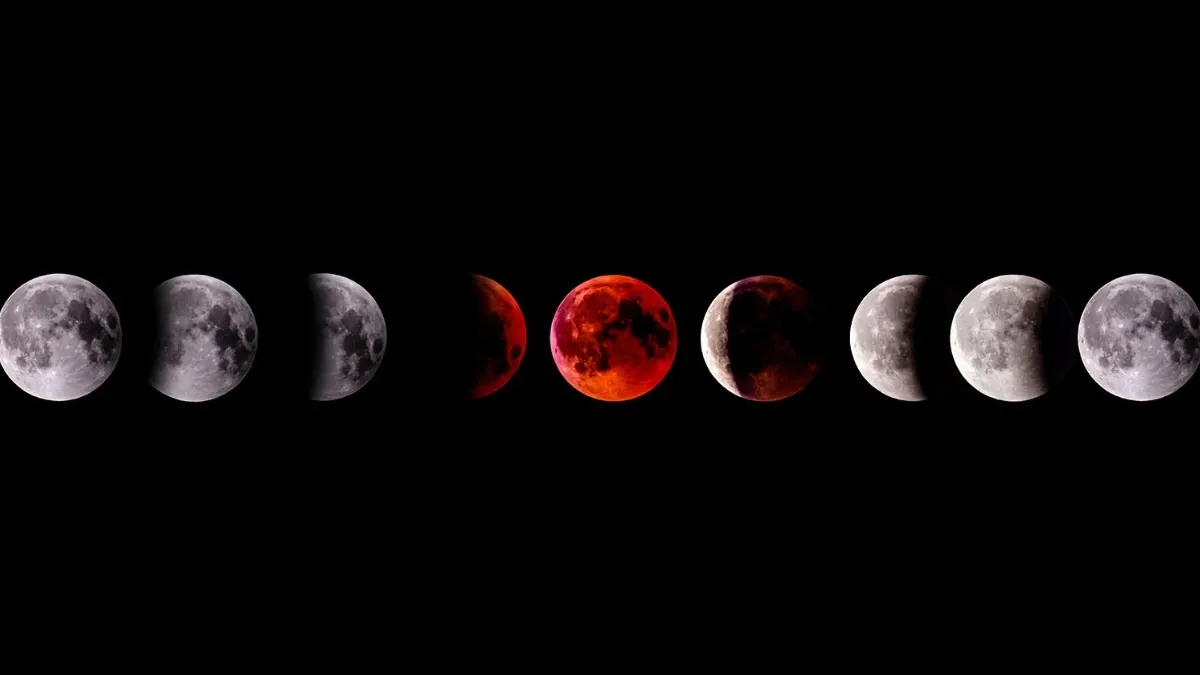
A rare and dramatic astronomical occurrence will occur tonight, a Total Lunar Eclipse, known to many as a Blood Moon, as it takes centre stage in tonight's sky.
This occurs because the Earth moves between the Moon and Sun, casting its shadow on the Moon.
The Moon gradually becomes darker while it passes through the Earth's shadow; then the Moon will appear bright red at totality.
Unlike a solar eclipse, this event can be safely viewed by the naked eye.
Here is what to expect during tonight's Blood Moon Total Lunar Eclipse - the important phases and how the events will unfold throughout the night.
Check Out: Worm Moon 2026: Why Does March Full Moon Have an Unusual Name?
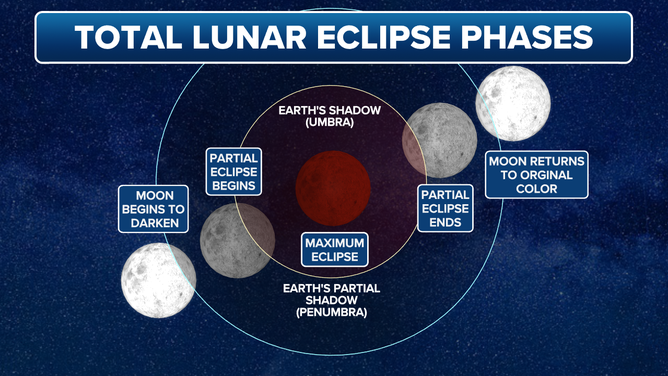
5 Key Phases of Blood Moon Explained
Source: FOX News
1. Penumbral Eclipse Starts
The penumbral eclipse begins as the Moon moves into the Earth's outer shadow. The dimness is subtle and often difficult to detect.
The Moon may appear as if it has been dimmed or shaded for a sustained period of time, but the shading does not create a visually dramatic impact at this point.
2. Partial Eclipse
Once the Moon is inside the Earth's inner shadow, known as the umbra, there will be a dark arc forming on the Moon creating the appearance of a shadow taking a "bite" out of the surface of the Moon.
The contrast between the shaded part of the moon and the illuminated part will become even stronger as more of the lunar surface becomes shaded.
3. Totality Begins
Once the Moon is fully within the umbra, it does not go completely dark, but it changes to a deeply reddish or copper hue.
This happens because, due to the refraction and filtering effects caused by the atmosphere of the Earth, sunlight bends toward Earth and scatters to the sides, allowing the red wavelengths to illuminate the moon.
4. Maximum Eclipse
At this point, the Moon is at the deepest point within the umbra. The reddish hue will be most intense and will be evenly spread over the entire lunar surface.
The shade of red also varies depending on the amount of atmospheric dust, clouds, and other materials in the atmosphere.
5. Eclipse Ends
The Moon slowly moves out of shadow while it reverses direction until it exits from its umbra and finally from its penumbra.
The reddish colour will disappear while it returns to its bright white appearance. Once the Moon has completely exited the shadow of the Earth, it will show a (normal) full Moon and the eclipse will be complete.



Comments
All Comments (0)
Join the conversation