Independence Day 2026 Quiz: Do you know these basic questions about India?
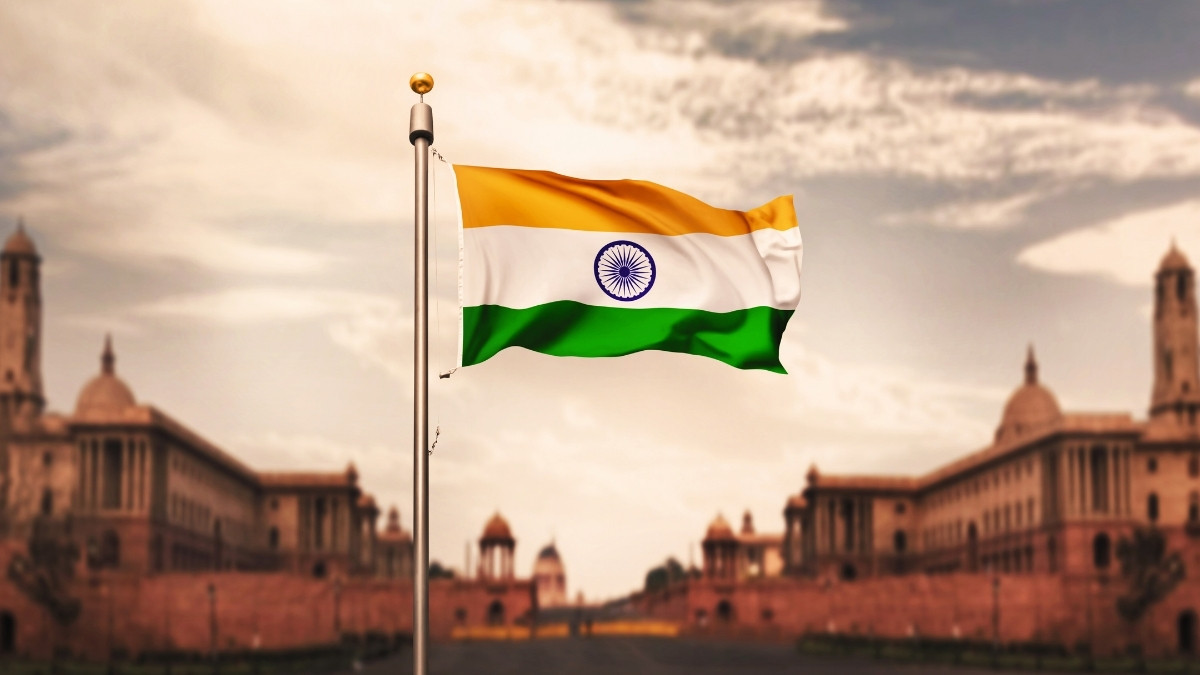
Independence Day 2026: Every year on August 15, Independence Day is observed across the country. Let us solve an interesting quiz based on Independence Day history, freedom fighters, etc.
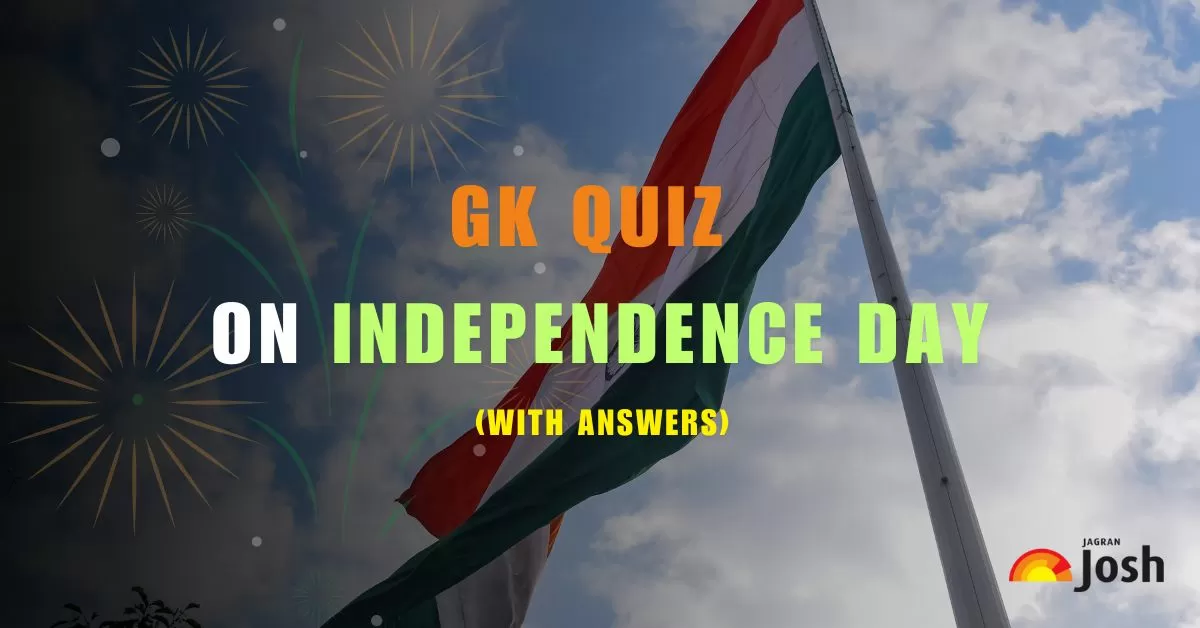
Independence Day 2026: This year, India will celebrate its 80th Independence Day on August 15th. This time, the country has announced various initiatives to mark this historic day.
The theme for 2026 Independence Day focuses on ""Honouring Freedom, Inspiring the Future". This theme represents India's goal of becoming a fully developed nation by 2047, the country's 100th anniversary of independence.
India launched year-long celebrations with a slew of programmes and projects to showcase 'development, governance, technology, reform, progress, and policy over the years. Test your knowledge by solving the quiz based on Independence Day.
1. What is the theme for 80th Independence Day?
(a) Viksit Bharat
(b) Honouring Freedom, Inspiring the Future
(c) Nation First, Always First
(d) None of the above
Ans. (b)
Explanation: The theme for the 80th Independence Day is 'Honouring Freedom, Inspiring the Future', which aligns with the government's goal of transforming the country into a developed nation by 2047.
READ| Happy Independence Day 2021: Wishes, WhatsApp Messages, Quotes, Slogan, Images & SMS
2. When did British came to India?
(a) 1611
(b) 1600
(c) 1609
(d) 1608
Ans. (d)
Explanation: The British first came to India on August 24, 1608, via the Port of Surat. They initially came to establish trade relations and set up factories for the East India Company.
3. Which of the following is/are true regarding the ratio of the national flag?
(a) The ratio of the length to the height of the flag shall be 3:2
(b) The ratio of the length to the width of the flag shall be 3:2
(c) The ratio of the length to the height of the flag shall be 2:3
(d) Both (a) and (b)
Ans. (d)
Explanation: The national flag shall be rectangular in shape. The ratio of the length to the height (width) of the flag shall be 3:2.
READ| Independence Day 2024 Questions with Answers for Government Exams
4. For how many years India was under British Rule?
(a) 200 years
(b) 89 years
(c) 190 years
(d) 100 years
Ans. (a)
Explanation: The British first came to India in 1600, where they established their East India Company. After that, they gradually expanded their control over the Indian subcontinent. This went on until 1947, when India gained independence. So, the British ruled India for 200 years, solidifying their dominance over India.
5. On Independence Day, the Prime Minister of India hoists our tricolour flag at:
(a) the Purana Qila, Delhi
(b) the Red Fort, Old Delhi
(c) the Red Fort, Agra
(d) the India Gate, New Delhi
Ans. (b)
Explanation: India became free from British rule on 15th August 1947 and the first Prime Minister of Independent India, Pt. Jawaharlal Nehru hoisted the Indian National Flag above Lahori Gate of Red Fort in Delhi. From that day Prime Ministers of India hoist our tricolour flag at the Red Fort, Old Delhi.
6. Who among the following was the Prime Minister of Britain at the time of Independence?
(a) Lord Mountbatten
(b) Winston Churchill
(c) Clement Attlee
(d) Ramsay MacDonald
Ans. (c)
Explanation: Clement Attlee was the Prime Minister of Britain at the time of Independence. He served the post from 1945-1955.
7. Who among the following was the first Governor-General of New Dominions of India until June 1948?
(a) Lord Mountbatten
(b) C. Rajgopalchari
(c) Dr BR Amdedkar
(d) Dr. Rajendra Prasad
Ans. (a)
Explanation: Lord Mountbatten became the first Governor-General of the new Dominions of India until June 1948. He swore in Jawaharlal Nehru as the first Prime Minister of independent India.
8. The famous quote "a tryst with destiny" is given by
(a) Dr BR Ambedkar
(b) Pt. Jawaharlal Nehru
(c) Mahatma Gandhi
(d) Abdul Kalam Azad
Ans. (b)
Explanation: First Prime Minister Pt. Jawaharlal Nehru said, "Long years ago, we made a tryst with destiny and now the time comes when we shall redeem our pledge… At the stroke of the midnight hour, when the world sleeps, India will awake to life and freedom."
9. Which of the following Plans was known as the partition plan?
(a) Macaulay Plan
(b) Atlee Announcement
(c) Montagu-Chelmsford Reforms
(d) Mountbatten Plan
Ans. (d)
Explanation: Lord Mountbatten, the Viceroy of India in 1947, put forth the partition plan widely known as the Mountbatten Plan. The Plan was accepted by Congress and the Muslim League.
10. Which of the following are the extremist leaders?
(a) Lala Lajpat Rai
(b) Bal Gangadhar Tilak
(c) Bipin Chandra Pal
(d) All of the above
Ans. (d)
Explanation: The Extremist leaders were Lala Lajpat Rai, Bal Gangadhar Tilak, Bipin Chandra Pal, and Aurobindo Ghosh. Instead of the PPP (Protest, Prayer, and Petition) path, they emphasise self-reliance, constructive work, and swadeshi.
11. Who presided over the 1905 Congress session in Banaras?
(a) Gopal Krishan Gokhale
(b) Dadabhai Naroji
(c) Bal Gangadhar Tilak
(d) Aurobindo Ghosh
Ans. (a)
Explanation: The Congress session in Banaras (1905) was presided by Gopal Krishan Gokhale.
12. When did the Jallianwala Bagh Massacre take place?
(a) 10 April 1917
(b) 13 April 1918
(c) 9 April 1916
(d) 13 April 1919
Ans. (d)
Explanation: Jallianwala Bagh Massacre took place on 13 April 1919. People were gathered at Jallianwala Bagh in Amritsar to protest against the arrest of Saifuddin Kitchlew and Satyapal on 13 April 1919.
13. Match the following is/are not correctly matched:
- Champaran Satyagraha - 1917
- Kheda Satyagraha - 1918
- Ahmedabad Mill Strike - 1918
- Rowlatt Act Satyagraha - 1919
(a) Only 1
(b) Both 2 and 3
(c) Only 2
(d) Both 2 and 4
Ans. (c)
Explanation: Kheda Satyagraha took place in 1917.
14. Who presided over the 1907 Congress Session in Surat on the bank of the river Tapti?
(a) Pherozeshah Mehta
(b) Dadabhai Naroji
(c) Lala Hardayal
(d) Gopal Krishan Gokhale
Ans. (a)
Explanation: 1907 Congress Session in Surat on the bank of the river Tapti was presided over by Pherozeshah Mehta due to the differences between Moderates and Extremists first split in Congress occurred.
15. In which session of the Congress both Extremist and Moderate leaders were united?
(a) Madras
(b) Lucknow
(c) Calcutta
(d) Banaras
Ans. (b)
Explanation: Lucknow Session of Congress 1916 was presided over by Ambika Charan Majumdar (Moderate leader) where both Extremist and Moderate leaders were united.
16. When was Non-Cooperation Movement started?
(a) 1919
(b) 1920
(c) 1921
(d) 1922
Ans. (b)
Explanation: Non-Cooperation Movement was started in 1920.
17. When was Gandhi Irwin Pact signed?
(a) 3 March 1930
(b) 5 March 1931
(c) 5 April 1931
(d) 15 April 1930
Ans. (b)
Explanation: On 5th March 1931, Gandhi Irwin Pact was signed.
18. Who among the following retained as the head of State until India transits a full republic?
(a) Dr Rajendra Prasad
(b) King George VI
(c) Mahatma Gandhi
(d) Queen Elizabeth II
Ans. (b)
Explanation: After getting independence on 15 August 1947 from the British. India retained King Gorge VI as the head of the State until its transition to a full republic on 26 January 1950.
19. The first Prime Minister Jawaharlal Nehru raised the Indian National Flag on 15 August, 1947 which of the following gates of the Red Fort?
(a) Lahori Gate
(b) Delhi Gate
(c) Kashmiri Gate
(d) None of the above
Ans. (a)
Explanation: The first Prime Minister Jawaharlal Nehru raised the Indian National Flag on 15 August 1947 above the Lahori Gate, Red Fort, Delhi, subsequently the incumbent Prime Minister customarily raises the Indian National Flag above the mentioned gate.
20. Who among the following played Shehnai at the celebration of Indian Independence Day 1947?
(a) Ali Ahmed Hussain Khan
(b) Bismillah Khan
(c) Madhukar Dhumal
(d) Ahmed Ali
Ans. (b)
Explanation: Bismillah Khan played Shehnai at the celebration of Indian Independence Day 1947. He was the first Indian to greet the nation with his musical instrument Shehnai.
21. In which of the following Congress sessions, the Indian National Congress declared Purna Swaraj?
(a) Lahore Session, 1929
(b) Karachi Session, 1930
(c) Nagpur Session, 1929
(d) Calcutta Session, 1929
Ans. (a)
Explanation: At the 1929 Lahore Session, Indian National Congress declared Purna Swaraj and was promulgated on 26 January, 1930.
22. Who among the following did not participate in official events of Indian Independence Day 1947?
(a) Sardar Vallabhbhai Patel
(b) Dr. Rajendra Prasad
(c) Mahatma Gandhi
(d) Dr. B. R Ambedkar
Ans. (c)
Explanation: Mahatma Gandhi did not participate in the official event of Indian Independence Day 1947. Instead, he marked the day with 24 hours fast in Calcutta, encouraging peace during riots.
23. Who was conferred with the rank of first Field Marshal of India?
(a)Kodandera M. Cariappa
(b) Sam Mankeshaw
(c) K.M. Cariappa
(d) Arjan Singh
Ans. (b)
Explanation: Sam Manekshaw was conferred with the rank of first Field Marshal of India. To date, only two Indian Army officers have been conferred with the rank. After Sam Manekshaw, the second individual was Kodandera M. Cariappa.
24. When was India's first five-year plan launched?
(a) 1949
(b)1947
(c) 1950
(d) 1951
Ans. (d)
Explanation: The first Prime Minister of India, Jawaharlal Nehru, presented the First Five-Year Plan to the Parliament of India in 1951. The First Five-year Plan mainly focused on the development of the primary sector and was based on the Harrod–Domar model with few modifications.
25. When were the first Lok Sabha elections held in India?
(a) 1952
(b) 1961
(c) 1950
(d) 1947
Ans. (a)
Explanation: General elections were held in India between 25 October 1951 and 21 February 1952. They were the first elections to the Lok Sabha after independence in August 1947. The First Session of this Lok Sabha commenced on 13th May 1952.
26. In which year did India make education the fundamental right of children?
(a) 2012
(b) 2009
(c) 2010
(d) 2008
Ans. (c)
Explanation: The Right of Children to Free and Compulsory Education Act or Right to Education Act (RTE) is an Act of the Indian Parliament that was enacted on August 4, 2009. When the Act came into force on April 1, 2010, India became one of the countries in the world to make education a fundamental right.
27. In which year was the Indian Space Research Organisation (ISRO) formed?
(a) 1969
(b) 1959
(c) 1979
(d) 1989
Ans. (a)
Explanation: ISRO was formed in 1969 with a vision to develop and harness space technology in national development while pursuing planetary exploration and space science research. ISRO replaced its predecessor, INCOSPAR (Indian National Committee for Space Research).
28. The British Monarch at the time of Indian Independence was________.
(A) George V
(B) King Edward VII
(C) George VI
(D) None of the above
Ans. ( c )
Explanation: George VI was King of the United Kingdom and the Dominions of the British Commonwealth from 11 December 1936 until his death in 1952.
29. Which one of the following parties was in power in the U.K. when India got independence?
(A) Socialist Party
(B) Liberal Party
(C) Labour Party
(D) Conservative Party
Ans. ( c )
Explanation: The Labour Party is a political party in the United Kingdom that has been described as an alliance of social democrats, democratic socialists, and trade unionists.
30. The Mountbatten Plan became the basis for______.
(A) Solution of communal problems
(B) Partition of the country
(C) Transfer of power
(D) Continuity of British Rule
Ans. (b)
Explanation: The Mountbatten Plan included the Principle of the partition of British India, which was accepted by the British Government. Successor governments would be given dominion status.
31. Who designed the National Flag of India?
(A) Pingali Venkayya
(B) MK Gandhi
(C) Sachindra Das Bose
(D) Hemachandra Kanungo
Ans (a)
Explanation: The design of the flag of India that was first presented in 1921 to Mahatma Gandhi, leader of the All-India Congress, was created by Pingali (or Pinglay) Venkayya.
32. Who was the first British person to visit India?
(a) Lord Mountbatten
(b) Captain William Hawkins
(c) Vasco Da Gama
(d) John Mildenhall
Ans. (d)
Explanation: The first British person to visit India was John Mildenhall, who arrived by land in 1599 and presented himself as an East India Company minister. He was one of the first British travellers who travelled overland to India.
33. The national song of India, "Vande Mataram," was first sung by _____
(a) Bankim Chandra Chatterjee
(b) Mahatma Gandhi
(c) Rabindranath Tagore
(d) Subhash Chandra Bose
Ans. (c)
Explanation: The national song of India, "Vande Mataram," was written by Bankimchandra Chatterji. However, it was first sung by Rabindranath Tagore in 1896. It was adopted by the constituent assembly on January 24, 1950.
34. How many years has it been since India gained independence?
(a) 77
(b) 78
(c) 76
(d) 79
Ans. (b)
Explanation: India gained independence on August 15, 1947, and its first anniversary was observed on August 15, 1948. So, this year, we will celebrate the 78th Independence Day on August 15, 2024.
35. When did Dandi March start?
(a) 14 April 1930
(b) 12 March, 1931
(c) 12 March, 1930
(d) 12 April, 1930
Ans. (c)
Explanation: On March 12, 1930, Mahatma Gandhi began the Dandi March from Sabarmati Ashram to Dandi, a village on the Gujarat coast. This march was a key part of the Civil Disobedience Movement, launched with the support of the Indian National Congress and the people of India. The movement aimed to peacefully defy British laws and assert India's demand for independence.
36. Who was the founder of the Arya Samaj?
a) Raja Ram Mohan Roy
b) Swami Vivekananda
c) Dayanand Saraswati
d) Bal Gangadhar Tilak
Ans. (c)
Explanation: Dayanand Saraswati founded the Arya Samaj in 1875, a Hindu reform movement that promoted values based on the Vedas.
37. The Swadeshi Movement was launched to protest against which event?
a) Partition of Bengal
b) Jallianwala Bagh Massacre
c) Rowlatt Act
d) Simon Commission
Ans. (a)
Explanation: The Swadeshi Movement was launched in 1905 to protest against the Partition of Bengal, encouraging Indians to boycott British goods and promote Indian-made products.
38. Who was the leader of the Bardoli Satyagraha?
a) Mahatma Gandhi
b) Subhas Chandra Bose
c) Sardar Vallabhbhai Patel
d) Jawaharlal Nehru
Ans. (c)
Explanation: Sardar Vallabhbhai Patel led the Bardoli Satyagraha in 1928, a successful non-violent movement against increased land revenue assessments in Bardoli, Gujarat.
39. Who was the first Indian to win a Nobel Prize?
a) C.V. Raman
b) Rabindranath Tagore
c) Amartya Sen
d) Mother Teresa
Ans. (b)
Explanation: Rabindranath Tagore became the first Indian to win a Nobel Prize in 1913 for his literary work "Gitanjali."
40. On August 15, 2026, India will mark 79 years of freedom. Which anniversary of Independence Day will be celebrated?
(a) 78th
(b) 79th
(c) 80th
(d) 81st
Ans. (c)
Explanation: India gained independence on August 15, 1947. August 15, 1948, marked the 1st anniversary. Therefore, August 15, 2026, marks the 80th Independence Day (the completion of 79 full years of independence).
41. Under the "Viksit Bharat @2047" vision, India aims to become a fully developed nation by the centenary of its independence. In which year will India celebrate 100 years of independence?
(a) 2030
(b) 2040
(c) 2047
(d) 2050
Ans. (c)
Explanation: Having gained independence in 1947, India will reach its centenary milestone (100th anniversary) in the year 2047.
42. The National Flag of India features the Ashoka Chakra at its center. How many spokes does the Ashoka Chakra contain?
(a) 12
(b) 20
(c) 24
(d) 30
Ans. (c)
Explanation: The Ashoka Chakra featured in the center of the Indian Tricolour contains 24 spokes, symbolizing constant movement, progress, and the 24 hours of the day.
43. On Independence Day, the Prime Minister hoists the national flag at the Red Fort. Who hoists the National Flag at Rajpath (Duty Path) on Republic Day?
(a) The Prime Minister
(b) The President of India
(c) The Vice-President of India
(d) The Chief Justice of India
Ans. (b)
Explanation: On Independence Day, the Prime Minister hoists the flag at the Red Fort. On Republic Day (January 26), the President of India unrolls/unfurls the flag at Kartavya Path (formerly Rajpath).
44. Who was the Viceroy of India when the country gained independence on August 15, 1947?
(a) Lord Wavell
(b) Lord Linlithgow
(c) Lord Mountbatten
(d) Lord Irwin
Ans. (c)
Explanation: Lord Mountbatten served as the last Viceroy of British India and oversaw the transfer of power on August 15, 1947.
45. In which year was the Quit India Movement launched under the leadership of Mahatma Gandhi?
(a) 1930
(b) 1940
(c) 1942
(d) 1945
Ans. (c)
Explanation: Mahatma Gandhi launched the Quit India Movement on August 8, 1942, during World War II, demanding an end to British rule in India with the famous slogan "Do or Die."
46. Who gave the famous slogan "Give me blood, and I shall give you freedom!"?
(a) Bhagat Singh
(b) Subhas Chandra Bose
(c) Chandrashekhar Azad
(d) Lala Lajpat Rai
Ans. (b)
Explanation: Netaji Subhas Chandra Bose gave this historic call to rally the Indian National Army (Azad Hind Fauj) in their fight against British colonial rule.
47. The Constituent Assembly formally adopted the National Anthem "Jana Gana Mana" on which date?
(a) 15 August 1947
(b) 26 November 1949
(c) 24 January 1950
(d) 26 January 1950
Ans. (c)
Explanation: "Jana Gana Mana," composed originally in Bengali by Rabindranath Tagore, was officially adopted in its Hindi version as the National Anthem of India by the Constituent Assembly on January 24, 1950.
48. Who among the following was known as the "Iron Man of India" for his key role in integrating over 500 princely states into the Indian Union?
(a) Jawaharlal Nehru
(b) Sardar Vallabhbhai Patel
(c) Dr. B.R. Ambedkar
(d) C. Rajagopalachari
Ans. (b)
Explanation: Sardar Vallabhbhai Patel, India's first Deputy Prime Minister and Home Minister, earned the title "Iron Man of India" for his monumental effort in politically integrating the princely states after 1947.
49. The historic 1929 Lahore Session of the Indian National Congress, where "Purna Swaraj" was declared, took place on the banks of which river?
(a) Ganges
(b) Indus
(c) Ravi
(d) Yamuna
Ans. (c)
Explanation: The 1929 INC session was held on the banks of the Ravi River in Lahore (now in Pakistan), presided over by Jawaharlal Nehru, where the pledge for complete independence was taken.
50. Which Indian leader was popularly known as "Frontier Gandhi"?
(a) Khan Abdul Ghaffar Khan
(b) Maulana Abul Kalam Azad
(c) Hasrat Mohani
(d) Muhammad Ali Jinnah
Ans. (a)
Explanation: Khan Abdul Ghaffar Khan, founder of the non-violent Khudai Khidmatgar movement in the North-West Frontier Province, was affectionately called "Frontier Gandhi."
51. The Indian Independence Act, which granted independence to India and created Pakistan, was passed by the British Parliament in which month and year?
(a) August 1947
(b) July 1947
(c) June 1947
(d) January 1947
Ans. (b)
Explanation: The British Parliament passed the Indian Independence Act on July 18, 1947, setting the date of partition and independence as August 15, 1947.
52 Who was the Chairman of the Drafting Committee of the Constituent Assembly of India?
(a) Dr. Rajendra Prasad
(b) Jawaharlal Nehru
(c) Dr. B.R. Ambedkar
(d) Sachchidananda Sinha
Ans. (c)
Explanation: Dr. B.R. Ambedkar served as the Chairman of the Drafting Committee set up to frame the Constitution of independent India.
53. What was the original legal status of India immediately following independence on August 15, 1947, until January 26, 1950?
(a) Sovereign Socialist Republic
(b) Dominion of India
(c) Union Territory
(d) British Colony
Ans. (b)
Explanation: From August 15, 1947, to January 26, 1950, India was an independent constitutional monarchy within the Commonwealth, known legally as the Dominion of India, before adopting its own constitution to become a Republic.
54. Which Indian revolutionary famously threw non-lethal smoke bombs inside the Central Legislative Assembly in 1929 along with Batukeshwar Dutt to "make the deaf hear"?
(a) Chandrashekhar Azad
(b) Bhagat Singh
(c) Ram Prasad Bismil
(d) Udham Singh
Ans. (b)
Explanation: On April 8, 1929, Bhagat Singh and Batukeshwar Dutt threw bombs into the Central Legislative Assembly in Delhi to protest against the Trade Disputes Bill and Public Safety Bill.
55. Who among the following was the official artist who designed the original hand-drawn borders and calligraphic pages of the Constitution of India?
(a) Nandalal Bose
(b) Abanindranath Tagore
(c) Raja Ravi Varma
(d) Jamini Roy
Ans. (a)
Explanation: Renowned artist Nandalal Bose, along with his students from Visva-Bharati, Santiniketan, decorated every page of the original handwritten Constitution of India with traditional motifs and historical artwork.
56. Before the adoption of the present tricolour, who designed the flag of the "Provisional Government of Free India" raised in Stuttgart, Germany, in 1907?
(a) Madam Bhikaiji Cama
(b) Annie Besant
(c) Sarojini Naidu
(d) Aruna Asaf Ali
Ans. (a)
Explanation: Madam Bhikaiji Cama unfurled the first version of the Indian National Flag on foreign soil in Stuttgart, Germany, during the International Socialist Conference in 1907.
57. Which printer in London printed the original letters of the Indian Independence Act, 1947?
(a) His Majesty's Stationery Office (HMSO)
(b) Cambridge University Press
(c) Eyre & Spottiswoode
(d) Oxford University Press
Ans. (a)
Explanation: The official legislation for the Indian Independence Act 1947 was published and printed by His Majesty's Stationery Office (HMSO) in London.
58. Who was the secret radio operator who operated the "Congress Radio" during the Quit India Movement of 1942?
(a) Sucheta Kripalani
(b) Usha Mehta
(c) Matangini Hazra
(d) Kalpana Datta
Ans. (b)
Explanation: Freedom fighter Usha Mehta operated the clandestine "Congress Radio" broadcast station to disseminate uncensored news during the Quit India Movement in 1942.
59. On August 15, 1947, who was appointed as the first Indian Commander-in-Chief of the Indian Army post-independence?
(a) General Sir Rob Lockhart
(b) Field Marshal K.M. Cariappa
(c) General Maharaj Shri Rajendrasinhji
(d) Field Marshal Sam Manekshaw
Ans. (b)
Explanation: Field Marshal K.M. Cariappa became the first Indian Commander-in-Chief of the Indian Army, taking over from British General Sir Roy Bucher on January 15, 1949 (the handover process started in August 1947).
60. Which historic fort, other than the Red Fort, hosted the raising of the Indian tricolour on August 15, 1947, by local revolutionaries in Central India?
(a) Gwalior Fort
(b) Jhansi Fort
(c) Chittorgarh Fort
(d) Golconda Fort
Ans. (b)
Explanation: Freedom fighters and local citizens raised the national flag at the historic Jhansi Fort on August 15, 1947, honouring Rani Lakshmibai’s legacy during the independence celebrations.
61. Who wrote the original music tune to which the song "Vande Mataram" was set for public choir performances during the swadeshi era?
(a) Rabindranath Tagore
(b) Vishnu Digambar Paluskar
(c) Jadunath Bhattacharya
(d) Kazi Nazrul Islam
Ans. (c)
Explanation: Bankim Chandra Chattopadhyay composed the lyrics, but musician Jadunath Bhattacharya set the original Raga Desh composition for early public performances of the song.
62. Which foreign diplomatic mission was the very first to open its embassy in independent New Delhi in August 1947?
(a) United States of America
(b) Union of Soviet Socialist Republics (USSR)
(c) United Kingdom
(d) France
Ans. (a)
Explanation: The United States established its formal diplomatic relations and opened its embassy mission in New Delhi right as India gained independence in August 1947.
63. Which British Cyril Radcliffe-led boundary commission divided Punjab and Bengal? What were the two separate commissions called?
(a) Punjab Boundary Commission and Bengal Boundary Commission
(b) Northern Commission and Eastern Commission
(c) Radcliffe Line A and Radcliffe Line B
(d) Partition Committee 1 and Partition Committee 2
Ans. (a)
Explanation: Lord Mountbatten established two separate commissions—the Punjab Boundary Commission and the Bengal Boundary Commission—both chaired by Sir Cyril Radcliffe to demarcate the borders.
64. Who was the only woman member in the committee that officially presented the National Flag to the Constituent Assembly on July 22, 1947?
(a) Hansa Mehta
(b) Sarojini Naidu
(c) Vijayalakshmi Pandit
(d) Amrit Kaur
Ans. (a)
Explanation: Freedom fighter and social activist Hansa Mehta presented the first national flag on behalf of the women of India to the Constituent Assembly on July 22, 1947.
Independence Day 2026 Questions with Answers for Quiz Competition
1. Which village in Karnataka is the only authorised centre for manufacturing and supplying the official National Flag of India?
(a) Garag
(b) Bengeri (Hubballi)
(c) Dharwad
(d) Shivamogga
Ans. (b)
Explanation: The Karnataka Khadi Gramodyoga Samyukta Sangha (KKGSS) located in Bengeri, Hubballi (Karnataka), is the sole official manufacturing unit certified to produce the National Flag of India according to Flag Code standards.
2. What was the exact name of the operation launched in 1948 to integrate the princely state of Hyderabad into the Indian Union?
(a) Operation Vijay
(b) Operation Polo
(c) Operation Meghdoot
(d) Operation Blue Star
Ans. (b)
Explanation: Operation Polo was the military action launched by the Indian Armed Forces in September 1948 to integrate the Princely State of Hyderabad into the Dominion of India.
3. On August 15, 1947, which princely state’s ruler initially refused to accede to either India or Pakistan and declared independence before joining India later?
(a) Junagadh
(b) Travancore
(c) Jodhpur
(d) All of the above
Ans. (d)
Explanation: Rulers of Junagadh, Travancore, and Jodhpur initially resisted joining India on August 15, 1947, but were eventually integrated into the Indian Union through diplomatic efforts led by Sardar Vallabhbhai Patel.
4. Who presided over the historic 1946 Meerut Session of the Indian National Congress right before India gained independence?
(a) J.B. Kripalani
(b) Jawaharlal Nehru
(c) Maulana Abul Kalam Azad
(d) Pattabhi Sitaramayya
Ans. (a)
Explanation: Acharya J.B. Kripalani presided over the Meerut session of the Indian National Congress in November 1946 and was the INC President during the transfer of power in 1947.
5. Who was the British monarch who signed the Royal Assent for the Indian Independence Act, 1947?
(a) King George V
(b) King George VI
(c) Queen Elizabeth II
(d) King Edward VIII
Ans. (b)
Explanation: King George VI granted the Royal Assent to the Indian Independence Bill on July 18, 1947, transforming it into law.
6. What was the legal duration of the interim government led by Jawaharlal Nehru before India formally adopted its Constitution in 1950?
(a) 2 years, 3 months
(b) 2 years, 5 months
(c) 3 years, 1 month
(d) 1 year, 11 months
Ans. (b)
Explanation: The Dominion status interim setup lasted from August 15, 1947, to January 26, 1950, a duration of approximately 2 years and 5 months.
7. Which Indian freedom fighter was nicknamed "Grand Old Lady of the Independence Movement" for hoisting the Indian flag at the Gowalia Tank Maidan during the Quit India Movement?
(a) Sarojini Naidu
(b) Aruna Asaf Ali
(c) Kasturba Gandhi
(d) Vijayalakshmi Pandit
Ans. (b)
Explanation: Aruna Asaf Ali earned the title "Grand Old Lady of the Independence Movement" after hoisting the Indian National Congress flag at Gowalia Tank Maidan in Bombay during the 1942 Quit India Movement.
8. Which notable Indian leader drafted the "Declaration of Independence" (Purna Swaraj pledge) read out across India on January 26, 1930?
(a) Mahatma Gandhi
(b) Jawaharlal Nehru
(c) Motilal Nehru
(d) Subhas Chandra Bose
Ans. (a)
Explanation: Mahatma Gandhi drafted the original declaration statement for Purna Swaraj Day, which was officially issued by the Congress Working Committee in January 1930.
9. Which famous Indian poet composed the song "Sare Jahan Se Accha", which was sung as an anthem of the anti-British movement in pre-independent India?
(a) Rabindranath Tagore
(b) Muhammad Iqbal
(c) Hasrat Mohani
(d) Bankim Chandra Chattopadhyay
Ans. (b)
Explanation: Muhammad Iqbal composed "Tarana-e-Hindi" (popularly known as "Sare Jahan Se Accha") in 1904, which became a popular patriotic song during the freedom struggle.
10. How many total princely states existed in India at the time of British withdrawal in 1947?
(a) 365
(b) 565
(c) 450
(d) 610
Ans. (b)
Explanation: At the time of independence in August 1947, there were 565 officially recognised princely states across the Indian subcontinent that had to decide whether to accede to India or Pakistan.
Kriti Barua is a skilled digital journalist and communications professional with 4+ years of experience, currently writing for the General Knowledge section at Jagran New Media. She has established herself as a subject matter expert in History, Geography, Trending National and International News, Sports, Science, and Defence, producing clear, reliable, and search-optimised content that connects with readers worldwide.
Kriti holds a BA degree from Delhi University and a one-year diploma in TV Production and Journalism, an academic background that adds research depth and strong storytelling instincts to her writing. Her experience spans brand writing, content marketing, and digital media, giving her a sharp understanding of what makes content both helpful to readers and visible in search.
At Jagran New Media, she applies this expertise to national and international news coverage, query-based articles, and in-depth pieces across her specialist subject areas. Her content is defined by easy language, factual accuracy, strong keyword strategy, and reader-friendly storytelling.