Top 10 Deadliest Earthquakes in the Past 10 Years
Discover the top 10 deadliest earthquakes in the past 10 years, including the June 2026 Philippines earthquake. Explore its Causes, Impacts, and Magnitude, with important key facts.
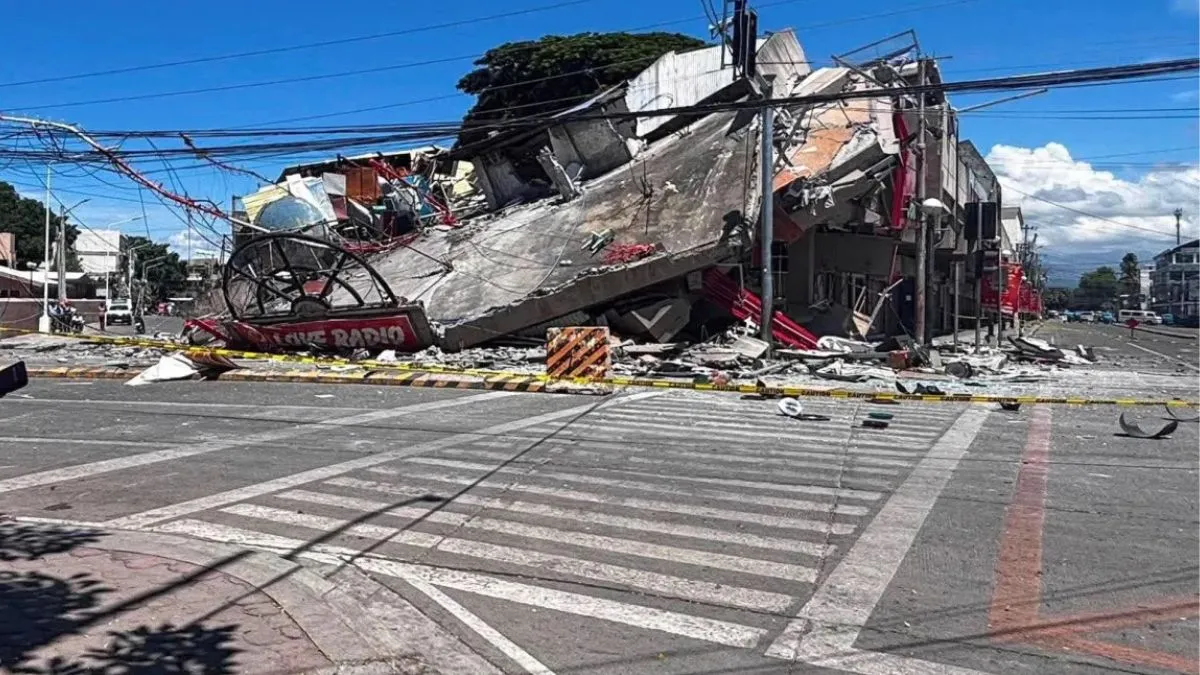
Recently, on 8 June 2026, in the morning, a powerful earthquake of around 7.8 magnitude has been seen in the Celebes Sea near the Philippines on Monday, raising the possibility of a tsunami for the country’s coastlines, according to United States monitoring agencies.
A tsunami advisory has also been issued for Guam, according to the U.S. Tsunami Warning System. There was no threat to the Pacific coastlines of the United States and Canada.
As we know, earthquakes are one of the most destructive natural disasters on Earth. They are caused by the sudden release of energy in the Earth's crust. In the past decade (2015-2026), several significant Earthquakes have resulted in a huge loss of life globally.
UPSC aspirants must know such events, as they are related to General Studies Paper 1 (Geography) and General Studies Paper 3 (Disaster Management).
The magnitudes in this article have been taken from the official scientific agency of the United States government, which monitors seismic activity worldwide.
Let’s explore the top 10 deadliest earthquakes in the past 10 years with a detailed overview.
What Is an Earthquake?
An earthquake is an intense shaking of Earth’s surface. The shaking is caused by movements in Earth’s outermost layer.
Top 10 Deadliest Earthquakes in the Past 10 Years
| Rank | Earthquake | Magnitude (Mw) | Date |
| 1 | Kamchatka, Russia Earthquake | 8.8 | 29 July 2025 |
| 2 | Philippines earthquake | 7.8 | 8 June 2026 |
| 3 | Turkey-Syria Earthquake | 7.8 | 6 February 2023 |
| 4 | Nepal Earthquake | 7.8 | 25 April 2015 |
| 5 | Myanmar Earthquake | 7.7 | 28 March 2025 |
| 6 | Indonesia (Sulawesi) Earthquake | 7.5 | 28 September 2018 |
| 7 | Iran (Kermanshah) Earthquake | 7.3 | 12 November 2017 |
| 8 | Haiti Earthquake | 7.2 | 14 August 2021 |
| 9 | California Earthquake | 7.1 | 06 July 2019 |
| 10 | Anchorage, Alaska, Earthquake | 7.1 | 30 November 2018 |
Source: United States Geological Survey (USGS) Earthquake Hazards Program
Detailed Overview of Each Earthquake
1. Kamchatka, Russia Earthquake (2025)
Date: 29 July 2025
Magnitude: 8.8 Mw
Epicentre: East of Petropavlovsk-Kamchatsky, Russia
This is the largest and deadliest Earthquake is occured. On 29 July 2025, massive 8.8 magnitude earthquake struck offshore of the Kamchatka peninsula.
his mainshock was the climax of an intense seismic sequence that began 10 days prior, which included a major 7.4 magnitude earthquake on 20 July and multiple 6.6 magnitude tremors.
Key facts:
-
This took place due to tectonic movement involving shallow reverse faulting along the Kuril-Kamchatka subduction zone interface, where the Pacific plate subducts northwest beneath the North America plate at a rapid rate of approximately 80 mm/yr.
-
It capped off a highly volatile 10-day period that witnessed 50 preceding earthquakes of magnitude 5.0 or greater.
- It represents one of the most significant releases of seismic energy in the region over the last century, striking less than 30 km from the epicentre of the historic 1952 magnitude 9.0 earthquake.
2. Philippines Earthquake (2026)
Date: 08 June 2026
Magnitude: 7.8 Mw
Epicentre: Off the coast of Sarangani Province, Philippines
This is the strongest earthquake to hit the Philippines since 1990. In the early morning hours of 8 June 2026, a powerful 7.8 magnitude offshore earthquake struck the southern region of Mindanao. The primary shock triggered a severe aftershock sequence, including a major 6.5 magnitude tremor shortly after.
The earthquake generated substantial damage across the southern provinces and triggered urgent tsunami warnings across the region, with waves reaching up to 1.4 metres hitting nearby coasts. Initial assessments report at least 4 to 8 deaths and over 200 injuries, with widespread power outages and building collapses reported in the major commercial hub of General Santos City.
Government forces and local disaster agencies immediately launched mass evacuations to higher ground for over a million people situated in the high-intensity impact zones.
Key facts:
- This took place due to tectonic movement along the Cotabato Trench.
- It had a devastating effect on the Mindanao region and triggered regional tsunami warnings in Indonesia and Malaysia.
- It prompted an immediate, large-scale national emergency response ordered by the presidency.
3. Turkey-Syria Earthquake (2023)
Date: 6 February 2023
Magnitude: 7.8 Mw
Epicentre: Gaziantep Province, Turkey
This is one of the deadliest earthquakes in the past 10 years. On 6 February 2023, a 7.8 magnitude earthquake hit southern Turkey and the northern part of Syria in the early morning hours. A second large earthquake, also magnitude 7.7, occurred in the same area only hours later.
The two shocks wrought catastrophic damages. USGS data shows that 59,000+ people died in Turkey and Syria. In Turkey, 38,900 buildings were destroyed and 14 million people were directly impacted. The quake was the most deadly in recorded history for Turkey and one of the most deadly in the world in the 21st century.
Key facts:
-
This took place on the East Anatolian Fault Zone.
-
It had a devastating effect on both Turkey and Syria.
-
It prompted a huge international humanitarian response.
4. Nepal Earthquake (2015)
Date: 25 April 2015
Magnitude: 7.8 Mw
Epicentre: Near Kathmandu, Nepal
The 2015 Nepal earthquake is the worst natural disaster in Nepal in more than 80 years. According to the USGS, the tremor measured 7.8 on the Richter scale and its epicenter was some 80km north west of Kathmandu. Almost 9000 were killed and 22,000 were injured. 8.0 million people's lives were impacted by the disaster. On 12 May 2015, a major aftershock, with magnitude of 7.3 on Richter scale, struck Nepal adding to the devastation. Historic monuments and thousands of houses were destroyed. India has contributed significantly to the relief work during Operation Maitri.
Key facts:
-
It took place at the border between the Indian and Eurasian tectonic plates.
-
Operation Maitri for relief and rescue was undertaken in India.
-
In Kathmandu, UNESCO World Heritage Sites were highly affected.
5. Myanmar Earthquake (2025)
Date: 28 March 2025
Magnitude: 7.7 Mw
Epicentre: Near Sagaing, Myanmar (close to Mandalay)
A 7.7 magnitude earthquake struck central Myanmar near Mandalay, the country's second-largest city, on 28 March 2025. The earthquake was shallow in depth, which increased the damage on the surface. As per USGS data, this was the deadliest earthquake event of 2025. More than 5,400 people were confirmed dead, though the actual toll is believed to be higher due to limited access in conflict-affected areas. The earthquake impacted 17 million people and caused widespread destruction across central Myanmar. Tremors were also felt in neighbouring countries including Thailand and China.
Key facts:
-
The earthquake struck along the Sagaing Fault, a major strike-slip fault in Myanmar.
-
The ongoing civil conflict in Myanmar hampered relief operations.
-
Thailand also suffered damage, with deaths reported in Bangkok.
6. Indonesia Sulawesi Earthquake and Tsunami (2018)
Date: 28 September 2018
Magnitude: 7.5 Mw
Epicentre: Palu Region, Sulawesi Island, Indonesia
The Sulawesi earthquake of 2018 struck the Palu region of Indonesia with a magnitude of 7.5. It triggered a devastating tsunami with waves of up to 1.5 metres, which swept through the city of Palu. In addition to the tsunami, the earthquake caused a phenomenon called soil liquefaction, where the ground behaved like a liquid, swallowing entire neighbourhoods. USGS data confirms over 4,340 deaths, making it the deadliest earthquake of 2018. Indonesia, which sits on the "Ring of Fire," is highly vulnerable to such disasters.
Key facts:
-
The earthquake caused both a tsunami and soil liquefaction.
-
The "Ring of Fire" is a region around the Pacific Ocean with high seismic and volcanic activity.
-
Indonesia is one of the most earthquake-prone countries in the world.
7. Iran Kermanshah Earthquake (2017)
Date: 12 November 2017
Magnitude: 7.3 Mw
Epicentre: Eastern Kermanshah Province, Iran (near the Iraq border)
A magnitude 7.3 earthquake struck the eastern part of Iran's Kermanshah Province on 12 November 2017. USGS recorded this as the strongest earthquake of 2017. Over 630 people were killed and more than 8,100 were injured. Additional deaths were reported across the border in Iraq. The earthquake caused major damage to residential buildings and displaced thousands of people.
Key facts:
-
The earthquake occurred along the Zagros Mountain fold and thrust belt.
-
Iran is one of the most seismically active countries in the world.
-
The event was felt in six countries, including Iraq, Turkey, Kuwait, and Pakistan.
Why Do Earthquakes Happen?
Although the Earth looks like a pretty solid place from the surface, it’s actually extremely active just below the surface. The Earth is made of four basic layers: a solid crust, a hot, nearly solid mantle, a liquid outer core and a solid inner core.
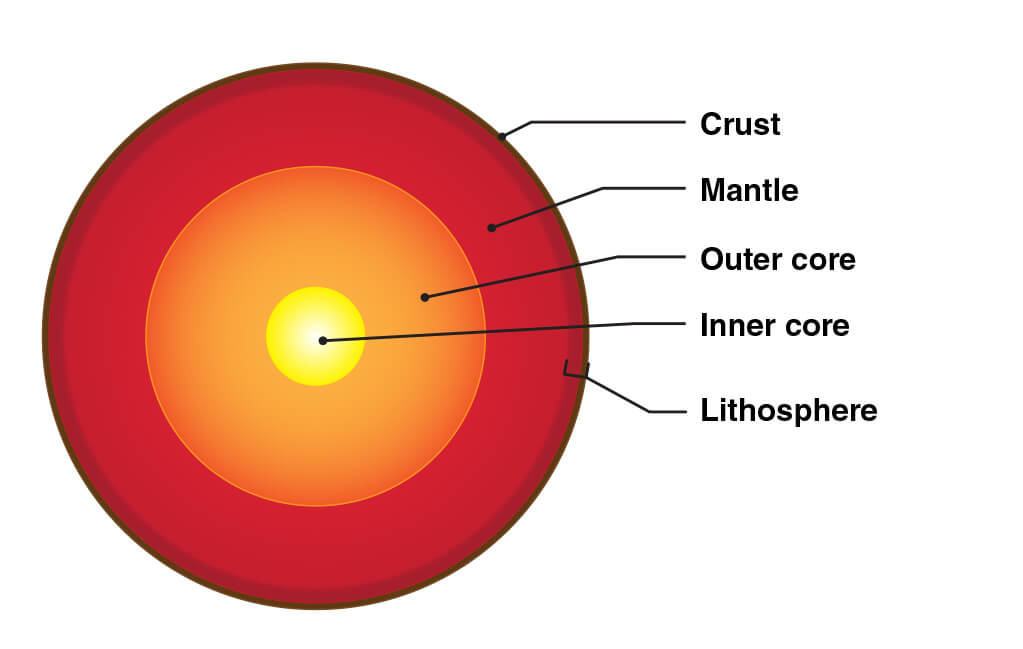
Source: spaceplace
Earthquakes are caused by shifts in the outer layers of Earth, a region called the lithosphere.
What is Lithosphere?
The lithosphere is the outermost layer of Earth, which is composed of the crust and the brittle part of the upper mantle. The term lithosphere is derived from the Greek words "lithos," meaning stone, and "sphaira," meaning globe or ball.
Source: spaceplace
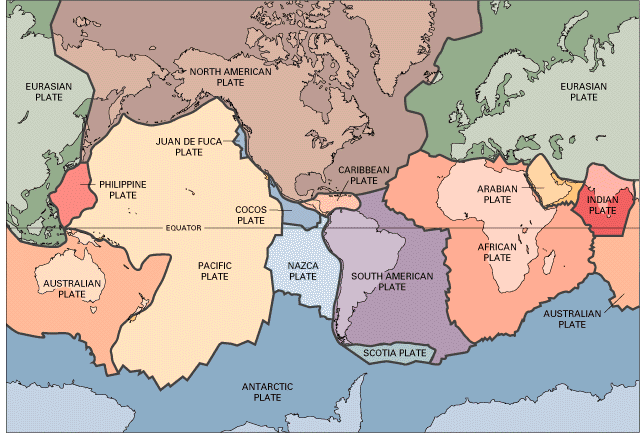
The lithosphere isn’t a continuous piece that wraps around the whole Earth like an eggshell. It is composed of large pieces of puzzle, which is also called tectonic plates. The tectonic plates are in motion as they move around in the viscous (slowly moving) mantle layer underneath.
The earth's crust is broken into huge plates which have drifted very slowly on the earth's surface for millions of years.
This continuous motion puts stress on the earth's crust. When the stresses get too large, it leads to cracks called faults. When tectonic plates move, it also causes movements at the faults. Earthquakes occur when the earth's crust suddenly moves along a fault line.
How Do We Measure Earthquakes?
The energy from an earthquake travels through Earth in vibrations called seismic waves. These seismic waves can be recorded on an instrument called seismometer. A seismometer is sensitive to seismic waves that pass under it and produces a record in the form of a series of zig zags.
Scientists can determine the time, location and intensity of an earthquake from the information recorded by a seismometer. This record also tells about the rocks that the seismic waves went through.
India's Seismic Vulnerability
India is divided into four Seismic Zones (Zone II to Zone V) based on earthquake risk. Zone V is the most critical and includes areas like the northeastern part of India, Jammu and Kashmir, Himachal Pradesh, Uttarakhand, and parts of Gujarat and Bihar. The Himalayan region is especially at risk, as it is situated on the boundary between the Indian and Eurasian plates, which are still colliding and exerting pressure.
So, in the past 10 years, there have been many earthquakes that can be seen, but these top 10 earthquakes are the deadliest in the 21st century. The Turkey-Syria earthquake in 2023, the Nepal earthquake in 2015, and the Myanmar earthquake in 2025 are among the deadliest ones, which have destructed many lives.
So, for UPSC aspirants, or any other aspirants, understanding the geographic, scientific, and humanitarian dimensions of these events is important for your examination and for having a broader understanding of global awareness.

He has contributed to top platforms like Mentorship India, IAS BABA, and IAS SARTHI, delivering engaging articles on trending topics and global affairs. As a content writer for Jagranjosh.com, Prabhat specializes in crafting high-quality, insightful content for the G.K. and Current Affairs section, driving engagement and providing value to a wide audience.
Reach him at prabhat.mishra@jagrannewmedia.com, and explore his work on Jagranjosh.com for the latest updates and analyses!

-1780891318675_t.webp)

-For-UPSC,-PCSâs,-SSC,-Banking-and-Other-Exams,-Download-PDF-Here--1780835278117_t.webp)