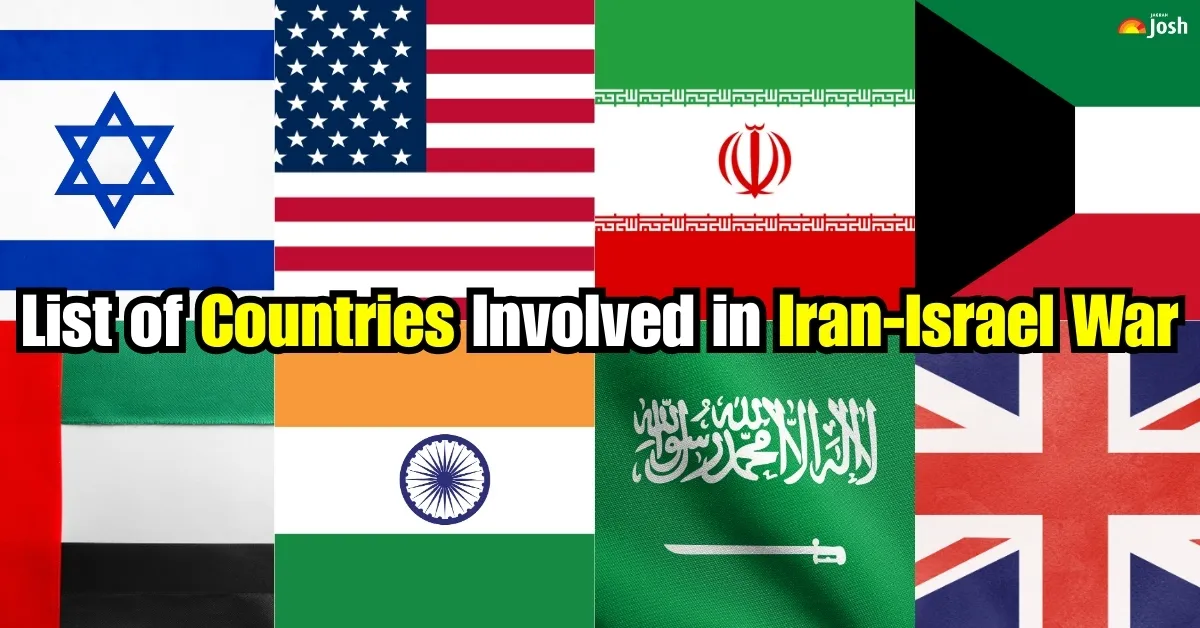
The Israel-Iran Conflict, which started on February 28, 2026, has entered its 4th week. Both countries, Israel and the United States, launched Operation Roaring Lion, a.k.a. Epic Fury, against Iranian military and nuclear sites, destroying several key leaders.
This Iran vs Israel conflict between the two countries has moved from a shadow war to full-fledged open military action. This is now affecting the whole of the Middle East, including countries like the UAE, Kuwait, Saudi Arabia, and more.
But there are a few countries which are directly or indirectly involved in the Iran vs Israel war. In this article, we will look at those nations that are affected by the Iran vs Israel war.
ALSO READ: List of Middle East Countries in the World: Check Capitals, Currency and Area
List of Countries that are involved in Israel and Iran Conflict

Source: Britannica
The Israel vs Iran war has now become a direct conflict in early 2026, involving many countries in the Middle East and elsewhere. The following table shows which countries are involved and the effects they are experiencing.
| Involvement Type | Countries Involved | Nature of Involvement / Impact |
| Direct Combatants | Israel, Iran, United States | There was a direct exchange of strikes and high-intensity military operations during Operation Epic Fury and Roaring Lion. |
| Active Military Support | United Kingdom, Lebanon (via Hezbollah) | The UK is offering defensive support and allowing access to its bases. At the same time, Hezbollah is launching direct rocket attacks on Israel. |
| Retaliation Targets | Saudi Arabia, UAE, Qatar, Bahrain, Kuwait, Jordan, Iraq | Some countries that host US bases or are US allies have been targeted by Iranian missile and drone strikes in retaliation. |
| Affected Indirectly | Oman, Azerbaijan, Cyprus, Turkey, India, China | Impacted by stray strikes, transit/shipping disruptions (Strait of Hormuz), or serving as mediators. |
| Diplomatic/Political | Russia, France, Germany, EU Member States | Nations are involved in condemnation, calls for diplomacy, or supporting one side through official statements. |
1. Israel
Israel, as a main participant, is motivated by its long-standing policy to stop Iran's nuclear programme, which it sees as a serious threat. In late February 2026, Israel began "Operation Roaring Lion", a large series of airstrikes against Iranian leaders and military sites. This move from indirect conflict to open fighting has led to intense missile exchanges.
2. Iran
Iran is at the centre of this conflict and is seen as the main regional opponent. After Supreme Leader Ali Khamenei was assassinated in March 2026, Iran responded with "Operation Truthful Promise 4", launching hundreds of drones and missiles at Israel and nearby US-allied countries. Iran also closed the Strait of Hormuz, using control over energy supplies to put pressure on the international community.
3. United States
The United States joined the conflict as a direct partner to Israel, starting "Operation Epic Fury" during President Trump's administration. The US has carried out large-scale airstrikes on Iranian missile sites and naval forces to stop nuclear escalation. In addition to these attacks, the US is also defending its many military bases in the Gulf, which have often been targeted by Iranian retaliation.
Conclusion
In early 2026, the conflict between Israel and Iran grew into a direct and large-scale war, reshaping the Middle East. Israel and the United States are working together to strike Iran's nuclear and missile sites, but the fighting has spread further.
Groups supported by Iran are now active in Lebanon and Iraq, and countries such as Saudi Arabia, the UAE, and Jordan have come under retaliatory attacks.
The United Kingdom is providing defence support, while Russia and China are facing economic fallout. This conflict has turned into a global crisis, affecting security and energy markets worldwide.
WHAT'S NEXT: What are Gulf Countries? Check Meaning, Members, Map, List and Role in Middle East



Comments
All Comments (0)
Join the conversation