Franz Kafka is remembered as one of the most outstanding literary voices. His works focus on alienation, bureaucracy, fear, and the issues of people in a world not knowing anything.
Kafka is renowned because of the bizarre, dream-like scenarios in his writing, in which characters come into contact with some unidentified systems of authority.
Due to this unique style, the word Kafkaesque nowadays is common in describing situations that are confusing or oppressive in the contemporary world.
The Metamorphosis is a novella that is regarded as a breakthrough in his writing. Let’s explore his earlylife, education journey, his writing career, with major literary works, and quick facts
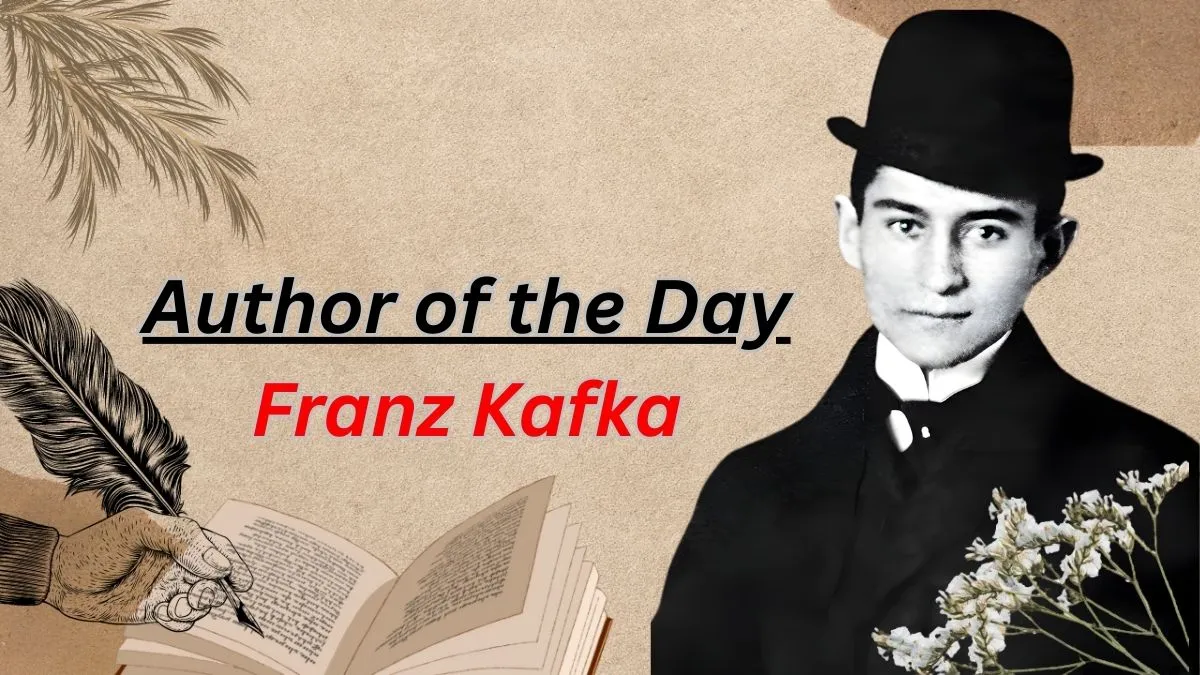
Author of the Day: Franz Kafka
Source: pmc
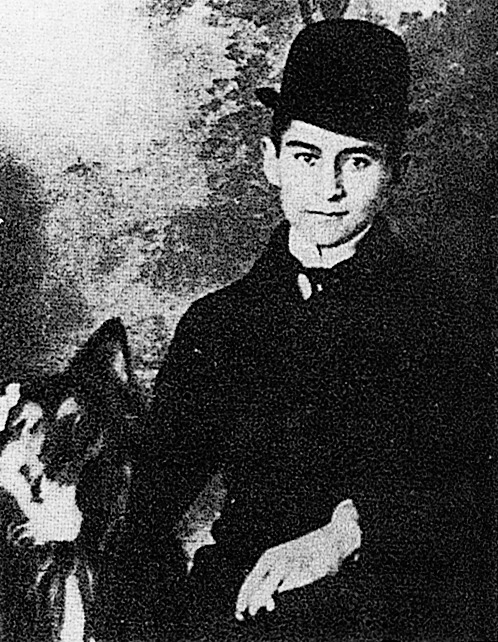
Franz Kafka is ranked among the most intriguing and significant literary personalities of the 20 th century.
His most famous writing work is in the form of dreamy situations that are strange, but where the characters are mostly confronted with systems of power that are mysterious.
Quick Facts About Franz Kafka
| Category | Details |
| Full Name | Franz Kafka |
| Born | July 3, 1883 |
| Birthplace | Prague |
| Profession | Novelist and Short-Story Writer |
| Education | Law degree from Charles Ferdinand University |
| Literary Style | Modernism, Existential Fiction |
| Famous Works | The Metamorphosis, The Trial |
| Died | June 3, 1924 |
| Burial Place | New Jewish Cemetery |
Who was Franz Kafka?
Franz Kafka was a German-language novelist and short-story writer from Prague, who is widely regarded as one of the most influential literary figures of the 20th century.
His writing skills are a combination of the elements of realism, symbolism, and surrealism, often portraying characters struggling against mysterious authorities or complex bureaucratic systems.
Kafka’s writing style is known for its psychological depth, dark humour, and philosophical themes such as alienation, guilt, and existential anxiety.
| Unique Insight: Kafka once instructed his friend Max Brod to destroy all his unpublished manuscripts after his death. Fortunately for literature lovers, Brod refused—and thanks to that decision, the world was able to discover some of the greatest works of modern literature. |
Early Life and Family Background of Franz Kafka
Source: kafka-online
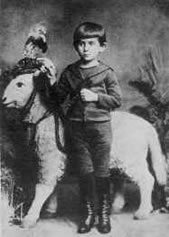
Franz Kafka was born in a Hungarian family, and it was a Jewish family of the middle class, which spoke German. He was the first child of six, but two of his little brothers passed away when they were still young.
-
His family background has been especially dismal as his three sisters, Gabrielle, Valerie, and Ottilie, were killed in Nazi concentration camps in World War II.
-
Kafka is the son of Hermann Kafka, in whose life a successful shop selling clothing accessories was among the businesses that he started and managed. He was also known to be a strong personality with strict behaviour that made him have a hard relationship with his sensitive son.
-
Julie Kafka mother of Kafka, was well educated and kept on aiding in the running of the family business. Kafka and his siblings were largely brought up by governesses and servants because of their hectic family life.
Education Journey
Kafka’s education reflected his father’s ambitions for social advancement. He attended German-language schools in Prague, which were considered prestigious at the time.
His education journey was:
-
In 1901, Kafka graduated from the Altstädter Gymnasium, a rigorous secondary school that emphasised classical education. During his studies, he learned Latin, Greek, literature, and history.
-
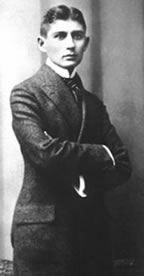
Afterwards, he joined Charles Ferdinand University. Initially, he chose chemistry but switched to law after two weeks. The law provided him with stable career prospects and eventually led to his Doctor of Law degree in 1906.
-
It was during his university years that Kafka met Max Brod, who would later become one of the most important figures in preserving Kafka’s literary legacy.
Source: kafka-online
Professional Career
Kafka worked primarily in the insurance sector. His professional career was:
-
In 1907, he joined an Italian insurance company, but the long working hours made it difficult for him to focus on writing.
-
A year later, he found a more stable position at the Workers’ Accident Insurance Institute for the Kingdom of Bohemia, where he worked for more than a decade.
-
Kafka often referred to this employment as his “bread job,” meaning it helped him earn a living while he pursued his true passion—writing.
-
Despite his lack of enthusiasm for office work, Kafka proved to be a responsible employee and received several promotions before retiring in 1922 due to health issues.
How did Franz Kafka’s struggles with Health issues?
He had physical and mental health issues in startinf of his age, and when he started his writing work, he suffered insomnia, anxiety, migraines, and digestive problems.
In 1917, he was diagnosed with Tuberculosis, which significantly affected his health during his later years.
Despite attempts to improve his health through vegetarian diets and natural therapies, the illness continued to worsen. Kafka eventually passed away on June 3, 1924, at the age of 40.
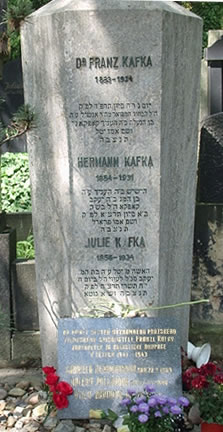
Source: kafka-online
Major Literary Works
Kafka’s works are famous for their symbolic and philosophical depth. Many were published only after his death.
First editions of his work:
-
Betrachtung. Leipzig: 1912.
-
Die Verwandlung. Leipzig: 1915.
-
In der Strasskolonie (In the Penal Colony). Leipzig: 1919.
Most Famous Works
| Work | Type | Year |
| The Metamorphosis | Novella | 1915 |
| The Trial | Novel | Published posthumously |
| Before the Law | Short Story | 1915 |
| In the Penal Colony | Short Story | 1914 |
| A Hunger Artist | Short Story | 1922 |
| A Country Doctor | Short Story | 1919 |
| The Judgment | Short Story | 1913 |
| The Great Wall of China | Story | 1931 |
| Josephine the Singer, or the Mouse Folk | Story | 1924 |
Why Franz Kafka Still Matters Today
The works of Franz Kafka are timeless as they reflect the fears of contemporary life, bureaucracy, extreme loneliness, and meaninglessness.
His tales can be read in universities all across the globe, and they still have an impact on production filmmakers, philosophers, and writers.
The term “Kafkaesque” has even found its way into the daily lexicon of people as a mantra to describe a scenario whereby one is trapped in a complicated and ridiculous system.





Comments
All Comments (0)
Join the conversation