Show Key Points
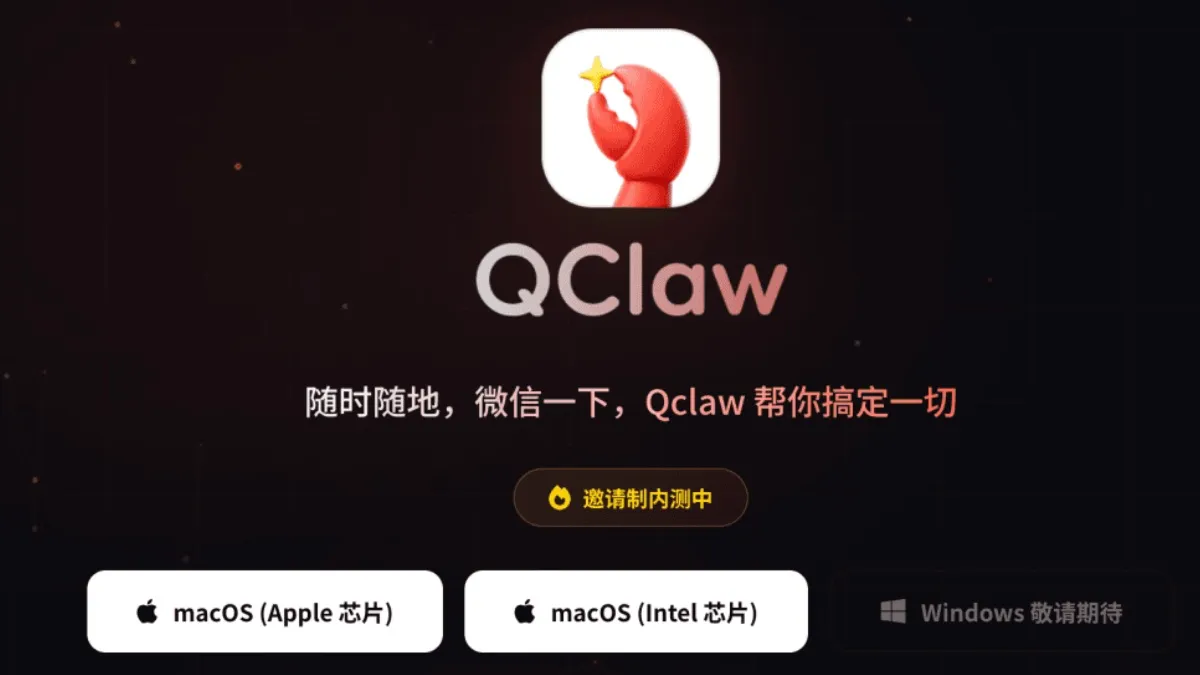
Tencent, one of China's largest tech companies, is said to be testing a new AI software system called QClaw AI internally referred to as "Little Lobster". QClaw AI is meant to operate as a digital assistant for users to communicate with their computer systems and other applications in order to perform various tasks over popular messaging apps such as WeChat and QQ.
This development shows Tencent's increased investment in AI automation systems in parallel with other global technology firms that are racing to develop systems that will help their users perform very complex digital jobs.
Check Out: "Equality Cannot Wait": UN Women Director’s Powerful Speech for International Women’s Day
What Is QClaw AI or ‘Little Lobster’?
QClaw AI is a possible prototype framework for creating AI-based systems to automate user-level software operations. Unlike traditional chatbots, it will not simply respond with a text-based answer, but rather perform operations on a user’s behalf, controlling the functionality of their computer and actually executing commands within various software applications.
According to speculation, QClaw AI has the capability to interact with user interfaces (i.e., the way that humans interact with computers) by clicking on buttons, selecting menu options, and performing multi-step operations.
Because of its autonomous behaviour, QClaw AI will be referred to as an agentic AI system—an artificial intelligence that facilitates human interactions through actioning tasks, as opposed to only providing information.
Tencent’s internal nickname for QClaw AI is “Little Lobster.” This could refer to the experimental approach to developing QClaw AI, which is part of Tencent’s larger efforts related to artificial intelligence.
Integration with WeChat & QQ
A significant aspect of QClaw AI is its potential to integrate with Tencent’s primary messaging applications, WeChat and QQ, which are used by billions of people in China and internationally.
If fully developed, QClaw AI integrated with WeChat and QQ has the capacity to allow users to:
-
Send chat messages to control the AI.
-
Automate software functions on their PCs.
-
Access applications and obtain information without leaving the messaging application(s).
An example of this may be a user requesting their AI assistant on WeChat to open a file, run a program, or perform a task on their computer, in turn, their AI assistant will carry out the action on the computer.
How It Could Work in Practice?
In theory, it appears that Tencent's new QClaw AI tool will operate by connecting messaging interfaces with agents that work from the user's computer.
This would work as follows in theory:
-
A user requests an action through WeChat or QQ.
-
QClaw AI interprets the command (via natural language processing).
-
The AI agent performs the action on the user's device.
-
Confirmation or results are delivered back in the chat.
With this type of connection between messaging apps and AI, these applications have now become a form of command center for automating tasks through the use of AI.



Comments
All Comments (0)
Join the conversation