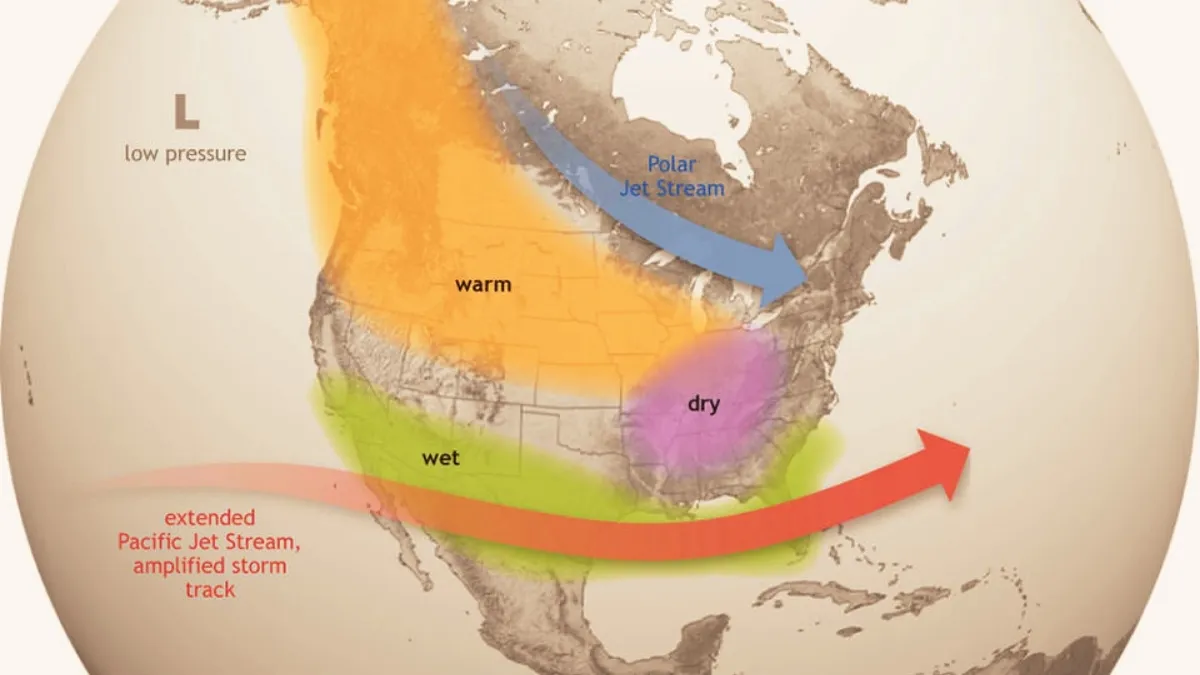
NOAA and World Meteorological Organization climate forecasters issued a warning on March 10, 2026, that El Niño events may quickly build in summer, leading to hotter temperatures and wild storms worldwide after La Niña events subside.
The climate phenomenon, caused by warmer waters in the Pacific Ocean shifting eastward, affects weather from droughts to floods, and a 50-60% possibility of July-September El Niño events is predicted by NOAA climate models.
Human-induced climate change is enhanced by El Niño events, which may lead to record-high temperatures in 2026, just like 2023-24 El Niño peak events.
Societies worldwide are gearing up for changes in neutral ENSO climate conditions.
Weather Watch: El Niño Could Arrive Soon, Bringing Hotter Temperatures and Wild Storms
La Niña weakening creates openings for El Niño events in May-July 2026, potentially moderate to strong according to ECMWF and experts.
Increases global temperatures by 0.2 to 0.5 degrees Celsius above normal, intensifying extremes in the midst of the climate crisis.
Effects include droughts in the Indian monsoon season, Australian bushfires, and floods in Peru, while the U.S. prepares for diverse changes.
60% probabilities of a neutral outcome through spring are forecasted, but El Niño probabilities will increase later.
What are the Niño and La Niña?
El Niño features unusually warm equatorial Pacific waters weakening trade winds, causing global weather flips like heavy rains in the Americas and droughts elsewhere.
La Niña does the opposite with cooler waters and stronger winds, flipping patterns. These opposites cycle every 2-7 years, influencing 30% of Earth's weather; neutral phases balance between.
Read more in detail about El Niño and La Niña Explained: Causes, Effects, and Impacts.
Will El Niño impact the United States?
Yes, it brings Southern California wetter winters, active Pacific storms, and Atlantic hurricanes with milder temperatures, as well as dry basins in the Southwest.
The Northern U.S. has cool and stormy weather compared to La Niña’s cold snaps. The return in 2026 could bring heatwaves and floods, as forecasted by AccuWeather, and farmers and cities prepare early.
Know about NASA’s Satellite Returns to Atmosphere after 14 Years here.
Global focus is on the Pacific as the chances of El Niño rise, making preparations for the weather even stronger. Safer seasons lie ahead with timely action.



Comments
All Comments (0)
Join the conversation