Show Key Points
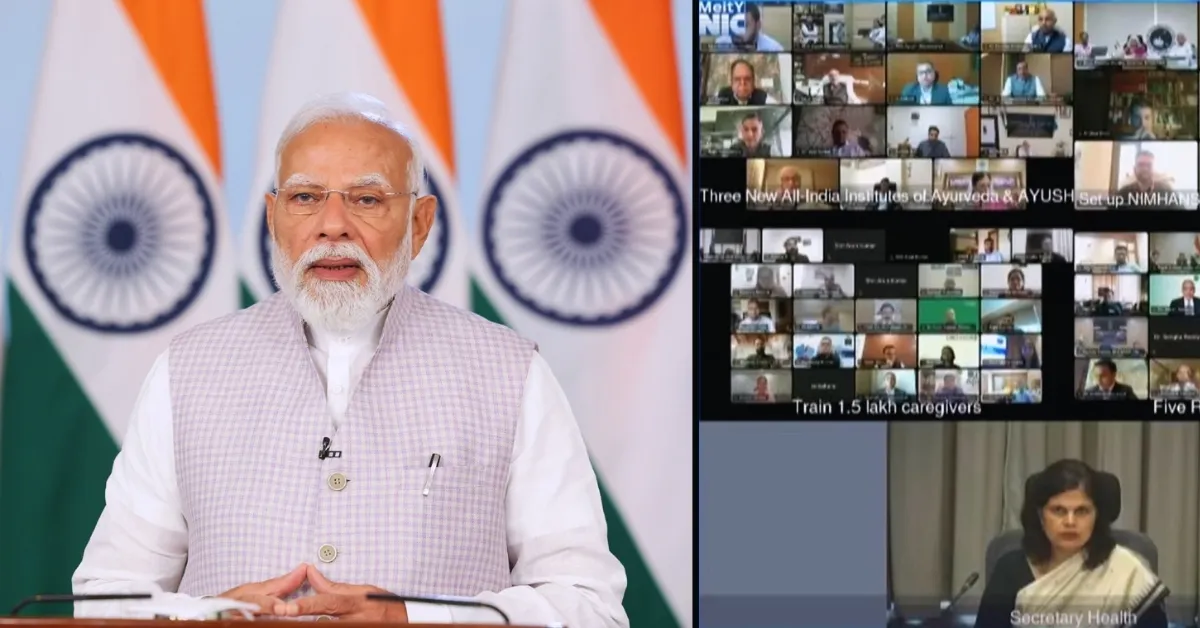
Post Budget Webinar: Prime Minister Shri Narendra Modi addressed the Post Budget 2026-2027 Webinar on 9th March 2026 via video conferencing on the theme “Sabka Saath Sabka Vikas-Fulfilling Aspirations of People”. Multiple breakout sessions will be organised across sectors including education and skilling, health and AYUSH, tourism and hospitality among others.
The discussion is a hallmark of the government’s approach to inclusive governance, serving as a platform to deliberate on how the Union Budget 2026-27 will tangibly improve the lives of citizens across all strata of society.
It will provide a platform for collaborative engagement among the government, industry and domain experts to translate the policy vision outlined in the Budget into actionable strategies.
PM Modi’s Post-Budget Vision (2026-27): Sabka Saath Sabka Vikas-Fulfilling Aspirations of People
Sabka Saath Sabka Vikas is an economic model centered on Inclusive Growth. Unlike traditional "trickle-down" economics, this model focuses on "bottom-up" empowerment.
The Four Pillars of Aspiration:
-
Gyan (Knowledge): Focusing on youth and educational reform.
-
Gareeb (The Poor): Ensuring basic necessities through DBT (Direct Benefit Transfer).
-
Yuva (The Youth): Employment generation through the "Care" and "Digital" economies.
-
Anndata (The Farmers): Modernizing agriculture through Agri-tech.
2. Key Policy Shifts Discussed in the 2026 Webinar:
Prime Minister discussed the specific sectoral shifts such as
A. The Transition to a "Care Economy":
One of the most significant takeaways was the formalization of the Care Economy. As India's demographic profile shifts, the budget prioritizes:
-
Skill Standardization: Creating a certified workforce for elderly and childcare
-
Global Mobility: Training Indian healthcare professionals to meet international standards and the Global Demand for Caregivers
-
This positions Indian youth as a primary workforce for the world’s aging populations (especially in Europe and Japan), requiring new international certification standards.
B. Saturation-Level Coverage (Antyodaya):
The PM emphasized "Saturation," an administrative term meaning 100% reach of government schemes.
Educational Insight: Saturation reduces corruption and eliminates middle-men, ensuring that trustworthiness is built between the citizen and the state.
C. The "Orange Economy" (AVGC) Strategy:
PM Modi specifically identified Animation, Visual Effects, Gaming, and Comics (AVGC) as a sunrise sector. This isn't just about entertainment; it’s a strategic move to turn India’s creative youth into global content exporters.
D. Industry-Campus Integration:
A major educational shift was his call to turn university campuses into "Industry Collaboration Hubs." He advocated for a move away from theoretical research toward "Research-Driven Learning" that solves real-world corporate and social problems.
E. Tele-medicine 2.0:
While acknowledging its success, the PM was candid about the flaws. He called for a simplified User Experience (UX). The goal is to make Tele-medicine so easy that a non-tech-savvy villager can use it without assistance.
F. Tourism as "City Branding":
Shifting the tourism narrative from "sightseeing" to "Destination Branding." By developing new, non-traditional spots, the government aims to create "vibrant cities" where the local community, cleanliness, and digital connectivity act as the primary brand ambassadors
3. The Role of Technology in Fulfilling Aspirations
The 2026-27 roadmap relies heavily on Digital Public Infrastructure (DPI). The webinar highlighted how technology acts as a "Force Multiplier" for the common man:
| Technology Tool | Educational Purpose | Impact on Aspirations |
| PM-Kisan & drones | Precision Farming | Higher crop yield & lower costs |
| PM Vishwakarma | Artisan Empowerment | Global market access for local crafts |
| Digital Skilling | Vocational Training | Bridging the rural-urban job gap |
4. Analysis: Why the "Post-Budget Webinar" Format Works
- Authoritativeness: They bring together Ministry Secretaries, industry leaders, and beneficiaries to ensure the budget isn't just a "document" but a "dialogue."
- Experience: By listening to ground-level feedback, the government adapts its implementation strategy in real-time.
The theme "Fulfilling Aspirations" is a shift from Subsidies to Empowerment. The 2026 vision focuses on making India a "Developed Nation" (Vikasit Bharat) by 2047 by investing in human capital today.
PM Modi’s post-budget webinar establishes a clear roadmap for Sabka Saath Sabka Vikas and a Viksit Bharat. This innovation-driven strategy leverages digital transformation, STEM empowerment, and saturation-level governance to fulfill the aspirations of the youth while strengthening India's global leadership in tourism, sports, and sustainability.



Comments
All Comments (0)
Join the conversation