

Show Key Points
The Samagra Shiksha Scheme is an integrated scheme for school education covering the entire gamut from pre-school to class 12. The Samagra Shiksha Abhiyan (SSA), started in 2018, combines three main education programs: Sarva Shiksha Abhiyan (SSA), Rashtriya Madhyamik Shiksha Abhiyan (RMSA), and Teacher Education (TE). This aims for a single, unified education system. The Sarva Shiksha Abhiyan (SSA) now aligns with the National Education Policy (NEP) 2020. This means the SSA works to improve school access, ensure fairness, boost quality, and integrate digital technology in education. Additionally, the scheme supports the 2009 Right to Education Act.
The scheme aims to ensure that all children have access to quality education with an equitable and inclusive classroom environment which should take care of their diverse background, multilingual needs, different academic abilities and make them active participants in the learning process. The scheme has been extended for a period of five years i.e., from 2021-22 to 2025-26.
Objective of Samagra Shiksha Abhiyan
The scheme aims to provide equitable, inclusive quality education to all children, regardless of background, multilingual needs, or academic ability, fostering active participation. The core objectives are: implementing NEP 2020 and RTE Act 2009; focusing on ECCE and foundational literacy/numeracy; using a holistic, integrated, inclusive, and experiential curriculum; boosting student outcomes; bridging social and gender equity gaps; strengthening teacher training (SCERTs/DIETs); ensuring safe learning environments; and promoting vocational education.
Key components include:
- Holistic Education: Schooling is a continuous process from Pre-school to Class 12.
- Administrative Reform: A single, flexible structure that views schooling as a continuum.
- Quality: Focus on 'Teachers and Technology' through enhanced teacher training, strengthening teacher education institutions (SCERTs/DIETs), and supporting programs like Rashtriya Avishkar Abhiyan and Padhe Bharat Badhe Bharat. Library grants are increased.
- Digital Education: Implementation of 'Operation Digital Board' in secondary schools, increased use of digital technology (smart classrooms, DTH), and strengthening UDISE+, Shagun, and ICT infrastructure.
- Strengthening Schools: Better transport (Classes I-VIII), increased school grants, provision for Swachh Vidyalaya, and improved infrastructure.
- Girl Education: Upgrading KGBVs to Class 6-12, self-defence training, and enhanced support for 'Beti Bachao Beti Padhao'.
- Inclusion: Increased RTE allocations for Uniforms and Textbooks (including energized textbooks). Increased allocation for Children with Special Needs (CwSN), plus a monthly stipend for Girls with Special Needs (Classes 1-12).
- Skill Development: Vocational Skills introduced from Upper Primary, with integrated, practical, and industry-oriented vocational education for Class 9-12.
- Sports: Sports Education is now an integral part, with provided equipment grants.
- Regional Balance: Promotes balanced development, prioritizing educationally backward blocks (EBBs), LWE districts, Special Focus Districts (SFDs), Border areas, and Niti Aayog's 117 aspirational districts.
Framework of Samagra Shiksha Abhiyan
The Samagra Shiksha initiative supports the new pedagogical and curricular framework for school education, structured as 5+3+3+4.
This structure covers:
- 3 years in Anganwadi/pre-school
- 12 years in school
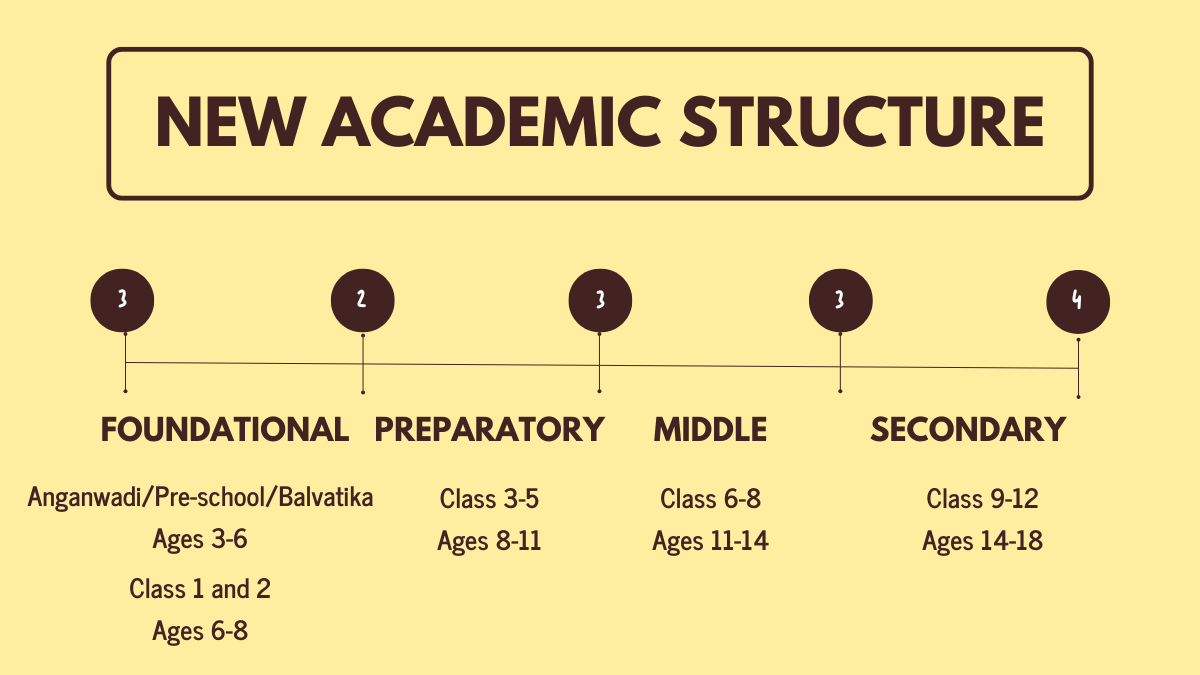
This new educational structure comprises the following stages: 5+3+3+4. Check the following comprehensive table:
| Stage | Years | Key Focus |
| Foundational Stage | 5 | Multilevel, play/activity-based learning |
| Preparatory Stage | 3 | Play, discovery, and activity-based and interactive classroom learning |
| Middle Stage | 3 | Experiential learning in the sciences, mathematics, arts, social sciences, and humanities |
| Secondary Stage | 4 | Multidisciplinary study, greater critical thinking, flexibility and student choice of subjects |
More information here:

Comments
All Comments (0)
Join the conversation