Show Key Points
World Water Day 2026: Water is the lifeblood of our planet, yet for billions, it remains a luxury rather than a right. World Water Day 2026, observed on March 22, arrives at a critical juncture in our global journey toward Sustainable Development Goal 6 (SDG 6) to ensuring clean water and sanitation for all by 2030.
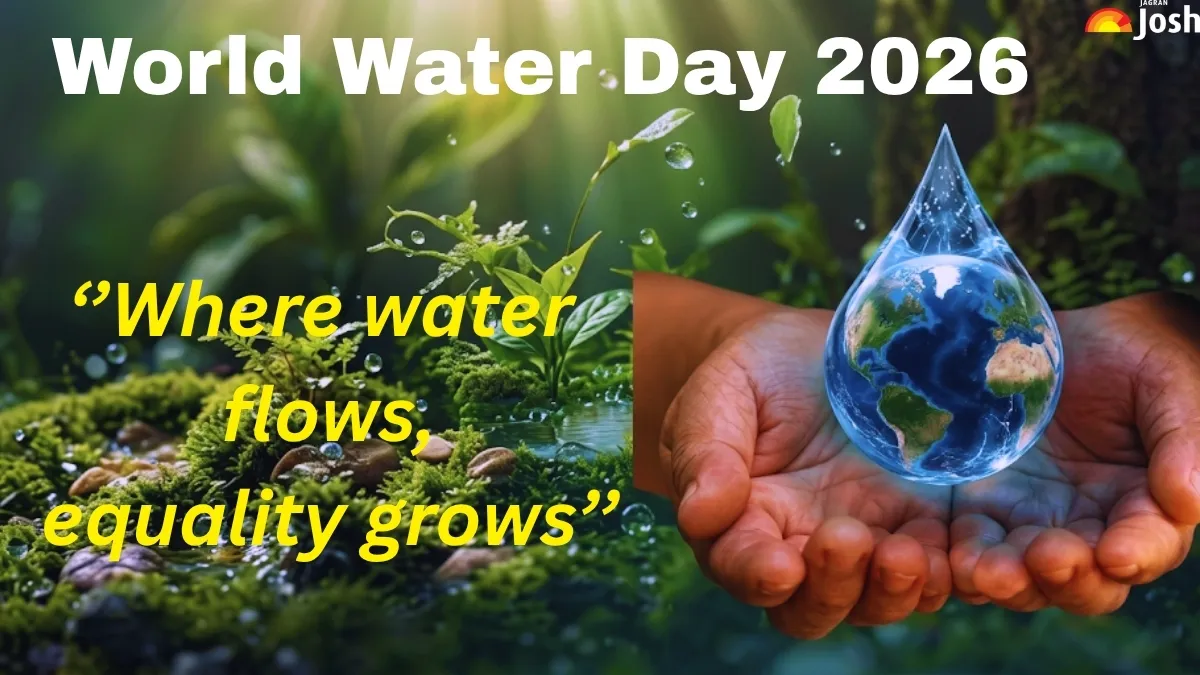
World Water Day 2026 year’s theme, "Water and Gender'' Where water flows, equality grows, moves beyond simple conservation. It highlights a profound reality of todays the global water crisis is not gender-neutral, households worldwide, women and girls are the primary water collectors, often sacrificing education and safety to secure this basic resource.
World Water Day 2026: Date and Theme
World Water Day is observed every year on March 22 for 2026, the United Nations has established a powerful and transformative theme:
-
Theme 2026: "Water and Gender"
-
Slogan:"Where water flows, equality grows"
This year's theme spotlights how the global water crisis disproportionately affects women and girls. In many parts of the world, women are the primary collectors and managers of household water, yet they are often excluded from the decision-making processes that govern water systems. The 2026 campaign calls for a rights-based approach that centers women’s leadership in water solutions.
World Water Day: History
We know that across the world on 22nd March World Water Day is celebrated. In 1993, the United Nations General Assembly decided to celebrate this day as an annual event to increase awareness among the people about the need and conservation of water. Officially it was first added in schedule 21 of the 1992 year “United Nations Conference on Environment and Development” in Rio de Janeiro, Brazil. And from the year 1993 World Water Day celebrations were started to motivate the people about the importance of water.
World Water Day Began:
-
1992 (Rio de Janeiro): The idea was first proposed during the United Nations Conference on Environment and Development (UNCED).
-
December 1992: The UN General Assembly adopted resolution A/RES/47/193, officially declaring March 22 as World Day for Water.
-
1993: The very first World Water Day was observed globally.
-
2010: The UN formally recognized the "human right to water and sanitation," further elevating the significance of this annual observance.
World Water Day 2026: Significance

World Water Day is more than just a date; it is a platform for global advocacy. Its significance lies in:
-
Supporting SDG 6: The primary goal is to support the achievement of Sustainable Development Goal 6: Clean Water and Sanitation for All by 2030.
-
Tackling Scarcity: With nearly 2.2 billion people living without access to safe water, the day raises awareness about the urgent need for infrastructure and conservation.
-
Economic & Health Impact: Safe water reduces the spread of diseases (like cholera and typhoid) and enables children—especially girls—to stay in school rather than spending hours fetching water.
-
Climate Resilience: As climate change alters weather patterns, World Water Day promotes strategies for water resilience, such as rainwater harvesting and glacier preservation.
World Water Day 2026: Key Facts
-
Unequal Burden: Globally, women and girls spend an estimated 200 million hours every day collecting water.
-
Education: Lack of private and safe sanitation facilities in schools is a leading reason why girls drop out of education during puberty.
-
Leadership Gap: Despite being the primary users, women hold less than 20% of water-related leadership roles globally.
World Water Day 2026 reminds us that a water-secure future is only possible when it is an equal future when we ensure that "water flows" for everyone, "equality grows" for the entire world. World Water Day serves as a powerful annual reminder that managing our freshwater resources sustainably is the only way to build a healthier, more inclusive future.
In 2026, the global community focuses on the profound link between water access and social equity, emphasizing that the water crisis is not just an environmental issue, but a human rights and gender issue.
Also Read: Who Won Nobel Prize of Water in 2026?



Comments
All Comments (0)
Join the conversation