-1776324101842.webp)
Women Reservation's Bill 2026: India stands at a crucial turning point in its democratic journey as Parliament takes up three transformative bills centered on women’s reservation, delimitation, and electoral restructuring. These proposals aim to reshape political representation by introducing a 33% quota for women and redrawing Lok Sabha constituencies, potentially expanding the House from 543 to 850 seats ahead of the 2029 general elections.
As India moves toward the 2029 Electoral structure, these reforms are not just legislative changes but a structural shift in how representation, electoral fairness, and constitutional principles will be redefined in the world’s largest democracy.
It also proposed a delimitation bill which is linked to population changes and census data that has sparked intense debate, particularly around the North-South representation divide.
What is Women's Reservation Bill 2026?
Women Reservation's Bill 2026 based on Nari Shakti Vandan Adhiniyam (2023), Constitution (One Hundred and Thirty-First Amendment) 131st Consititutional Amendment Bill, 2026, aiming to operationalise 33% reservation for women in the Lok Sabha and State Legislative Assemblies.
It is a transformative legislation designed to operationalize 33% reservation for women in the Lok Sabha and State Assemblies although the concept was introduced 106th Amendment) Act, 2023 in 2023, however the 2026 Bill provides the structural "trigger" needed for implementation.
Key Features of Constitution Amendment 131st Bill 2026:
-
33% reservation for women in Lok Sabha and State Assemblies.
-
The Bill proposes a roughly 57% increase in the strength of the Lower House. New Ceiling: Increases the maximum seats from 543 to 850 (815 seats for States and 35 seats for Union Territories)
-
Reservation to be implemented from the 2029 general elections.
-
Rotation of reserved constituencies after each delimitation cycle.
-
Inclusion of SC/ST women within the reserved quota.
Key Constitutional Changes:
-
Amending Article 81 and 82: The Bill shifts the definition of population from the last preceding Census" to "population as ascertained at such Census as Parliament may by law determine."
-
Seat Expansion: It proposes increasing the Lok Sabha's strength from 543 to 850 seats (815 for States and 35 for Union Territories).
-
Legislative Discretion: Parliament now gains the power to choose which Census data underpins delimitation, moving away from a strictly mechanical constitutional process.
What is Delimitation Bill 2026? Constitution Amendment 131st Bill 2026
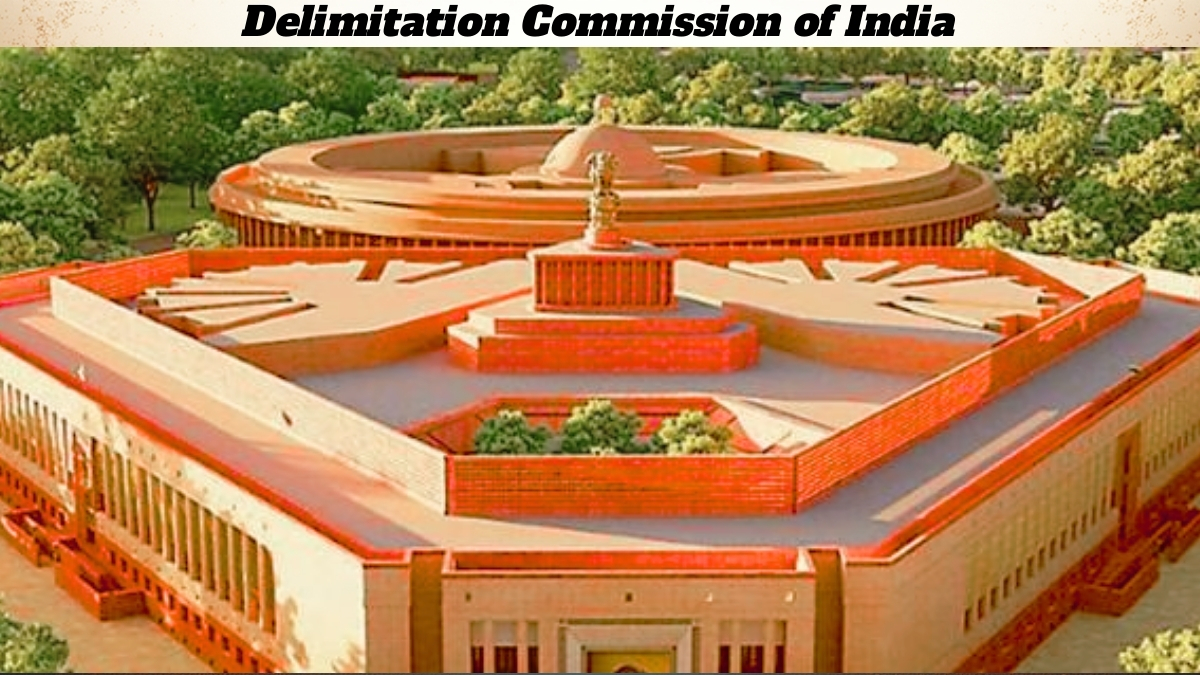
Delimitation Bill, 2026 introduced alongside the 131st Constitutional Amendment Bill was introduced in a special session of Parliament. It represents the most significant overhaul of India's electoral map in over 50 years.
A Delimitation Bill provides the legal framework for the Delimitation Commission to redraw the boundaries of territorial constituencies. The Delimitation Bill, 2026, is a historic "reset" because it breaks a decades-old freeze on seat redistribution that has been in place since the 1970s.
The primary objective is to redraw constituency boundaries and expand the size of the Lok Sabha to finally implement the 33% Women’s Reservation (Nari Shakti Vandan Adhiniyam) by the 2029 General Elections. Lifting the Delimitation Freeze under Article 82 of Indian Consititution. It removes the constitutional freeze (imposed in 1976 and 2001) that prohibited seat redistribution until the first Census after 2026
| Feature | Current Status (Pre-2026) | Proposed Changes (2026 Bill) |
| Lok Sabha Seats | 543 seats | Increased to 850 seats (up to 815 for States, 35 for UTs). |
| The "Freeze" | Seats frozen based on the 1971 Census until the first census after 2026. | Freeze removed. Delimitation can start immediately. |
| Census Data | Tied to "the last preceding census" (usually 2021/2027). | Allows the use of 2011 Census data as an interim baseline. |
| Women's Quota | Passed in 2023 but delayed. | Linked to the 2026 delimitation for a 2029 rollout. |
| Constituency Size | Massive (some MPs represent 2M+ people). | Seats will be smaller geographically for better accountability. |
How Women's Reservation is Linked to Delimitation
The women reservation bill is linked to delimitation, the implementation of the 33% women’s quota is legally tethered to the completion of delimitation because the 2021 Census has faced significant delays, now it will happen based on the last census 2021. The central government’s new legislative package proposes a workaround such as:
-
Delimitation will now be conducted based on the 2011 Census (the latest published Census).
-
The reservation cannot be applied to current seats without redrawing boundaries to identify specifically reserved constituencies.
-
The 2029 Goal by decoupling the process from the delayed 2021 Census, the government aims to ensure the quota is active in time for the 2029 General Elections.
Will the 2029 Lok Sabha Elections See 33% Women's Representation?
Yes, the 2029 elections are the primary target. By using the 2011 Census as the data foundation, the government has cleared the main legal hurdle that was stalling the 106th Amendment Act (2023).
However, the success of this timeline depends on the Delimitation Commission completing the massive task of redrawing up to 850 constituencies within the next three years. If the legislative package passes the Special Session, 2029 will be the first time in Indian history that one-third of the Lok Sabha consists of women lawmakers. New reservation bill will add more Women MPs approximately 280+ seats will be reserved for women.
Impact on Political Parties, Seat Distribution, and Electoral Strategy
The shift from 543 to 850 seats will force a total overhaul of Indian political strategy:
-
Parties must immediately begin identifying and training over 280 female candidates for the Lok Sabha alone.
-
Regional dispute as high-population states in the North like UP and Bihar will see a massive surge in MP count, increasing their influence in government formation but Southern states like Kerala and Tamil Nadu will see their relative percentage of power in the House shrink.
-
Smaller Constituencies with 850 seats, the physical size of a constituency will shrink, requiring candidates to focus on more localized, grassroots campaigning.
Women's Reservation Bill 2026: Challenges
-
The North-South Fault Line: A population-based delimitation threatens to reduce their proportional representation compared to Northern states. Southern states such as Tamil Nadu, Kerala and Karnataka have successfully limit the population growth.
-
Lowered Safeguards: The new framework lowers this to a simple majority, raising concerns about potential political gerrymandering by deferring delimitation required a two-thirds majority.
-
Federal Balance: Reconciling the "One Person, One Vote" principle with the need to protect states that followed federal population policies remains the sharpest point of debate.
Way Forward
To ensure a fair and inclusive transition to the 2029 electoral structure, the government and opposition must collaborate on:
-
Seat Allocation: Defining a formula that satisfies both the North and the South.
-
Empowering the Delimitation Commission: Ensuring the Delimitation Commission is independent and its terms of reference are clearly defined by law rather than executive discretion.
-
Expediting the 2021 Census: While the 2011 Census is a functional temporary fix, modern data is essential for accurate representation.
The women reservation and delimiataion bill 2026 represent a transformative moment. The success of these reforms will depend on whether India can balance the democratic promise of women's empowerment with the federal necessity of regional fairness.
Also Read: Full List of 33 Questions for First Phase of Census 2027