Why Do Crocodiles Eat Stones? The Reasons Will Surprise You!
Why do crocodiles eat stones? Learn how gastroliths help them digest food, stay underwater longer, and become more effective hunters in the wild.
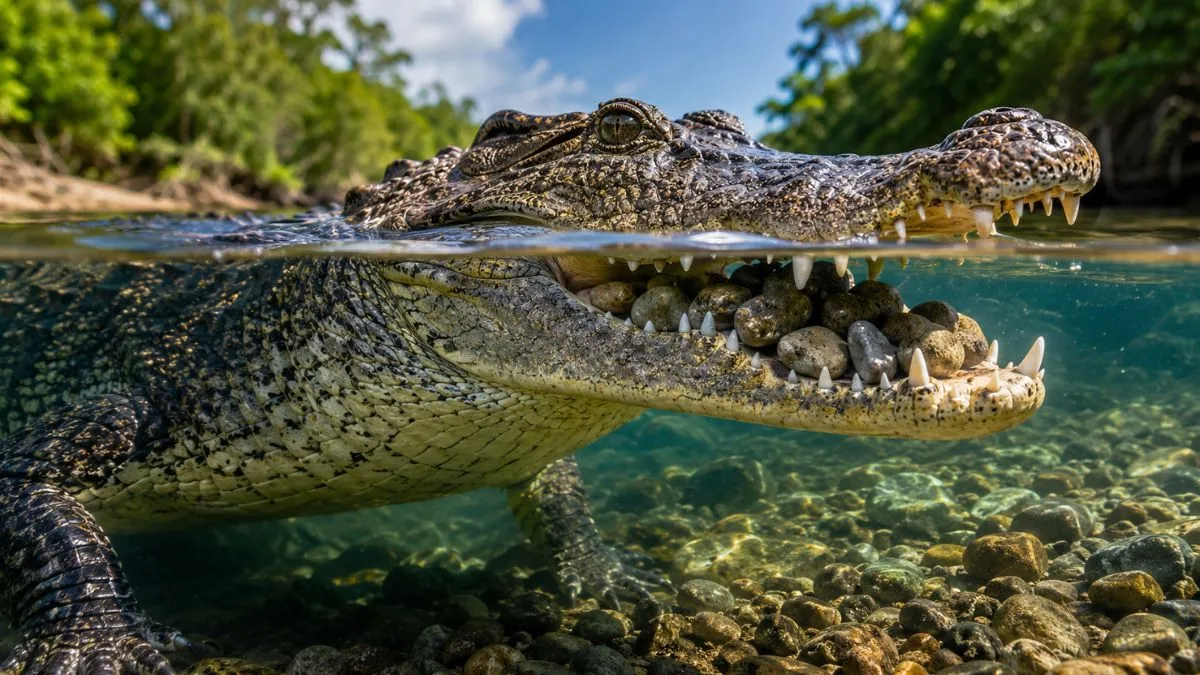
When you see a crocodile near a river, you might assume it only eats fish, birds or small animals. But there's one more thing crocodiles like to swallow, and it's not food at all. It is stones.
Yes, that's right. Crocodiles intentionally swallow stones. It's not a coincidence or a random occurrence. Scientists have studied this strange habit for many years, and the real reasons behind it are quite surprising.
Let’s explore this article in detail and know the reasons behind this.
Why Do Crocodiles Eat Stones?
Crocodiles eat stones primarily for two reasons. The stones aid them in the digestion of their food in the first place. Secondly, the stones allow them to remain submerged in water for longer periods and not rise to the surface.
These stones are located in the stomach of the crocodile and are known as gastroliths. "Gastrolith" is derived from two ancient Greek words, "gastro", which means "stomach", and "lithos", which means “stone”.
Reason 1: Stones Help Crocodiles Digest Food
Crocodiles don't chew their food. They just rip large pieces of meat, bones and even shells, and swallow them whole. This makes it difficult for their stomach to digest.
This is where the stones enter in. A gizzard is a strong, muscular part in the crocodile's body. This gizzard acts like a grinding machine, according to a study published on a website operated by the US National Institutes of Health called PMC.
The stones are moved around in the gizzard, which breaks food into smaller pieces. This facilitates digestion of the food by the stomach and its conversion to energy.
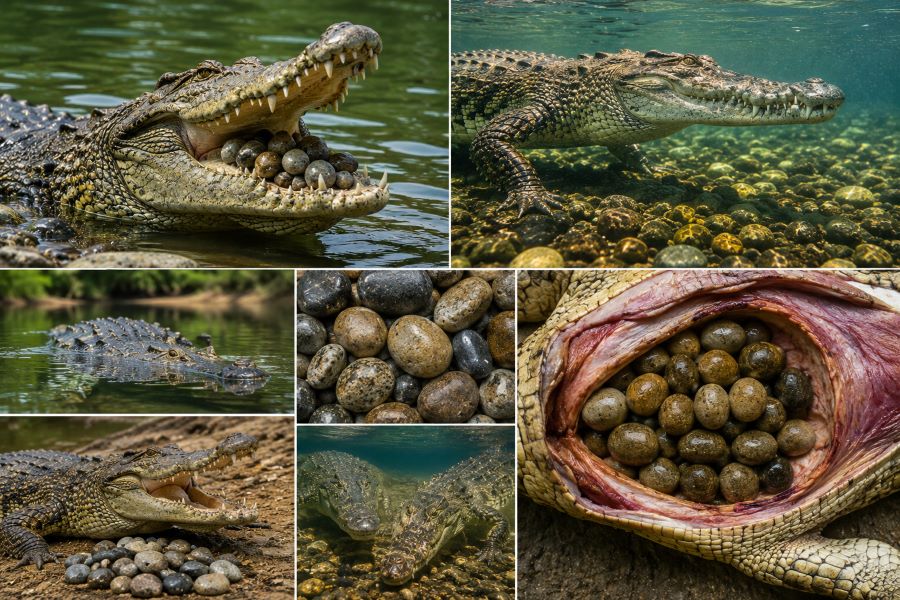
Reason 2: Stones Help Crocodiles Stay Underwater Longer
Most crocodiles' lives are spent in water but their lungs contain air, making the body light. It is easy for a light body to float, but it cannot remain underwater for a long time without expending a lot of energy.
The solution to this problem is for crocodiles to ingest stones. The stones make them a little heavier so that they spend very little energy keeping them from moving when submerged. It functions in all but name a lot like the weight belt that divers wear.
This concept was put to the test with young American alligator, close cousins of crocodiles, as per the National Library of Medicine study. In the study, the majority of the alligators voluntarily ingested granite stones representing approximately 2.5% of their body weight. These stones allowed the alligators to stay underwater a lot longer after they ate them.
So, by consuming just a little stone, 2–3 percent of body weight, crocodiles can nearly double their underwater duration. This will help them camouflage themselves more effectively when they hunt and when they are in danger.
Do Crocodiles Choose To Eat Any Stone?
No. Crocodiles do not eat any random stone. They usually prefer smooth and rounded stones, not sharp or rough stones. Smooth stones will not irritate their stomach, and they will stay in their stomach for a longer time.
The stones are also of different sizes based on the size of the crocodile. Larger crocodiles carry larger stones; smaller crocodiles and younger crocodiles carry smaller stones, called pebbles.
Can Crocodiles Remove These Stones Later?
Yes, they can. The crocodile can throw up the stones, if they have been used too long for grinding of food, or if they are no longer needed.This way, crocodiles are able to swap out old stones for new ones as necessary.
Quick Summary: Why Crocodiles Eat Stones
| Reason | What It Does | Helps the Crocodile By |
| Digestion | Stones grind tough food like bones and shells | Making digestion easier and faster |
| Buoyancy Control | Stones add weight to the body | Staying underwater longer with less effort |
| Hunting | Better control underwater | Hiding and catching prey more easily |
Quick Facts About Crocodiles
1. The saltwater crocodile is the world's largest reptile.
2. They have the most powerful bite ever measured in any animal. One saltie was known to bite with 16,460 newtons (or 1.6 tonnes) of force in 2012.
3. Crocodiles belong to the group of ‘archosaurs’ dating back approximately 250 million years ago. The first crocodilian dates back to the late Cretaceous period, some 95 million years ago.
4. Saltwater crocodiles can live over 70 years!
5. Many of you know that crocodiles belong to carnivores, but you will be surprised that many species of crocodiles eat fruits also.
So the next time someone asks you why crocodiles eat stones, you will have a clear and science-based answer. It is not random behaviour. It is a smart trick used by nature to help crocodiles digest food properly and stay hidden underwater for longer periods. Nature truly has some amazing surprises hidden in the most unexpected places.

Prabhat Mishra is a Subject Matter Expert and digital journalist with an extensive background in the competitive exam landscape and over 4 years of experience in education, national and international news, and current affairs. Over his tenure with top knowledge platforms like Mentorship India, IAS BABA, IAS SARTHI, and now Jagran Josh, he has a deep understanding of government exams like UPSC and State PCS, including UP and Bihar, as he has already qualified for the UPPCS 2022 Mains and Bihar 68th Mains. With his core expertise in history, polity, geography & current affairs, he specialises in creating well-researched, aspirant-centric content and simplifying complex topics for competitive examinations.


