What Is The Miyawaki Forest Project In India? Who Started Miyawaki Forest In India?
A Miyawaki forest is a small, dense forest made with a special Japanese method that helps native plants grow quickly. These forests are spreading quickly in cities across India. They fit many layers of plants into small spaces, helping to fight pollution, cool the air, and bring back native greenery.

Imagine you're weaving through the usual chaos and fumes of an Indian city, and then—bam—you stumble into a patch of wild, tangled forest. No, it's not a movie set. It's actually happening, right in the middle of all that concrete, thanks to something called the Miyawaki technique. This idea started in Japan, but it's been quietly taking root here since 2009, and now it's popping up everywhere as the go-to way to bring real, messy nature back to our cities. Let's dig into how this whole thing started, why it works, and just how much of a difference it's making.
What is Miyawaki Forest?
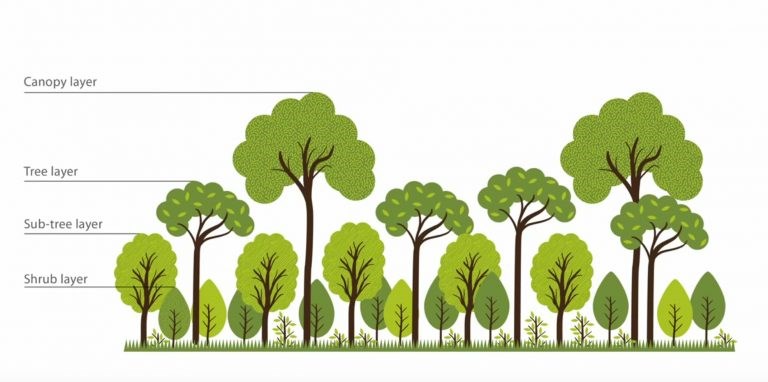
A Miyawaki forest is not your ordinary tree plantation. It is a dense, multi-layered pocket forest that grows up to 10 times faster and becomes 30 times denser than traditional forests.
Developed by studying how nature builds its own ecosystems, this method involves planting dozens of different native species very close together in the same patch of land.
Because the saplings are placed so close—usually about 3 to 5 plants per square meter—they do not have space to spread out horizontally. Instead, they compete fiercely for sunlight and shoot upward at an incredibly fast rate. A typical Miyawaki forest contains four distinct layers:
- Shrub layer
- Sub-canopy layer
- Canopy layer
- Main tree layer
This mimics a 100-year-old natural forest in just about 20 to 30 years. Once established, these micro-forests become 100% self-sustaining after the first 3 years. They are excellent at trapping dust, lowering local temperatures by several degrees, absorbing heavy rainfall, and inviting local birds and insects back into concrete heavy areas.
What is the Miyawaki Forest Project in India?
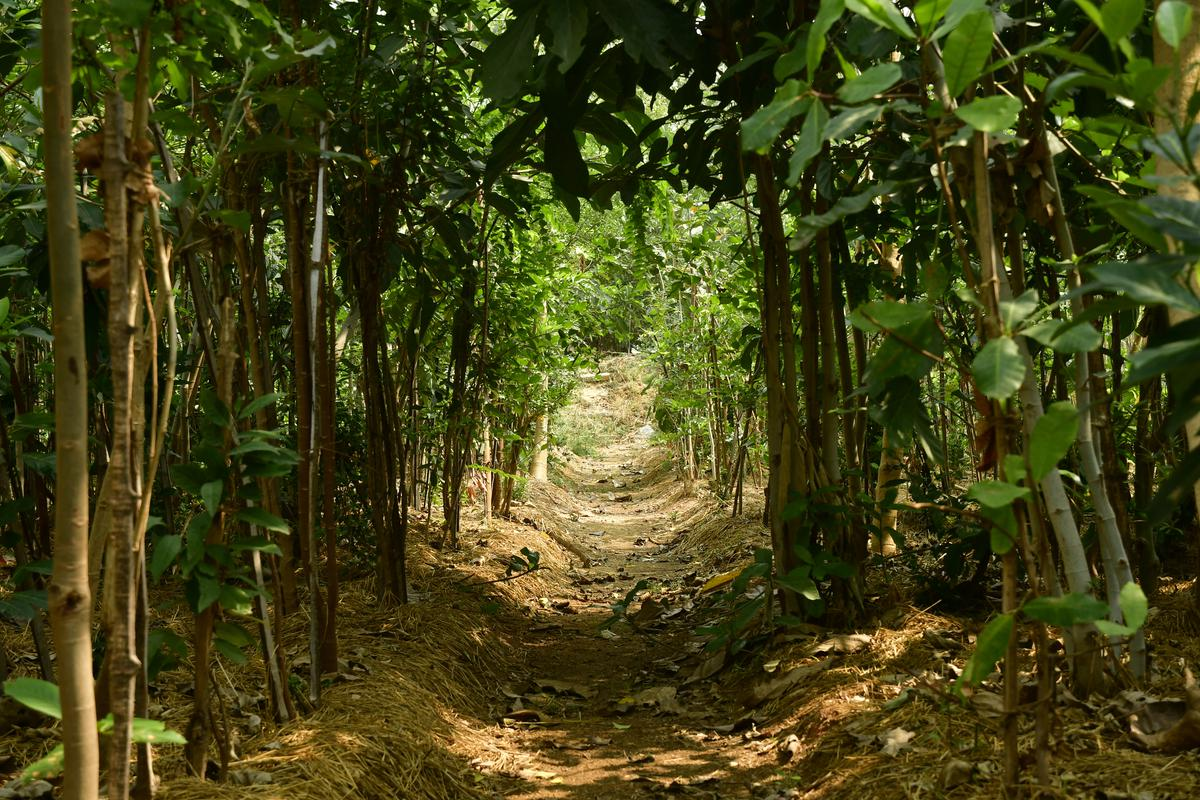
The Miyawaki forest Project in India represents a massive urban greening movement driven by state governments, NGOs, and corporations to battle rising pollution and heat islands. Instead of planting miles away in rural areas, this project focuses on squeezing tiny, hyper-dense forests into neglected urban spaces like roadside patches, factory lands, school compounds, and residential colonies.
In recent years, major Indian cities have adopted this project on a grand scale. For instance, the Brihanmumbai Municipal Corporation (BMC) has successfully created over 60 Miyawaki forests across Mumbai, planting more than 250,000 saplings to create vital green lungs for the crowded city.
Similarly, the Delhi Development Authority (DDA) and various groups in Chennai, Bengaluru, and Hyderabad are actively transforming barren lands into dense biodiversity hotspots. These projects are highly valued because they provide immediate climate resilience, absorb maximum carbon dioxide in minimal space, and improve groundwater recharge rates by over 40% in dry urban zones.
Who Started Miyawaki Forests in India?
The story of Miyawaki forests in India officially began in June 2009. The Japanese automobile giant Toyota developed the very first Miyawaki forest in India on a 4-hectare plot around their manufacturing plant located at Bidadi, near Bengaluru in Karnataka. They executed this milestone project with direct technical assistance from the creator himself, Dr. Akira Miyawaki.
Following this corporate beginning, the method was popularised on a mass scale by an industrial engineer named Shubhendu Sharma. After working with Dr. Miyawaki at the Toyota plant, Sharma was so inspired by the results that he quit his job and founded Afforestt in 2011.
This for-profit social enterprise standardised the process for Indian climatic conditions and soil types. Since then, numerous other dedicated green heroes and NGOs like SayTrees and Enviro Creators Foundation have taken the movement forward, establishing hundreds of dense forests across almost every Indian state.
Which is the largest Miyawaki forest in the world?
When it comes to the absolute scale of these micro-forests, India holds some of the most impressive world records. The Smritivan Earthquake Memorial and Museum, located on Bhujiyo Hill in the Kutch district of Gujarat, holds the title for hosting the world's largest Miyawaki forest.
Spread across a massive area of over 470 acres, this green project was dedicated to the nation by Prime Minister Narendra Modi to honour the victims of the devastating 2001 Gujarat earthquake.
Another massive contender on the private real estate front is the Woods Shamshabad project developed by the Stonecraft Group near Hyderabad, Telangana. Spanning over 18 acres in its first phase alone, this mega-project features more than 450,000 deeply packed native trees, making it the largest continuous urban Miyawaki forest created on a single managed site.
These mega-forests prove that the Japanese technique is no longer limited to small backyard patches; it can scale up to restore entire degraded landscapes.
What Is The Minimum Area For A Miyawaki Forest?
One of the greatest advantages of the Miyawaki method is its extreme flexibility. Unlike traditional forestry, which requires massive patches of land to be viable, a Miyawaki forest can thrive in surprisingly tiny areas. The absolute minimum recommended space needed to plant a functional, dense Miyawaki forest is just about 100 square meters (which is roughly 1,076 square feet). This is just about the size of a standard backyard or a few parked cars.
In highly packed urban environments where land prices are sky-high, experts have even successfully created smaller "pocket" or "micro" installations spanning just 30 to 50 square meters. As long as the patch receives a minimum of 6 hours of daily sunlight and is at least 3 meters wide to allow the trees to form a protective, collective canopy, the method works beautifully. This small footprint makes it an ideal option for schools, residential societies, and cramped factory corners.
Who invented the Miyawaki forest?
The Miyawaki forest method was invented by a world-famous Japanese botanist and plant ecology expert named Dr. Akira Miyawaki. Born in 1928, Dr. Miyawaki spent decades studying the natural vegetation patterns around old Shinto shrines and traditional cemeteries across Japan.
He noticed that while modern commercial forests consisted of only one or two introduced tree species, the shrine forests were incredibly diverse, resilient, and filled with native trees. Based on his deep research into what he called "Potential Natural Vegetation" (PNV), he engineered a specialized 4-step ecological planting technique in the early 1970s.
His brilliant work proved that by planting native species closely together in a heavily organic soil mix, human beings could jumpstart the natural succession process of a forest. For his incredible contributions to global reforestation and restoring degraded lands from Asia to South America, he was awarded the prestigious Blue Planet Prize in 2006.
What Soil Is Best For Miyawaki Forests?

To support such intense and rapid plant growth, the soil used in a Miyawaki forest must be exceptionally loose, fertile, and rich in organic matter. Natural urban soil is often as hard as concrete, meaning it must be deeply excavated—usually up to a depth of 1 meter—and completely modified before any planting happens. The ideal soil profile for a Miyawaki forest should be highly porous to allow roots to penetrate deep down without resistance, while retaining moisture without getting waterlogged.
To create this perfect environment, local soil is thoroughly mixed with three primary organic components based on precise percentages:
- Perforator materials: Rice husk or wheat straw (approx 20-30%) to improve aeration and loosen texture.
- Water-retainers: Coir pith or sugarcane bagasse (approx 20-30%) to help the soil hold onto moisture.
- Organic fertilisers: Well-decomposed cow dung manure or vermicompost (approx 25-30%) to supply a steady stream of essential nutrients to the young saplings.
The ideal pH level for most native Indian forest species ranges from slightly acidic to neutral, specifically between 5.5 and 7.0.
What is meant by Miyawaki forest?
A Miyawaki forest is basically a man-made jungle, built from scratch using local plants and a bit of science. Forget those neat rows you see in regular parks. Here, trees and shrubs are packed in tight, layer on layer, just like they would be in the wild. These days, if you hear someone say 'Miyawaki,' they're talking about any pocket-sized urban forest that ditches the boring, spaced-out planting for a real, tangled thicket.
If you try to plant just one kind of tree in a Miyawaki forest, you’re doing it wrong. The real deal calls for at least 30 or 50 different native species, all from the neighborhood. The result? Underground, you get a wild tangle of roots. Up top, a leafy canopy so thick you can barely see the sky.
The whole point is to get the plants working together, not battling it out for space. When you cram them in close, they start sharing resources through hidden fungal highways underground, help each other hold onto water, and shoot up way faster than they would alone.
What is a Miyawaki forest named after?
Miyawaki forests get their name straight from the guy who invented them, Dr. Akira Miyawaki. He basically flipped the script on how we plant trees, ditching the old-school timber farms for something that actually helps the environment bounce back. Before his idea caught on, most man-made forests were just there to look pretty or get chopped down for wood, and honestly, they usually did more harm than good.
Putting his name on this way of planting is the science world's way of saying, 'Yep, this actually works—and it works with nature, not against it.' These days, when you hear city planners talk about a Miyawaki Forest, they're talking about a method that's been put through its paces everywhere from Tokyo to Bangalore. It's not just a buzzword; it's a proven way to bring real forests back, even in the middle of a city.
Conclusion
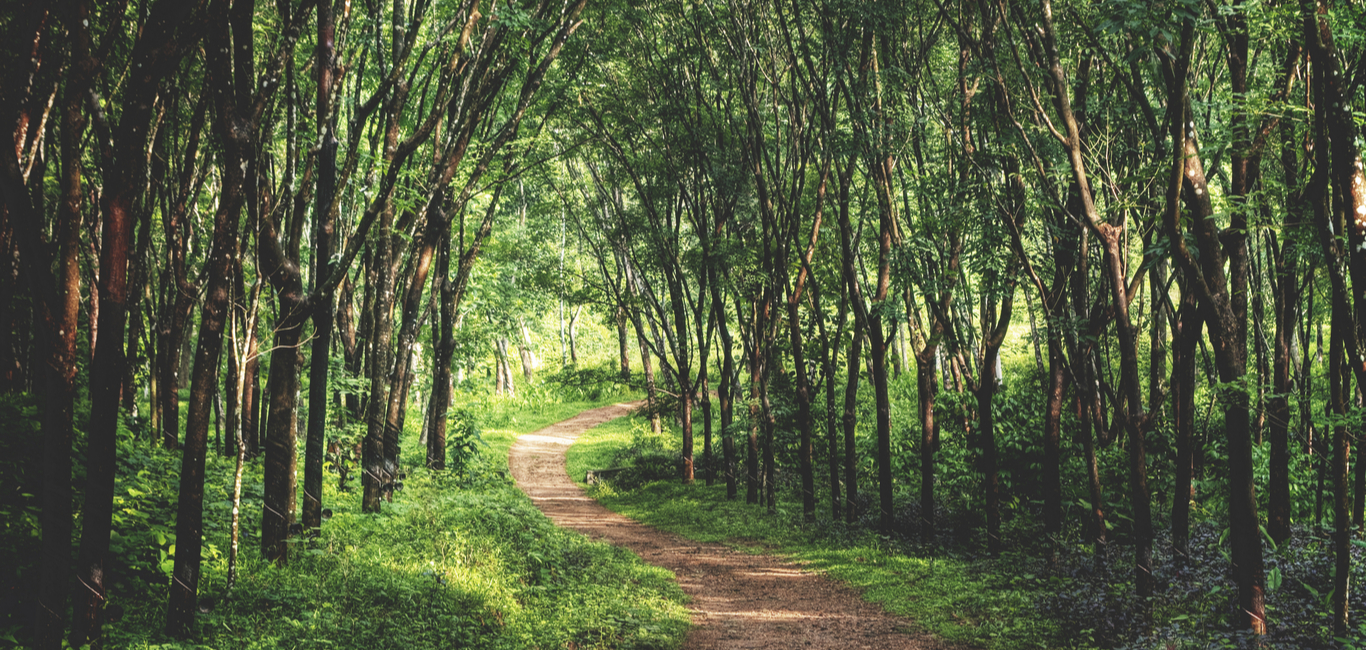
The Miyawaki forest project is basically India’s shortcut to a greener future. Imagine squeezing a century-old forest into a patch of land barely bigger than a badminton court. That’s the magic of this Japanese method: you get a wild, tangled, real-deal forest in a fraction of the time. You’ll find sprawling 470-acre Miyawaki forests out in Kutch, but also these scrappy little green oases wedged between apartment blocks in Mumbai and Delhi. As our cities keep gobbling up space, these dense thickets of native trees are quietly doing the heavy lifting—scrubbing the air and giving us all a fighting chance to breathe.

Kriti Barua is a skilled digital journalist and communications professional with 4+ years of experience, currently writing for the General Knowledge section at Jagran New Media. She has established herself as a subject matter expert in History, Geography, Trending National and International News, Sports, Science, and Defence, producing clear, reliable, and search-optimised content that connects with readers worldwide.
Kriti holds a BA degree from Delhi University and a one-year diploma in TV Production and Journalism, an academic background that adds research depth and strong storytelling instincts to her writing. Her experience spans brand writing, content marketing, and digital media, giving her a sharp understanding of what makes content both helpful to readers and visible in search.
At Jagran New Media, she applies this expertise to national and international news coverage, query-based articles, and in-depth pieces across her specialist subject areas. Her content is defined by easy language, factual accuracy, strong keyword strategy, and reader-friendly storytelling.


