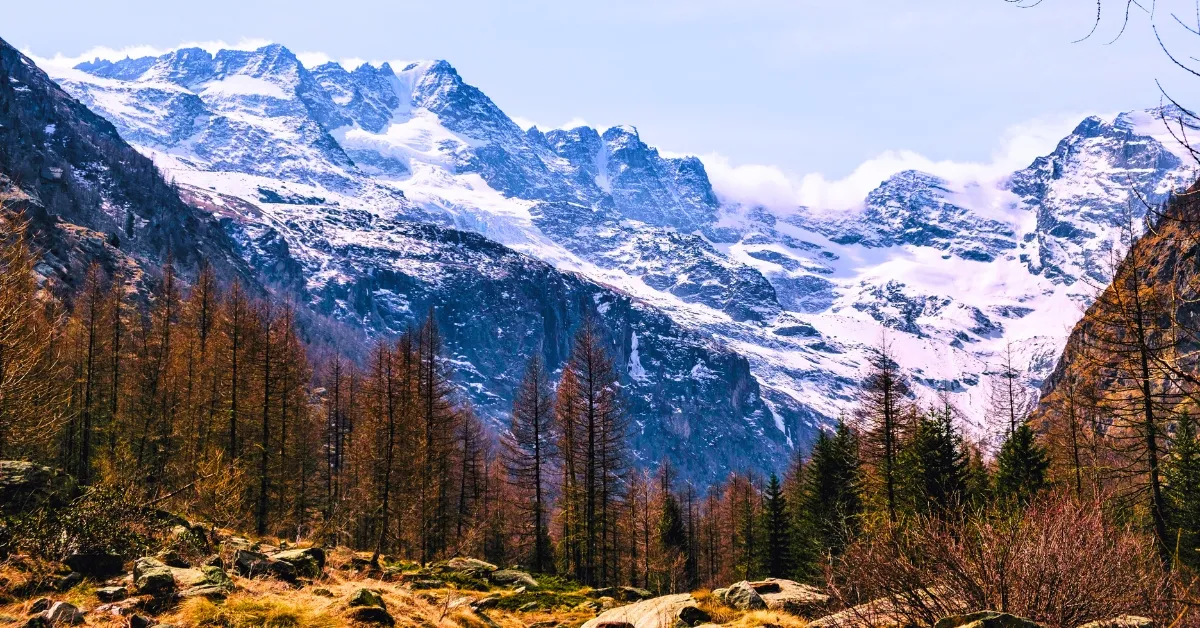
Did you know that mountains cover about one-quarter of the Earth's land surface? These giants form over millions of years. Some, like the Fold Mountains, created by colliding plates, are jagged and tall. Others, like the Volcanic Mountains, form from cooled lava. Many peaks have nicknames, like the "Savage Mountain". But do you know which one is called the Yellow Mountain? In this article, we'll take a look at the history and mystery of this colourful wonder.
ALSO READ| Which Is the Largest Mountain in Asia?
Which Mountain Is Known As The Yellow Mountain?

Mount Huangshan sits in eastern China and is better known as the Yellow Mountain. In 747 AD, it was renamed to honour the Yellow Emperor, a legendary ancestor in Chinese history. This mountain is a geological wonder, shaped more than 100 million years ago by tectonic movements and glaciers. Its granite peaks often rise above a 'Sea of Clouds,' giving the area a mystical feel. Huangshan Pine trees, known for growing straight out of rocky cracks, cover much of the landscape. The mountain is also home to many animals, like the Tibetan macaque and rare birds. Many people also call it the 'Loveliest Mountain of China.'
FOR YOU| Which Mountain Is Known As the "Mother Goddess Of The World"?
5 Lesser-known Facts About Mount Huangshan
- The Huangshan Pines produce a chemical that inhibits the growth of other plants nearby, ensuring they get all the limited nutrients from the granite.
- The mountain's distinct pillars were shaped by exfoliation weathering, in which the outer layers of rock peel away like an onion due to pressure changes.
- Because of its height and shape, the mountain creates its own weather, resulting in over 200 days of fog and clouds each year.
- Geologists have found "boulder seas" on the mountain, which are massive fields of rocks moved by ancient glaciers during the Quaternary period.
- Within a short climb, the flora changes from subtropical evergreen forests to alpine meadows due to the extreme altitudinal zonation.
Why Is Mount Huangshan Called The Yellow Mountains?
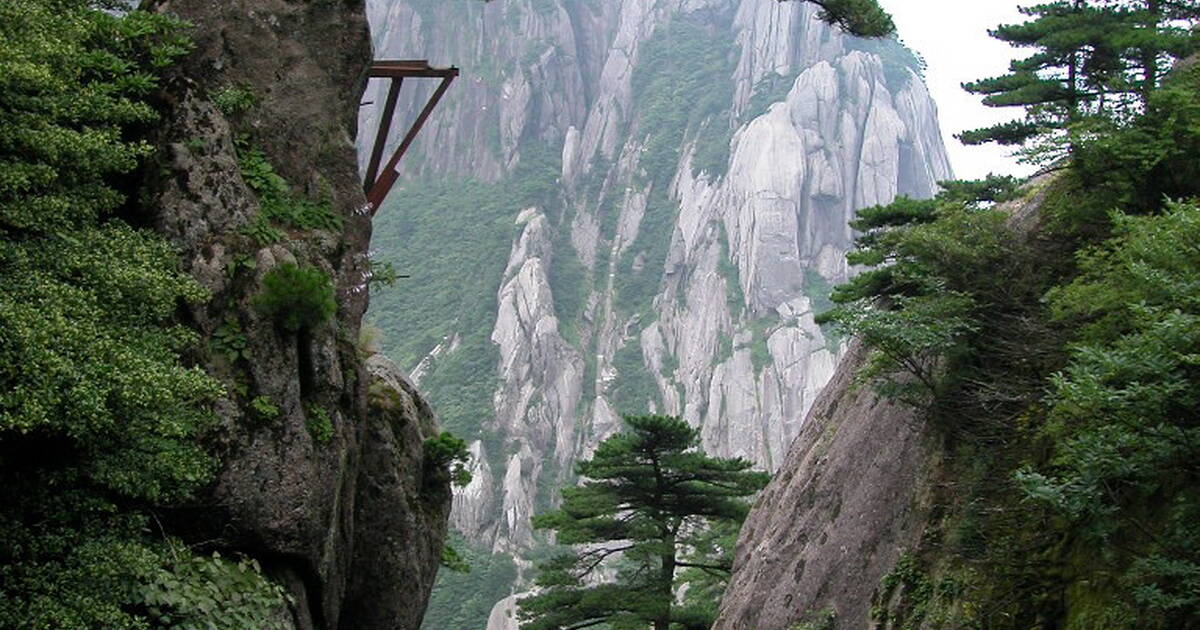
Mount Huangshan's name has more to do with legendary history than its physical colour. Despite its name, the mountain isn't actually yellow; it is primarily made of dark grey granite and lush green pine trees.
1. The Legend of the Yellow Emperor
- The mountain was originally called Yi Shan (Black Mountain) because of its dark, jagged peaks.
- However, in 747 AD, the Tang Dynasty Emperor Xuanzong issued a decree to rename it Huangshan.
- "Huang" means yellow, but it specifically refers to Huang Di, the "Yellow Emperor".
- According to Chinese mythology, the Yellow Emperor travelled to these peaks to practise alchemy and refine the elixir of immortality.
- It is said he finally ascended to heaven from these very slopes. The name was changed to honour him as the legendary ancestor of the Chinese people.
2. The Visual Illusion
Although the name comes from history, sometimes nature lives up to it. At sunrise and sunset, thick clouds gather around the granite pillars and catch the light, turning the whole mountain range a bright golden yellow.
3. Unique Physical Features
Several factors make Mount Huangshan stand out from other mountain ranges:
- Peculiar Pines: The "Huangshan Pines" are well known for growing straight out of solid rock. Instead of soil, their roots release an acid that breaks down granite, allowing them to reach water.
- The Sea of Clouds: The peaks are so tall, and the air is so humid that thick mist often fills the valleys. This makes the peaks look like islands floating in a white sea.
- Thermal Springs: The mountain lies on fault lines that create natural hot springs. These springs stay at about 42°C all year.
Quick Summary
| Feature | Description |
| Named After | Huang Di (The Yellow Emperor) |
| Old Name | Yi Shan (Black Mountain) |
| Location | Anhui Province, China |
| Primary Rock | Mesozoic Granite |