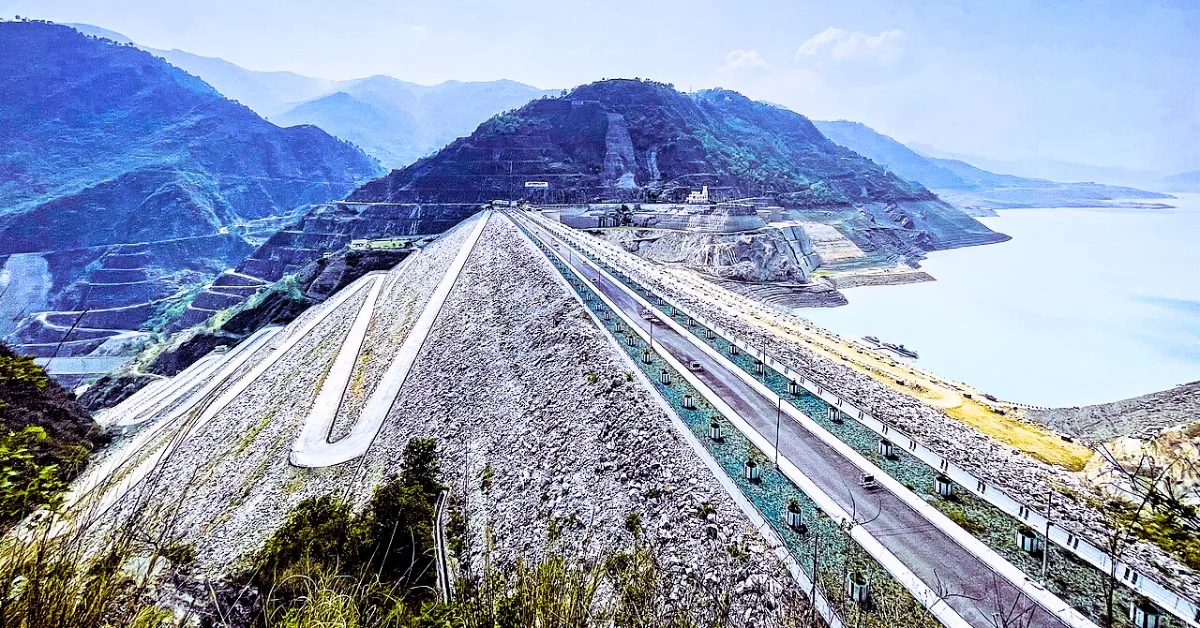
Key Points
- Tehri Dam, completed in 2006, is India's tallest at 260.5 meters.
- It generates 2,400 MW, irrigates 270,000 hectares, and supplies drinking water.
- Located in Uttarakhand, it withstands magnitude 8.4 earthquakes.
India has more than 5,000 large dams that are important in our everyday lives. These big structures support farming, provide drinking water, and generate electricity.
Some well-known dams are the Bhakra Nangal Dam, the Sardar Sarovar Dam, and the Hirakud Dam, which is the longest in India. The Kallanai Dam is also here and is one of the oldest in the world.
Recently, the government started the Dam Rehabilitation and Improvement Project (DRIP) to make older dams safer.
But out of all these huge dams, do you know which one is the tallest? In this article, we will explore the impressive engineering and facts about the highest dam in India.
ALSO READ| List of Top 10 Major Dams in India
Which is the Highest Dam in India? Where is it located?
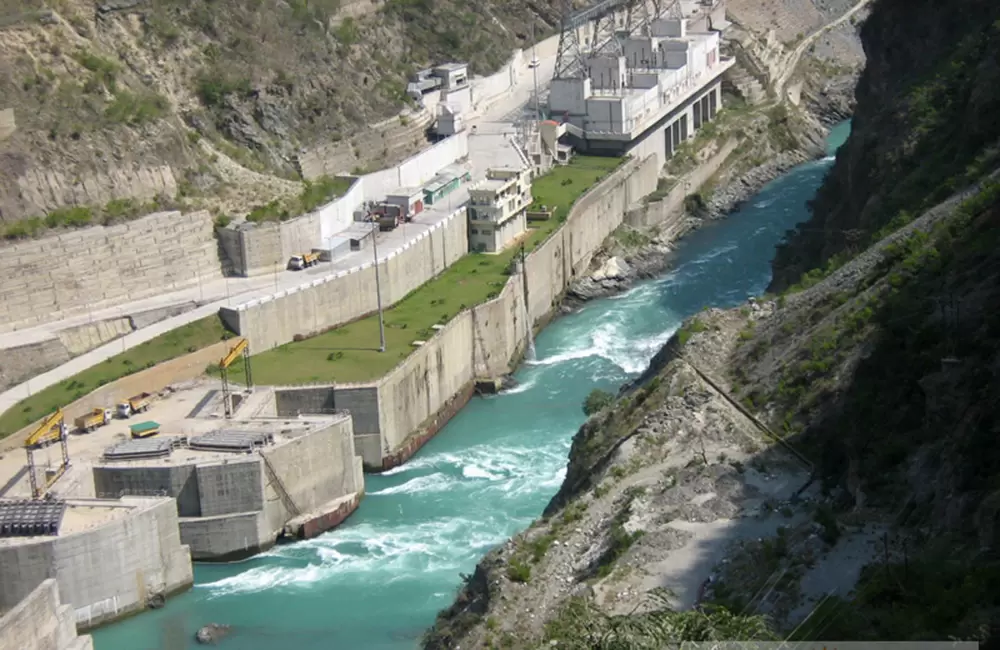
Source: eUttarakhand
The Tehri Dam is the highest dam in India. It stands at a staggering height of 260.5 metres (855 feet), making it the highest dam in India and ranking among the top ten tallest dams in the world.
It is located in the Tehri Garhwal district of Uttarakhand and is built across the holy Bhagirathi River. The construction began in 1978 and was completed in 2006.
This multipurpose rock-and-earth-fill embankment dam was constructed to generate 2,400 MW of hydroelectric power, irrigate more than 270,000 hectares of land, and provide drinking water to millions of residents in Delhi, Uttar Pradesh, and Uttarakhand.
It serves as a critical peaking power station, helping stabilise the northern power grid during periods of high demand.
Did You Know?
- Unlike concrete gravity dams, Tehri is a rock-fill dam with a central clay core, designed to be flexible enough to absorb seismic energy in a high-earthquake zone.
- It is scientifically engineered to withstand a magnitude 8.4 earthquake on the Richter scale, a rarity for structures of this size.
- To support its height, the dam's base is remarkably wide, measuring 1,128 meters, which is nearly twice the length of the dam's top (575 meters).
- The project completely submerged the historic town of Old Tehri, leading to the creation of "New Tehri," one of the few planned hill stations in India.
- It features a "Dead Storage" capacity of 925 million cubic meters, designed to trap silt and prevent reservoir loss for at least 150 years.
- It uses unique vertical "Morning Glory" or shaft spillways that allow water to drop vertically like a giant drain to manage extreme floods.
- Scientific data shows it can reduce downstream flood levels in Rishikesh and Haridwar by 1.5 to 2 meters during heavy monsoon cloudbursts.
What is the Importance of the Tehri Dam?
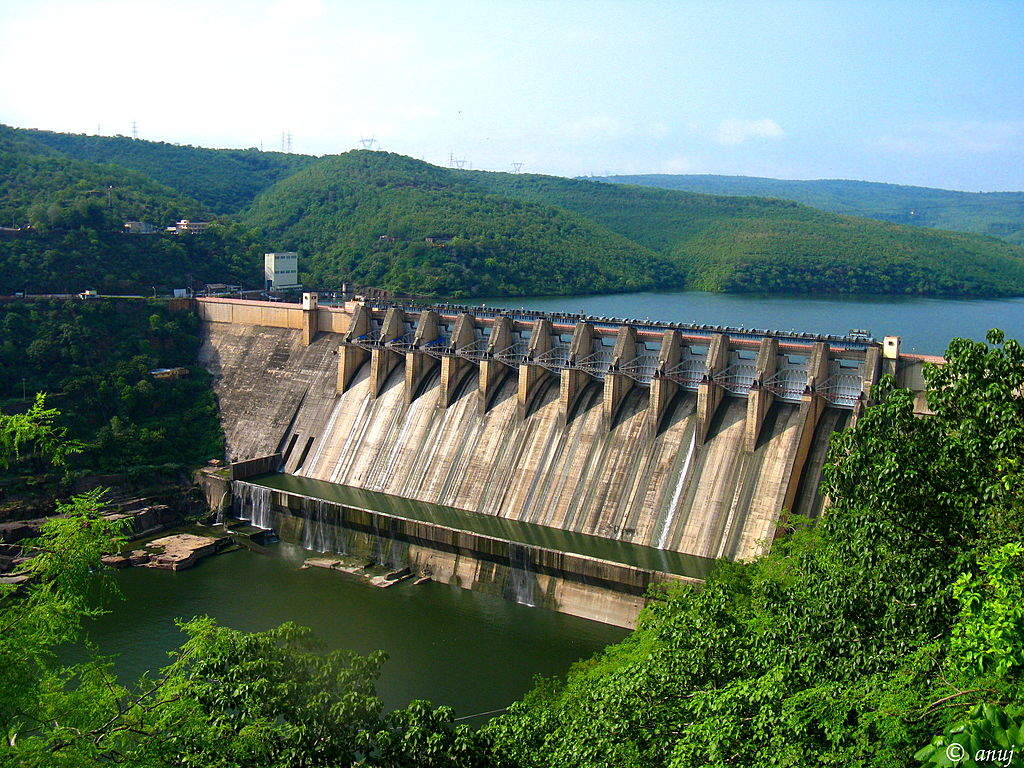
Source: TOI
The Tehri Dam is not just a huge structure made of rock and earth. It plays a vital role in Northern India by supporting energy production, agriculture, and disaster management.
1. Power Generation (Hydrolelectricity)
The dam is a massive powerhouse with an installed capacity of 2,400 MW. It serves as a "peaking" power plant, which means it can quickly increase electricity production when the demand on the national grid spikes. This prevents blackouts and provides clean, renewable energy to several states.
2. Lifeline for Agriculture
The water stored in the Tehri reservoir irrigates approximately 270,000 hectares (over 667,000 acres) of land. This supports farmers in Uttarakhand and Uttar Pradesh, helping ensure food security in the region even during dry seasons.
3. Drinking Water Supply
The dam is a primary source of clean drinking water for millions of people. It provides roughly 270 million gallons of water per day to Delhi and parts of Uttar Pradesh, fulfilling a basic necessity for the growing urban population.
4. Flood Control
By regulating the flow of the Bhagirathi River, the dam protects downstream towns like Rishikesh and Haridwar. During heavy monsoons or cloudbursts in the Himalayas, the reservoir stores excess water, preventing catastrophic flooding in the Ganges plains.
5. Tourism and Economic Growth
The creation of the Tehri Lake has turned the region into a major hub for water sports and adventure tourism. This has created thousands of jobs for locals and boosted the economy of the Uttarakhand hills.
IN CASE YOU MISSED| Top 10 Electricity-Producing States in India (2025)
List of Other Highest Dams in India
India is home to impressive dams that use our rivers to support power and development. Stretching from the Himalayas to the Western Ghats, these dams play a key role in irrigation and energy. Here are the ten highest dams in India.
| Rank | Dam Name | Height | River | State |
| 1 | Tehri Dam | 260.5 m | Bhagirathi | Uttarakhand |
| 2 | Lakhwar Dam | 204 m | Yamuna | Uttarakhand |
| 3 | Idukki Arch Dam | 168.9 m | Periyar | Kerala |
| 4 | Bhakra Dam | 167.6 m | Sutlej | Himachal Pradesh |
| 5 | Pakal Dul Dam | 167 m | Marusudar | Jammu & Kashmir |
| 6 | Sardar Sarovar Dam | 163 m | Narmada | Gujarat |
| 7 | Srisailam Dam | 145 m | Krishna | Andhra Pradesh/Telangana |
| 8 | Ranjit Sagar Dam | 145 m | Ravi | Punjab |
| 9 | Baglihar Dam | 143 m | Chenab | Jammu & Kashmir |
| 10 | Chamera I Dam | 140 m | Ravi | Himachal Pradesh |
Note: Some of these, like Lakhwar and Pakal Dul, are in advanced stages of construction or recently completed, representing India's latest push for renewable energy.
Why is the Tehri Dam So Famous?
The Tehri Dam is known around the world for its impressive size. It is the tallest dam in India and ranks among the tallest in the world. The dam is also famous because the old Tehri town was completely submerged to make way for its huge reservoir.
Which River Flows From Tehri Dam?
The Bhagirathi River is the main river flowing through the Tehri Dam. It starts at the Gaumukh glacier and is one of the two main sources of the holy Ganges.
After moving through the dam's turbines, the river flows to Devprayag, where it meets the Alaknanda River to officially become the River Ganga.
WHAT'S NEXT| List of Perennial Rivers in India




Comments
All Comments (0)
Join the conversation