Which Indian Classical Dance form is a Combination of Two Distinct Dance Traditions?
Which Indian classical dance form is a combination of two distinct dance traditions? Discover its origin, history, unique features, cultural significance, and why it is important for UPSC, SSC, PSC, and other competitive exams.
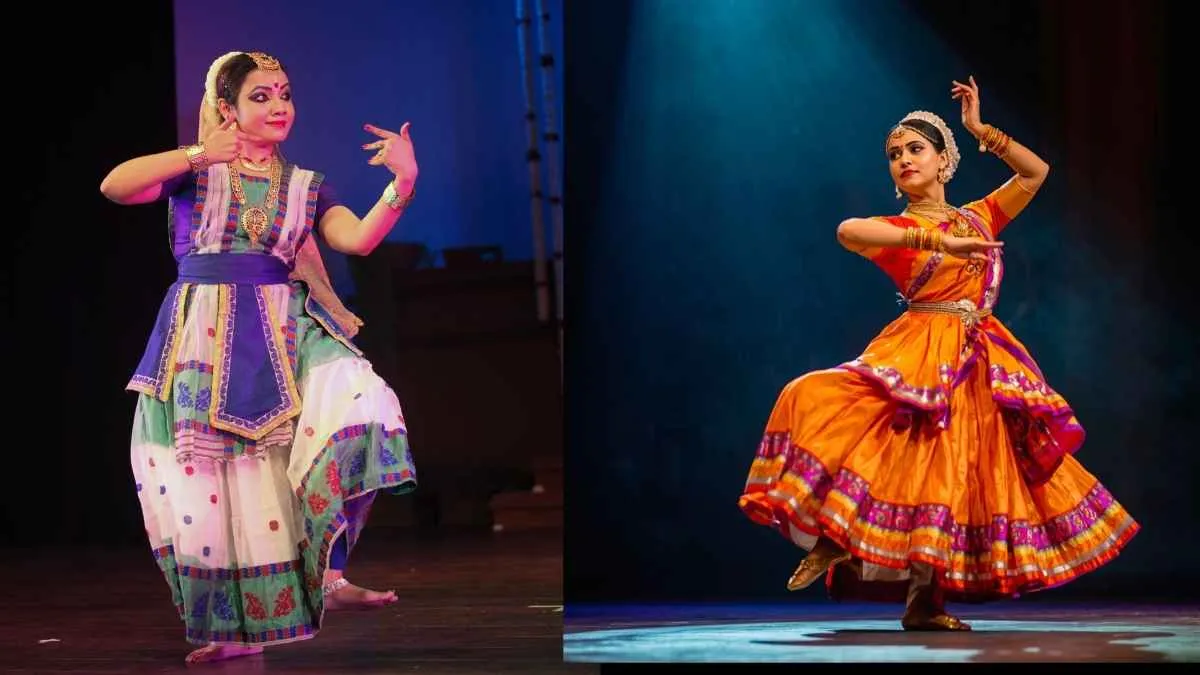
India's classical dance traditions reflect centuries of cultural evolution, storytelling, devotion and artistic expression among the eight recognised classical dance forms, one stands out for its unique origin as a blend of two distinct dance traditions. This rare fusion has created a graceful and expressive art form that combines intricate footwork, dramatic storytelling, and rich musical heritage.
The dance form has evolved over time by drawing inspiration from different regional traditions while maintaining its own identity. Its distinctive style, colourful costumes and expressive performances have earned it national and international recognition.
Which is the Indian Classical Dance form that blends two distinct traditions?
Kathak is the only Indian classical dance form that natively stands as a combination of two distinct dance traditions: the Hindu temple devotional tradition (Jaipur) and the Islamic court aesthetic of the Mughal era.
It is officially recognised by India's Sangeet Natak Akademi (the National Academy of Music, Dance, and Drama). Kathak derives its name from the Sanskrit words Katha (story) and Kathakar (storyteller). It stands apart from other classical styles due to its geographical evolution across Northern and Western India which act as a historical bridge where sacred ritual met sophisticated royal entertainment.
History and Origin; How two dance traditions came together
The evolution of Kathak is mapped through two defining historical phases that merged seamlessly over time:
The Ancient temple tradition during the Bhakti movement
Originally, Kathak was performed by wandering bards known as Kathakars who traveled across North Indian villages and temples. They recited ancient epics, Puranic literature and myths, using basic hand gestures (Mudras), facial expressions and basic body movements to bring their stories to life with the rise of the Bhakti Movement in the 15th and 16th centuries.
This form absorbed the folklore of the Radha-Krishna cult, giving birth to Ras Lila, a highly spiritual, graceful and expressive form of community storytelling.
The Medieval court tradition during the Mughal integration
Kathak transitioned from temple courtyards into the royal durbars (courts) with the arrival of the medieval era and the establishment of the Mughal Empire. During this period the emphasis shifted from pure religious devotion to technical virtuosity, showmanship and entertainment.
The dance absorbed Persian cultural influences. The abstract devotional elements were combined with sharp, mathematical footwork patterns, rapid spins, highly stylized and subtle gestures. This unique synthesis gave Kathak its distinct split identity, a dance form containing both a sacred Hindu core and an elegant secular structure.
Who developed the Kathak unique classical Dance form?
Kathak was systematically preserved, codified and passed down through family-based lineages known as Gharanas. Several foundational figures and Gharanas shaped its modern form:
-
Nawab Wajid Ali Shah: The last Nawab of Awadh was a patron of Kathak. He actively choreographed dances, composed music and allowed the artistic refinement of the Lucknow Gharana to flourish under his direct royal supervision.
-
The Maharaj Lineage: Foundations laid by masters like Ishwari Prasad followed by legendary stalwarts like Thakur Prasad, Bindadin Maharaj, Kalka Prasad and later the late Padma Vibhushan Pandit Birju Maharaj who transformed Kathak from an unstructured folk-art revival into an exact, academically sound classical discipline.
-
The 20th-Century Revivalists: The Anti-Nautch movement stigmatized Indian dance forms during the British colonial era but pioneers like Madame Menaka (Leila Sokhey) stepped up to break social taboos, establish the first formal Kathak institutions and successfully rescue the dance form, placing it firmly onto global proscenium theater stages.
-1782043267542.jpg)
Key features and performance style of the dance
Kathak performance balances a rigid structure of technical movements with deeply emotional storytelling and performance stages include:
-
Ananda / Amad: The formal entry where the dancer steps onto the stage, presenting elegant initial movements synchronized to a specific time cycle (Tala).
-
Thaat: A slow-tempo segment where the dancer establishes a perfectly upright classical posture, displaying subtle, isolated micro-movements of the eyes, eyebrows, neck and shoulders.
-
Tatkaar (Footwork): The definitive technical feature of Kathak. Dancers manipulate the floor using lightning-fast, intricate foot percussion that matches the rhythm of accompanying drums.
-
Chakkars (Spins): Brilliant, rapid pirouettes executed entirely on the heel. This dynamic aspect is a direct hallmark of the Persian or Mughal court style integration.
-
Abhinaya (Expression): The narrative aspect of the dance. Dancers use Gat Bhav a specialized solo performance method where they switch between characters.
Costumes, makeup and musical instruments used in the dance
Kathak features two fully recognized styles of traditional costuming by reflecting its dual heritage
The Hindu / Temple Costume
-
Female Dancers: Wear a traditional Saree draped uniquely to allow leg mobility or a vibrant Lehenga-Choli pairing accompanied by a sheer veil (Odhni).
-
Male Dancers: Wear a bare torso or lightweight Bandi jacket combined with a traditional wrapped Dhoti.
The Mughal / Court Costume
-
Female Dancers: Wear an Anarkali (a heavily flared, long-sleeved tunic) combined with tight-fitting Churidar trousers and a Dupatta. Hair styling includes side-swept decorations or a distinct head ornament called a Jhumar or Passa.
-
Male Dancers: Wear a flowing Angrakha (an asymmetrical tunic) paired with Churidar pants and a traditional waist sash.
Accompanying Instruments
The musical architecture of Kathak relies heavily on North Indian instruments:
-
Tabla and Pakhawaj: used to keep and challenge the dancer's complex rhythmic cycles.
-
Sarangi and Harmonium: provide the repeating melodic loop (Lehra).
-
Ghungroos: Dancers wear between 100 to 150 heavy brass ankle bells bound carefully on each leg, which act as a live musical instrument controlled by the dancer's foot strikes.
Today, Kathak serves as an important symbol of India’s historical diversity and secular cultural identity. It demonstrates how disparate cultural sensibilities can successfully merge into a harmonious, enduring art form.
The Government of India via the Sangeet Natak Akademi and premium centers like Kathak Kendra (New Delhi) continuously funds academic research, holds national festivals and safeguards the Guru-Shishya Parampara, an ancient lineage-based teaching method to preserve this heritage for future generations.
Manisha Waldia is a distinguished content strategist with 5 years of experience crafting premium educational content for UPSC and State PCS, with a focus on deep conceptual analysis across Polity, Geography, History, and Environment. She currently brings this expertise to Jagran Josh, where she covers major national and international events, current affairs, and static general knowledge. Over her career, Manisha's specialized insights have led her to curate high-impact materials and serve as a UPSC Mains answer-evaluator for India’s top institutes—including Drishti IAS, Shubhra Ranjan IAS, Study IQ, GS Score, and PWonlyIAS. She has also worked alongside leading NGOs like Oxfam India and Avani Kumaon.
Contact: manisha.waldia@jagrannewmedia.com


