India to Host BRICS Security Meeting, Focus on Counter Terrorism and Global Security
India to host BRICS security meeting under National Security Adviser Ajit Doval on June 22 and 23, 2026. The high-level talks will focus on counter-terrorism and emerging global security threats.
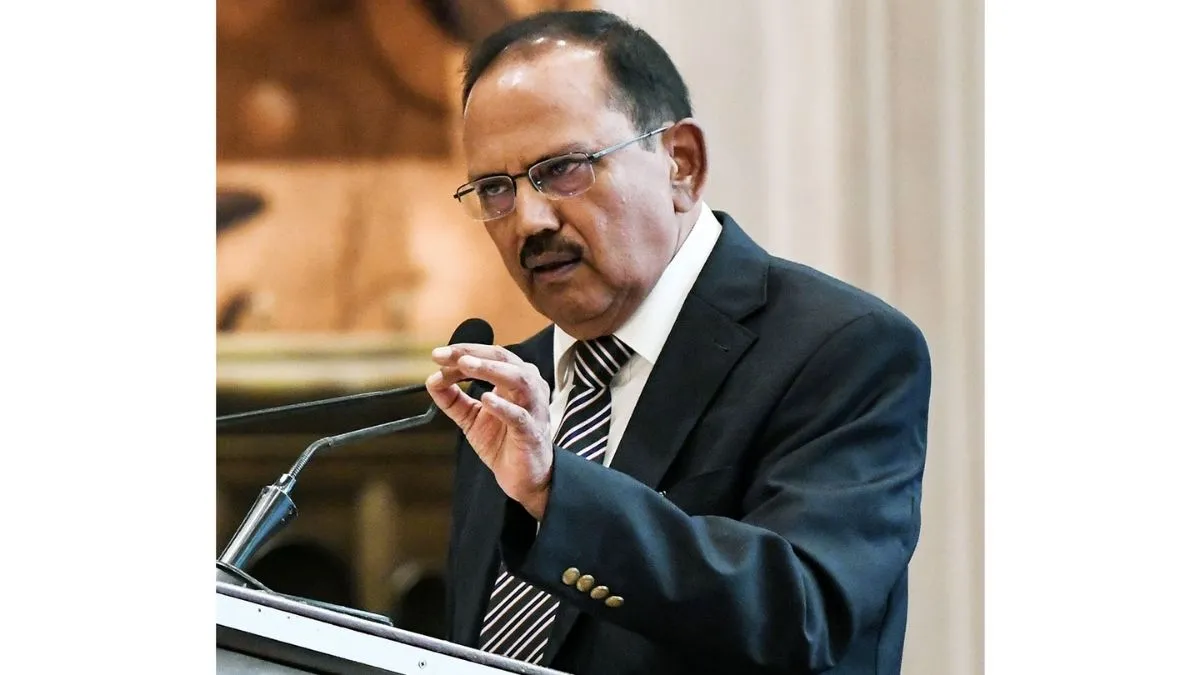
The Ministry of External Affairs (MEA) confirmed India will officially host the BRICS National Security Advisers’ Meeting on June 22 and 23, 2026. The high-level deliberations will be chaired by India’s National Security Adviser, Ajit Doval by bringing together top defense and intelligence minds from the expanded economic bloc.
According to the MEA, National Security Advisers and Heads of Delegation from BRICS member countries will exchange views on the theme “Non-traditional security challenges confronting the world today” by focusing on the rapidly evolving nature of national security challenges and the role of emerging technologies in shaping new security threats.
The two-day summit will serve as a critical foundation for aligning strategies against cross-border threats, digital warfare, modern geopolitical instabilities and security heads are slated to discuss how artificial intelligence (AI), deepfakes, autonomous systems and dark web networks are shaping sophisticated new security threats.
The NSAs will review the actionable outcomes of two key ministerial meetings held earlier
-
The BRICS Joint Working Group on Counter-Terrorism which aimed at choking terror financing and improving intelligence-sharing infrastructure.
-
The BRICS Working Group on Security in the Use of Information and Communication Technologies (ICTs) by focusing on securing critical infrastructure against state-sponsored cyberattacks.
India’s Vision for the 2026 BRICS Chairship
This meeting marks India’s fourth turn at the helm of the BRICS Chairship, having previously led the grouping in 2012, 2016, and 2021.
India’s 2026 leadership operates under the core philosophy: “Building for Resilience, Innovation, Cooperation, and Sustainability.” which means it directly mirrors the "people-centric and humanity-first" framework championed by Prime Minister Narendra Modi during his address at the 2025 Rio Summit by advocating the global economic and security policies that must protect the most vulnerable populations.
More about the BRICS and its Member Countries
To understand the significance of BRICS it is vital to understand its evolution and objectives. Originally coined by an economist in 2001 as an acronym for fast-growing markets (BRIC) and it officially formed as a diplomatic bloc in 2009 with South Africa joining in 2010.
In the present context BRICS has evolved from a tight-knit club into a massive intercontinental coalition by following its recent historic expansion, the bloc now comprises 11 emerging economies:
The Founding Members: Brazil, Russia, India, China, and South Africa.
The Newly Integrated Members: Egypt, Ethiopia, Indonesia, Iran, Saudi Arabia, and the United Arab Emirates (UAE).
Why does BRICS matters more than Ever
The expanded BRICS is no longer just an economic alternative to Western-led institutions like the G7; it is a heavyweight player in global governance. The 11 member states combined represent greater than 45% of the world's total population and command roughly 30% of the global Gross Domestic Product (GDP).
Resource monopolization with the inclusion of major Middle Eastern energy powers. BRICS nations control significantly more than 40% of global crude oil production and crucial maritime trade checkpoints.
BRICS has broken past pure trade frameworks over the last decade. It now operates as a powerful consensus-building platform for political stability, climate change financing, food security and collective counter-terrorism initiatives.
As the security chiefs meet under NSA AJIT Doval's chairmanship. The outcomes of these deliberations will likely lay down a vital security roadmap for the Global South which directly influences how these 11 powerful nations police cyber borders and fight international terrorism in the years to come.
Manisha Waldia is a distinguished content strategist with 5 years of experience crafting premium educational content for UPSC and State PCS, with a focus on deep conceptual analysis across Polity, Geography, History, and Environment. She currently brings this expertise to Jagran Josh, where she covers major national and international events, current affairs, and static general knowledge. Over her career, Manisha's specialized insights have led her to curate high-impact materials and serve as a UPSC Mains answer-evaluator for India’s top institutes—including Drishti IAS, Shubhra Ranjan IAS, Study IQ, GS Score, and PWonlyIAS. She has also worked alongside leading NGOs like Oxfam India and Avani Kumaon.
Contact: manisha.waldia@jagrannewmedia.com


