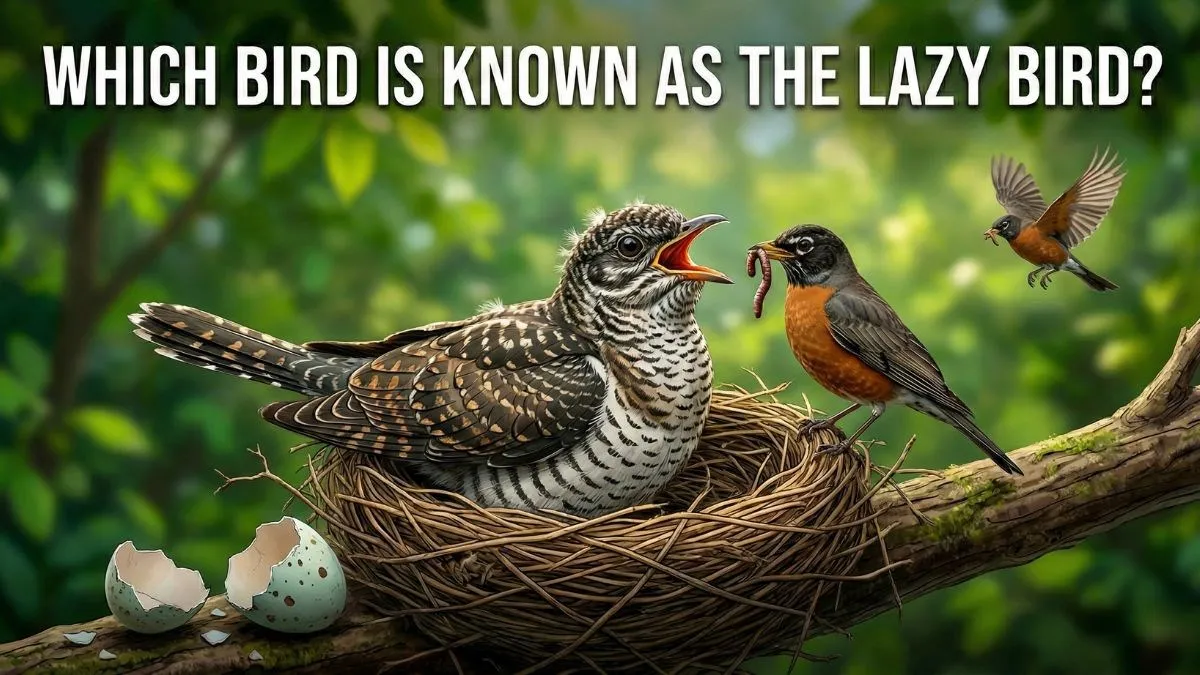
Can you imagine a world without any birds? If there were no birds in our environment, how would it balance between humans and the natural ecosystem? Birds are not just for culture, but they play an essential role in the functioning of the world’s ecosystem. They are warm-blooded, feathered vertebrates known for their wings, beaks, and hard-shelled eggs, evolving from the Mesozoic Era of the Jurassic Period. As per the birdsoftheworld, there are a total of 11,167 species worldwide.
Among these fascinating creatures, one bird has earned a rather unusual title — the “Lazy Bird.” But is it truly lazy, or just incredibly clever?
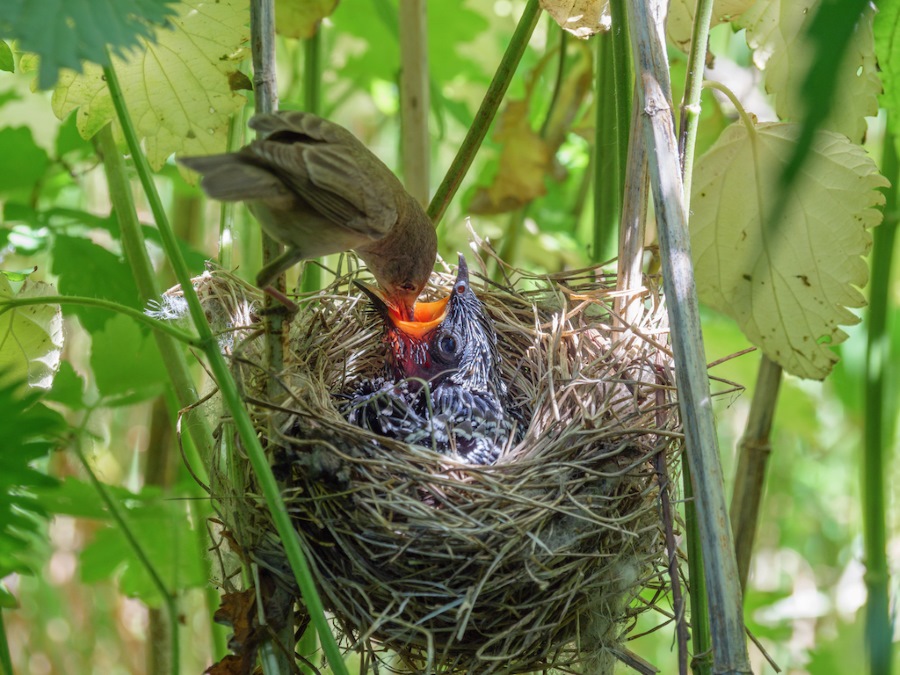
Source: Live Science
Which Bird is Known as the Lazy Bird?
The bird commonly known as the Lazy Bird is the Cuckoo (called Koel in India). Cuckoos are labelled “lazy” not because they avoid flying or feeding themselves, but because they do not build their own nests. Instead, they lay their eggs in the nests of other birds and leave the responsibility of parenting to them.
This unusual reproductive strategy is known as brood parasitism.
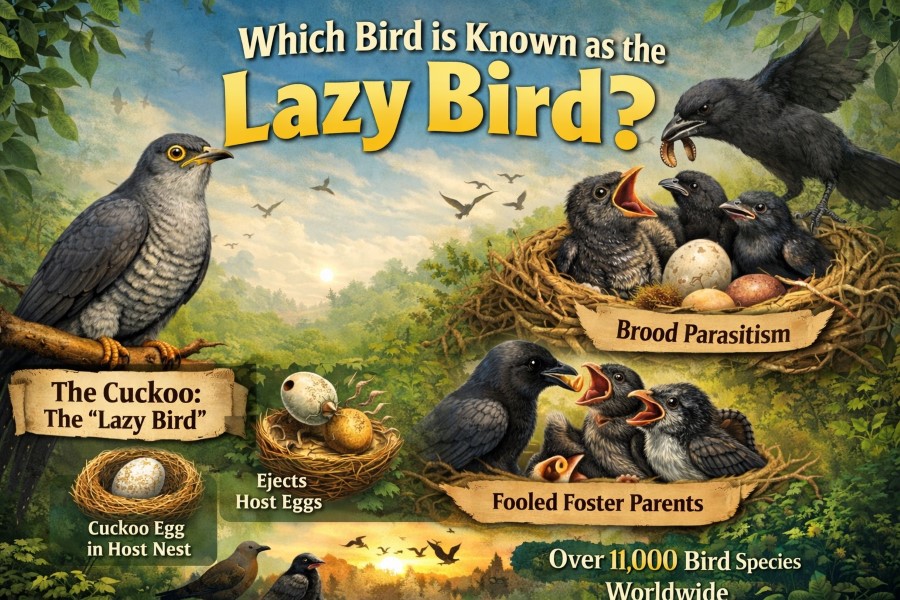
What Is Brood Parasitism?
Brood parasitism is a biological phenomenon in which one species relies on another to raise its young.
How cuckoo brood parasitism works:
-
A female cuckoo searches for a suitable host nest (crow, robin, pipit, etc.).
-
When the host bird is away, the cuckoo:
-
Removes or eats one host egg
-
Lays a single egg of her own
-
The cuckoo egg closely mimics the color and pattern of the host’s eggs.
-
The host bird unknowingly incubates and raises the cuckoo chick.
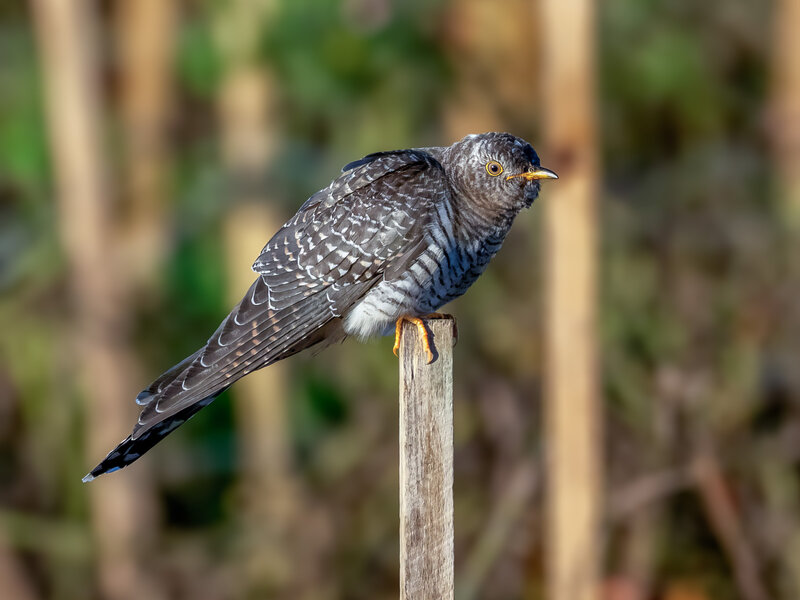
Source: NYT
A Clever (Not Lazy) Survival Strategy
The cuckoo’s intelligence doesn’t stop at egg-laying.
After hatching:
-
The cuckoo egg hatches earlier than host eggs.
-
The cuckoo chick instinctively:
-
Pushes host eggs or chicks out of the nest
-
Ensures all food is brought only to itself
-
The foster parents continue feeding the cuckoo chick, unaware of the deception.
Within weeks, the cuckoo chick often grows larger than its foster parents, then eventually flies away — leaving the hosts behind.
How Do Cuckoo Eggs Match Host Eggs?
This remarkable trick is backed by science and evolutionary biology.
Scientific explanation:
-
Female cuckoos lay eggs only in the type of nest they were raised in.
-
A cuckoo raised by crows will lay eggs only in crow nests.
-
This genetic specialization ensures egg resemblance.
-
If a cuckoo lays eggs in the wrong nest, the host bird often detects and rejects it.
This behavior has been documented in long-term ornithological studies referenced by wildlife research bodies and biodiversity institutions.

Source: ebird
Are Cuckoos the Only “Lazy” Birds?
No. Several other birds use brood parasitism as a survival method.
Examples include:
-
Cowbirds – common in North America
-
Honeyguide birds – found in Africa
-
Black-headed ducks – common in South America
Even outside birds:
-
Cuckoo catfish (a fish species) tricks other fish into raising its young
Nature repeatedly shows that survival is not always about hard work — sometimes it’s about smart adaptation.
Comparison Table: Lazy Bird vs Nest-Building Birds
| Feature | Cuckoo (Lazy Bird) | Typical Nest-Building Birds |
| Builds own nest | No | Yes |
| Raises its young | No | Yes |
| Egg mimicry | Excellent | Not needed |
| Parenting effort | Very low | Very high |
| Survival success | High | Moderate |
Is the Cuckoo Really Lazy?
Calling the cuckoo “lazy” is a human interpretation, not a biological flaw. From a scientific perspective, the cuckoo is:
-
Highly adaptive
-
Evolutionarily successful
-
A master of deception and survival
Government-backed wildlife studies and biodiversity research portals often highlight brood parasitism as an advanced evolutionary strategy, not laziness.
Conclusion
Around the world, there are more then 11000 types of Bird Species, but among these, there are many bird which has some different characteristics with their nature, which make them some special and unique. Among these, “Cuckoo” is one of them. She hold the title as a “Lazy Bird” not for her habitat, diet or any other characteristics, but instead, it represents one of nature’s most fascinating survival techniques. By outsourcing parenting through brood parasitism, the cuckoo conserves its energy, increase their survival rate and doing so, it proves the intelligence in nature, which can be in any form. What looks like laziness is actually evolution at its smartest.






Comments
All Comments (0)
Join the conversation