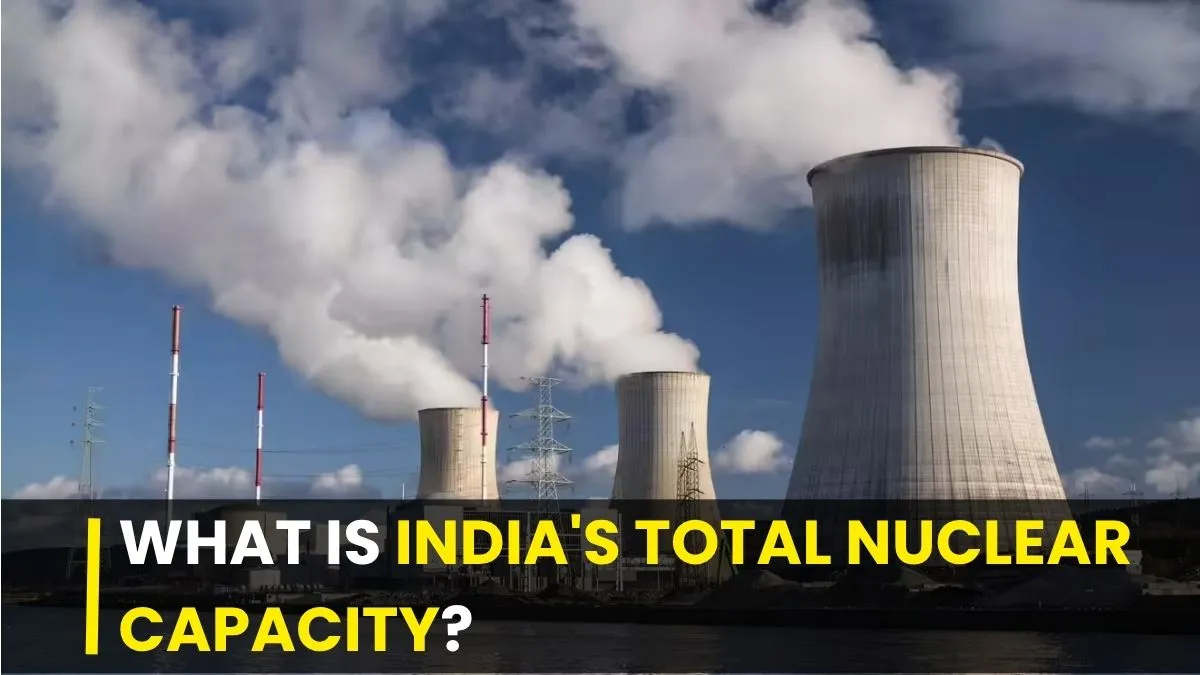
Why is India's nuclear power in the news? On 6 April 2026, India's 500 MWe Prototype Fast Breeder Reactor (PFBR) at Kalpakkam, Tamil Nadu, attained first criticality, which marks the beginning of a controlled fission chain reaction. This 500-megawatt electric PFBR was designed by the Indira Gandhi Centre for Atomic Research (IGCAR) and built by Bharatiya Nabhikiya Vidyut Nigam Limited (BHAVINI).
With this achievement, India moves to Stage 2 of its three-stage nuclear power programme, a vision originally conceived by Dr Homi J. Bhabha. India's Three-Stage Nuclear Power Programme, as envisioned by Dr Homi Bhabha in the 1950s, aims to leverage India's limited uranium and vast thorium reserves.
This 500 MWe PFBR produces more fuel than it consumes using Uranium-Plutonium Mixed Oxide (MOX) fuel. Once fully operational, India will become only the second country in the world after Russia to operate a commercial fast breeder reactor. This achievement marks a significant step in India's goal of achieving net zero emissions by 2070.
What is the total nuclear power capacity of India?
As of early 2026, India's installed nuclear power capacity is 8.78 GW (8,780 MW).
India currently has 24 operational nuclear reactors across 7 nuclear power plants.
The reactor types in India comprise 20 Pressurised Heavy Water Reactors (PHWRs), 2 Boiling Water Reactors (BWRs), and 2 Pressurised Water Reactors (PWRs)
India's nuclear power capacity at present contributes about 3.1 per cent of the country's electricity generation in 2024-25.
In 2024-25, nuclear power plants in India generated 56,681 million units of electricity.
Expansion and Future Targets:
India has an ambitious target of 100 GW nuclear power capacity by 2047.
India's nuclear capacity is projected to reach 22,480 MW by 2031-32.
Initiatives include construction and commissioning of ten reactors, totalling 8,000 MW, across the states of Gujarat, Rajasthan, Haryana, Tamil Nadu, Madhya Pradesh, and Karnataka.
India is developing 'Bharat Small Reactors' with a capacity of 220 MWe, expected for deployment by 2033.
At least five indigenously designed and operational Small Modular Reactors (SMRs) will be operationalised by 2033.
India has allocated Rs 20,000 crore for research and development of Small Modular Reactos (SMRs).
Who operates the nuclear power reactors in India?
The Nuclear Power Corporation of India (NPCIL), wholly owned by the government of India and administered by the Department of Atomic Energy (DAE), is the primary operator of nuclear power reactors in India.
The Bharatiya Nabhikiya Vidyut Nigam Limited (BHAVINI), set up in October 2023, manages plutonium and thorium-based fast breeder reactors.
7 Operational Nuclear Power Plants in India
India has seven active nuclear power plants with a total installed capacity of over 8,000 MW. The largest nuclear power plant in India is the Kudankulam Nuclear Power Plant (KKNPP) located in the Tirunelveli district of Tamil Nadu. Below is the list of nuclear power plants in India:
1. Tarapur Atomic Power Station (TAPS), Maharashtra
2. Rajasthan Atomic Power Station (RAPS), Rawatbhata, Rajasthan
3. Madras Atomic Power Station (MAPS), Kalpakkam, Tamil Nadu
4. Narora Atomic Power Station (NAPS), Uttar Pradesh
5. Kakrapar Atomic Power Station (KAPS), Gujarat
6. Kaiga Generating Station (KGS), Karnataka
7. Kudankulam Nuclear Power Plant (KKNPP), Tamil Nadu