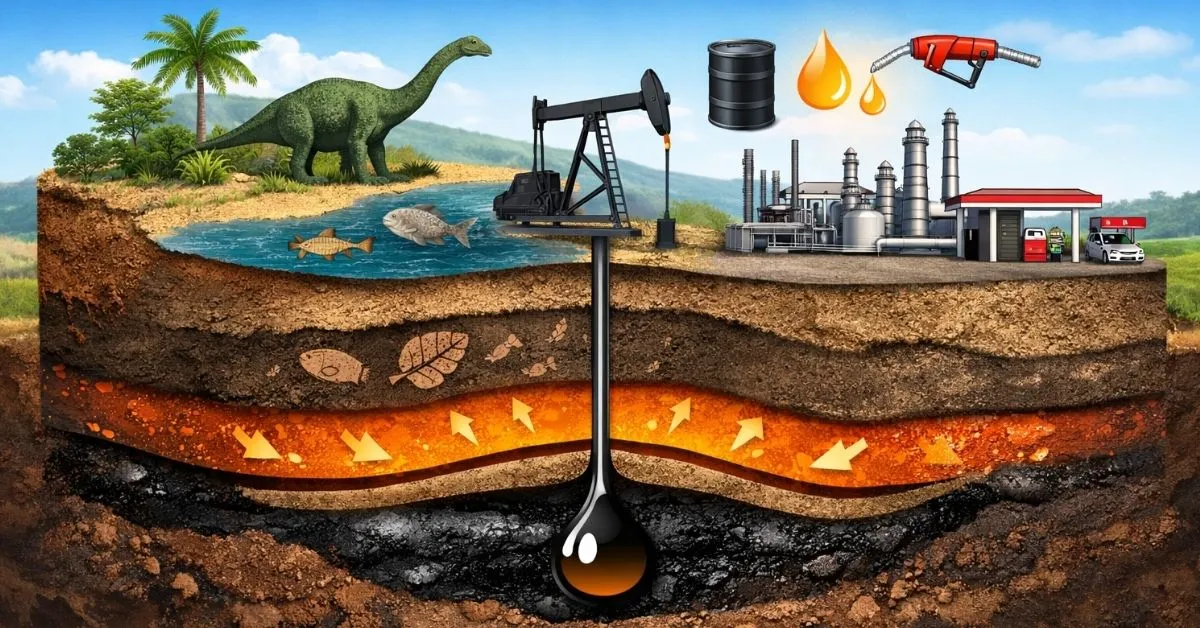
Petrol is known to be one of the most widely used fuels in the modern world. This non-renewable resource powers millions of cars, motorcycles, and machinery every day. However, one of the major questions that arises is how the petrol is formed.
The formation of petrol is not a quick task as it takes millions of years . Petrol is derived from crude oil, which forms from the remains of ancient marine plants and animals buried under layers of sediment.
To understand the process clearly, it is helpful to look at the formation of petrol step by step from ancient life forms to the refined fuel that powers vehicles today.
What Is Petrol?
The Indian Oil Corporation Limited mentions: “Gasoline is a complex mixture of relatively volatile hydrocarbons that vary widely in chemical & physical properties and are derived from fractional distillation of crude petroleum with a further treatment mainly in terms of improvement of its octane rating. The hundreds of individual hydrocarbons in gasoline range from c4 to c11.”
To put it in simple terms, petrol, which is also known as gasoline in some countries, is a liquid fuel made from crude oil. It is mainly used in internal combustion engines found in cars, motorcycles, and small machines.
Petrol is not available directly in the nature. Instead, it is produced after crude oil is extracted from underground and refined in oil refineries.
How is Petrol Formed?
The story of petrol begins hundreds of millions of years ago in ancient oceans. Tiny marine organisms such as plankton, algae, and microscopic animals lived in these oceans. When these organisms died, their remains sank to the bottom of the sea.
Over time, these organic materials mixed with mud, sand, and sediments on the ocean floor. As more layers of sediment built up, the remains were buried deeper and deeper under the Earth’s surface. This process began during different geological periods.
The U.S. Energy Information and Administration website mentions: “We call crude oil and petroleum fossil fuels because they are mixtures of hydrocarbons that formed from the remains of animals and plants (diatoms) that lived millions of years ago in a marine environment before dinosaurs existed. Over millions of years, the remains of these animals and plants were covered by layers of sand, silt, and rock. Heat and pressure from these layers turned the remains into what we now call crude oil or petroleum. The word petroleum means rock oil or oil from the earth.”
Over millions of years, this pressure and heat caused chemical reactions that slowly transformed the organic matter into hydrocarbons which are the basic components of oil and gas.
As the temperature and pressure continued to increase, kerogen gradually broke down and turned into crude oil and natural gas.
After crude oil formed, it did not always remain where it was created. Instead, the liquid hydrocarbons slowly moved through tiny pores in underground rocks.
Eventually, the oil became trapped beneath layers of impermeable rock, forming underground oil reservoirs. These reservoirs can exist thousands of meters below the Earth's surface.
The U.S. Energy Information and Administration website mentions: “Crude oil and other hydrocarbons exist in liquid or gaseous form in underground pools, or reservoirs, in tiny spaces within sedimentary rocks and near the earth's surface in tar (or oil) sands. Petroleum products are fuels made from crude oil and the hydrocarbons contained in natural gas. Petroleum products can also be made from coal, natural gas, and biomass.”
How Long Does Petrol Take to Form?
The formation of crude oil which leads to petrol formation can take 10 million to 300 million years depending on geological conditions.
In conclusion, petrol is formed through a long natural process that begins with tiny marine organisms living in ancient oceans. After their remains are buried under layers of sediment, heat and pressure transform them into crude oil over millions of years. That is why this resource is known as non-renewable and must be used carefully.



Comments
All Comments (0)
Join the conversation