Show Key Points
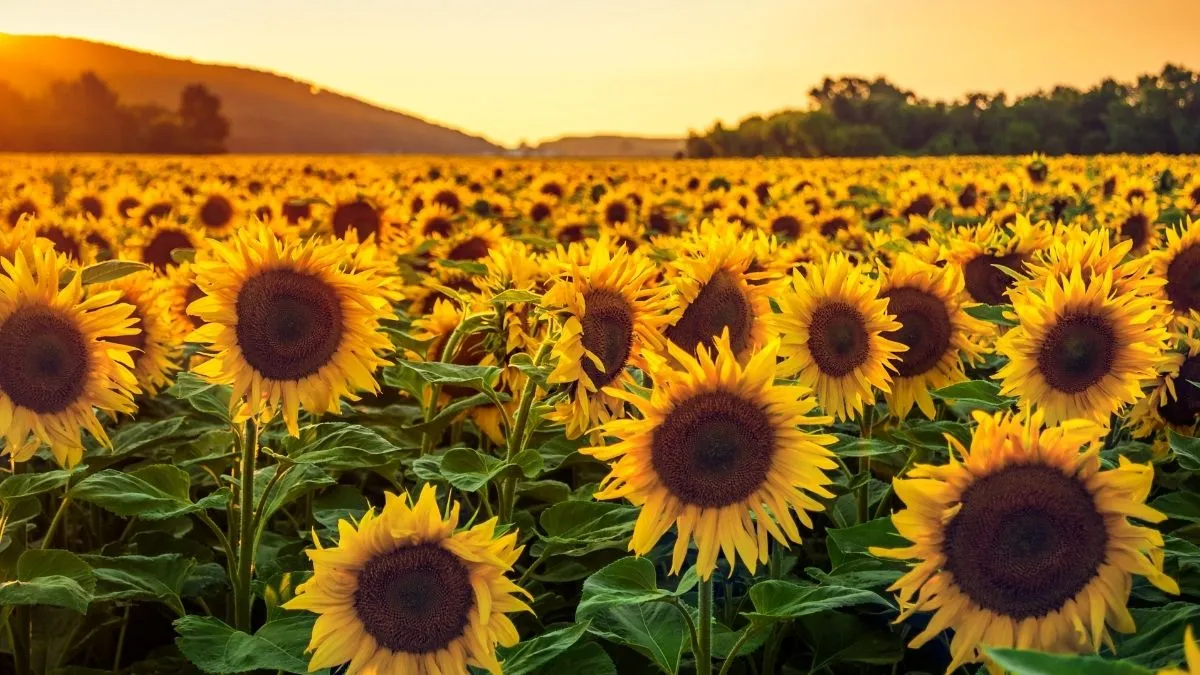
Sunflowers are far more than just bright, sun-facing garden ornaments; they are a critical global resource. As of 2026, global sunflower seed production has seen a significant shift, with experts forecasting a harvested area of over 33 million hectares worldwide to meet the rising demand for healthy oils.
Most people know sunflowers for their tall stalks and seeds that are full of oil. However, students and people who want to ace competitive exams need to know the scientific name of sunflowers. It is part of one of the most diverse plant families on Earth.
In this article, we'll look at the scientific name for sunflower, how it is classified in detail, and some interesting facts about Asteraceae plants.
What is the Scientific Name of a Sunflower?
The scientific name of a sunflower is Helianthus annuus. This name is derived from two Greek words: "helios," meaning sun, and "anthos," which translates to flower.
The species name "annuus" is Latin for annual, highlighting the plant's one-year life cycle. This botanical name specifically refers to the common sunflower, which is famous for its large, seed-bearing head and its ability to grow rapidly in various climates.
Family Classification of a Sunflower
The daisy or composite family is where sunflowers belong. The flower heads of this group are made up of hundreds of tiny flowers that work together. Here is a more in-depth look at how sunflowers fit into the biological hierarchy.
| Rank | Sunflower Plant Scientific Classification |
| Kingdom | Plantae |
| Division | Tracheophyta (Vascular Plants) |
| Class | Magnoliopsida (Dicotyledons) |
| Order | Asterales |
| Family | Asteraceae |
| Genus | Helianthus |
| Species | H. annuus |
Sunflower Family - Common Species and Distribution
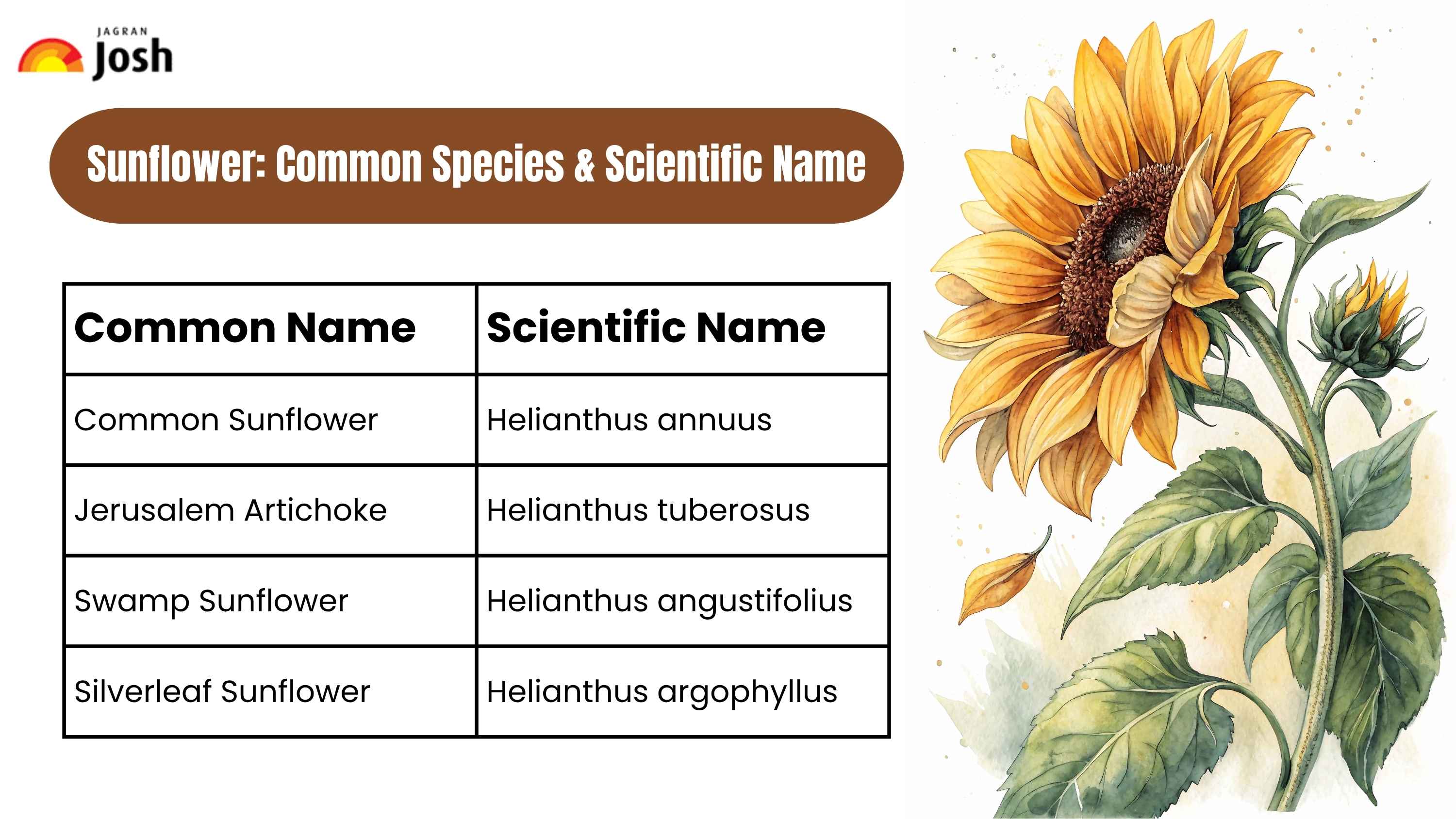
There are roughly 70 different sunflower species within the Helianthus genus. While Helianthus annuus is the most common, other species serve unique purposes in different regions.
| Common Name | Scientific Name | Primary Region | Conservation Status |
| Common Sunflower | Helianthus annuus | Global (Native to North America) | Secure (G5) |
| Jerusalem Artichoke | Helianthus tuberosus | North America/Europe | Secure |
| Swamp Sunflower | Helianthus angustifolius | Eastern United States | Least Concern |
| Silverleaf Sunflower | Helianthus argophyllus | Coastal Southern USA | Stable |
Check Out - Which US State is Known as the 'Sunflower State'?
5 Most Interesting Facts about Sunflowers
Here are some more amazing facts about the sunflower plant you may find interesting to note:
1. Heliotropism in Youth
Young sunflowers exhibit a behavior called heliotropism, where the flower heads track the sun's movement from east to west. However, as the plant matures and the stem stiffens, the flower head typically remains fixed, facing the east to stay warm and attract more pollinators.
2. A Thousand-in-One Bloom
What appears to be a single large flower is actually a pseudanthium. The center is made of thousands of tiny disk florets, while the yellow petals on the outside are actually ray florets.
3. Nature's Decontaminators
Sunflowers are hyperaccumulators. They have the unique ability to absorb toxic heavy metals and radiation from the soil. They were famously planted at the sites of the Chornobyl and Fukushima nuclear disasters to help clean the environment.
4. Math in Nature
The seeds in a sunflower head follow the Fibonacci sequence. The spirals of seeds are arranged in a specific mathematical pattern that allows the plant to pack the maximum number of seeds into the smallest possible space.
5. Record-Breaking Heights
Sunflowers are rapid growers. While most reach 8–12 feet, the current Guinness World Record for the tallest sunflower stands at over 30 feet, which was grown in Germany.
Check Out - What is the Scientific Name of a Pine Tree?
Knowing the scientific name of a sunflower helps us understand how complicated this common plant is on a biological level. Helianthus annuus is still an important part of our ecosystem. It belongs to the Asteraceae family and makes oil in a way that doesn't hurt the environment.



Comments
All Comments (0)
Join the conversation