Show Key Points
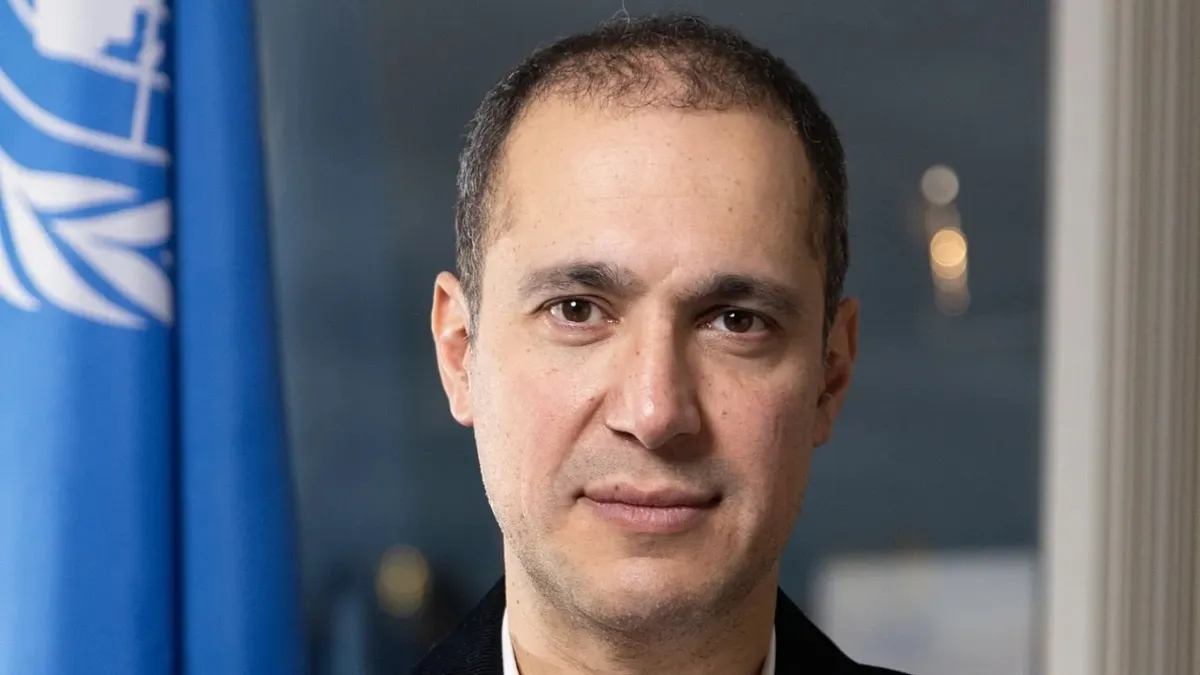
Professor Kaveh Madani, Director of the United Nations University Institute for Water, Environment and Health (UNU-INWEH) has been awarded the 2026 Stockholm Water Prize recognized for his groundbreaking work in the water-energy-food nexus and environmental systems analysis and shaping international water policy and diplomacy.
Water is the lifeblood of our planet, yet it remains one of our most mismanaged resources as climate change accelerates and populations grow, the need for visionary leadership in water governance has never been more critical.
The Stockholm International Water Institute (SIWI) named Professor Kaveh Madani as the laureate of the 2026 Stockholm Water Prize which is often referred to as the "Nobel Prize for Water," , for his contributions to understanding complex water systems and his tireless advocacy for sustainable resource management across the globe.
What is the "Nobel Prize for Water"?
The Stockholm Water Prize is the world’s most prestigious water award which was established in 1991. It is presented annually to individuals or organizations for their contribution in the conservation and protection of water resources.
Since there is an no separate Nobel Prize for the water and its resources, hence the Stockholm Water Prize has filled this gap gaining its reputation as the "Nobel Prize for Water
-
It is awarded by Stockholm Water Foundation in cooperation with the Royal Swedish Academy of Sciences and presented by H.M. King Carl XVI Gustaf of Sweden.
-
The Stockholm Water Prize recognizes a wide range of achievements by reflecting the multidisciplinary nature of water such as molecular biology and water engineering.
Stockholm Water Prize 2026
Stockholm Water Prize 2026 is given to Kaveh Madani. Kaveh Madani currently serves as the Director of the United Nations University Institute for Water, Environment and Health (UNU-INWEH). Madani was chosen for his pioneering research into the water-energy-food (WEF) nexus and marking a significant moment for the field of environmental systems analysis.
His work moved beyond looking at water in isolation, instead showing how water security is inextricably linked to energy production and food systems. At the age of 44 years old, Professor Kaveh Madani has made history as the youngest laureate in the 35-year legacy of the Stockholm Water Prize. His achievements include:
-
Systems Thinking: Developing mathematical models that help policymakers understand the trade-offs between different sectors.
-
Water Diplomacy: Bridging the gap between science and policy, particularly in conflict-prone regions where water is a source of tension.
-
Public Engagement: Using his platform to educate the global public on the "water bankruptcy" facing many modern nations.
Who Won the Stockholm Water Prize in India?
India has won the multiple Stockholm Water Prize, which reflects the country's deep cultural and historical ties with its rivers and groundwater.
-
Dr. Bindeshwar Pathak (2009): The founder of Sulabh International was honored for his work in developing cost-effective sanitation systems to improve water quality and public health across India.
-
Rajendra Singh (2015): Known as the Waterman of India, He won the prize for his innovative use of traditional "johads" (earthcheck dams) to revive dried-up rivers and bring water back to nearly 1,000 villages in Rajasthan.
-
Madhav Chitale (1993): for his leadership in water resource management and his role in shaping India's national water policy.
The 2026 Stockholm Water Prize awarded to Kaveh Madani is a testament to the fact that solving the global water crisis requires more than just engineering; it requires diplomacy, systems thinking, and a deep understanding of human behavior.


Comments
All Comments (0)
Join the conversation