Show Key Points
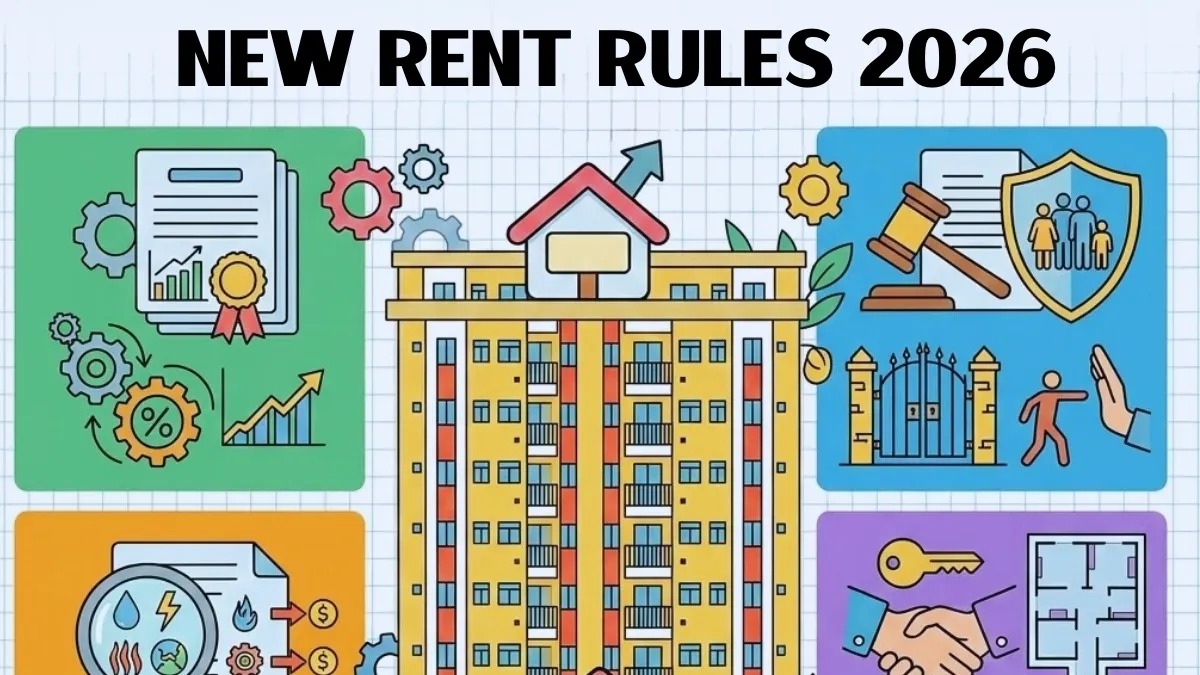
New Rent Rules 2026: The New Rent Rules 2026 are a game-changer for anyone living on rent or owning property (residential) in India under the new Model Tenancy Act, the biggest shift to digital registration, making it mandatory to register rent agreement within 60 days to ensure full legal protection. and for tenants th security deposits are now capped at just 2 months and a mandatory 90-day rent hike notice and a 24-hour privacy rule before a landlord visit.
For the Landlords, Rent Tribunals designed a 60-day dispute resolution and faster eviction processes by integrating police verification and digital stamping These rules finally replace with a transparent system that protects everyone’s money and peace of mind.
Key Provisions of New Rent Rules 2026
The new rules aim to bridge the gap between landlords and tenants through transparency and use of the modern technology such as:
1. Mandatory Written & Registered Agreements
-
No Oral Agreements: Verbal or handshake deals are no longer hold legal validity, every tenancy must be backed by a written contract.
-
60-Day Registration Rule: Both parties must jointly inform Rent Authority and register agreement within 60 days of signing.
-
Digital Stamping: Agreements must be digitally stamped and registered online through state-specific portals to be admissible in court.
-
Unique Tenancy ID: Upon registration, a unique ID is generated which is required for any future legal proceedings or dispute resolutions.
2. Security Deposit Caps:
-
For Residential Properties zsecurities capped at a maximum of 2 months' rent.
-
For Commercial/Non-Residential capped at a maximum of 6 months' rent.
-
Refund Timeline: The deposit must be refunded on the day the tenant vacates after valid deductions for damages excluding normal wear and tear.
3. Rent Hikes & Revisions:
-
Frequency: Rent can only be increased once in 12 months.
-
Notice Period: Landlords must provide a 90-day (3-month) written notice before implementing a rent hike unless a specific increase is already defined in the agreement.
-
Mid-term Hikes: Prohibited unless the landlord has made significant structural improvements to the property with the tenant's consent.
4. Privacy and Entry Rights:
-
24-Hour Notice: Landlords cannot enter the premises without giving a 24-hour written or electronic notice.
-
Daylight Rule: Inspections and repairs must be conducted between sunrise and sunset only.
-
Emergency Exception: Notice is not required in cases of emergencies like fire, flooding or natural calamities.
5. Repairs and Maintenance Responsibilities:
the responsibilities are divided as follows:
-
Landlord: Structural repairs, whitewashing/painting, external electrical wiring and plumbing pipe bursts.
-
Tenant: Day-to-day upkeep, minor repairs (taps, switches, sockets), drain cleaning and glass panel replacements.
-
Failure to Repair: If a landlord fails to handle essential structural repairs within 30 days of notice, the tenant can do it and deduct the cost from the rent.
6. Eviction and Overstaying Penalties:
-
Faster Eviction: Eviction is streamlined through Rent Tribunals for reasons like non-payment of rent (for 2+ months) and misuse of property, or structural damage.
-
Overstaying Fines: If a tenant refuses to vacate after the lease ends:
-
2x Rent: For the first two months.
-
4x Rent: Monthly thereafter until the property is vacated.
7. Dispute Resolution Mechanism:
-
Three-Tier System: Disputes are moved out of civil courts and handled by:
-
Rent Authority at District level
-
Rent Court
-
Rent Tribunal (Appellate body)
-
60-Day Deadline: These bodies are mandated to resolve most rental disputes within a 60-day timeframe.
Difference Between Old vs. New Rental Rules
| Feature | Old Practice (Pre-2026) | New Rules (2026 Onward) |
| Agreement | Often verbal or simple 11-month notarized paper. | Mandatory Written & Registered agreement. |
| Registration | Optional for short terms, often ignored to save tax. | Compulsory Registration with Rent Authority within 60 days. |
| Security Deposit | Arbitrary (often 6–10 months in major cities). | Capped at 2 Months (Residential) and 6 Months (Commercial). |
| Rent Hikes | Sudden increases often without formal notice. | 90-Day Written Notice required for any hike. |
| Landlord Entry | Could visit anytime "to check the flat." | Mandatory 24-Hour Notice, daytime entry only. |
| Disputes | Dragged in Civil Courts for 10–20 years. | Rent Tribunals aim to resolve cases in 60 days. |
| Eviction | Extremely difficult and high risk of "squatting." | Faster Eviction with heavy penalties for overstaying (2x–4x rent). |
| Stamping | Physical stamp papers (easily backdated/faked) | Digital e-Stamping via integrated state portals. |
| Repairs | Constant "he-said-she-said" over who pays. | Clearly Defined Roles (Structural, Landlord, Usage:Tenant) |





Comments
All Comments (0)
Join the conversation