Show Key Points
Science awards honor the amazing discoveries and inventions.From the global prestige of the Nobel Prize in Sciences to local science fairs where students first kindle their curiosity, these recognitions focus on creativity, persistence, and the quest for truth.
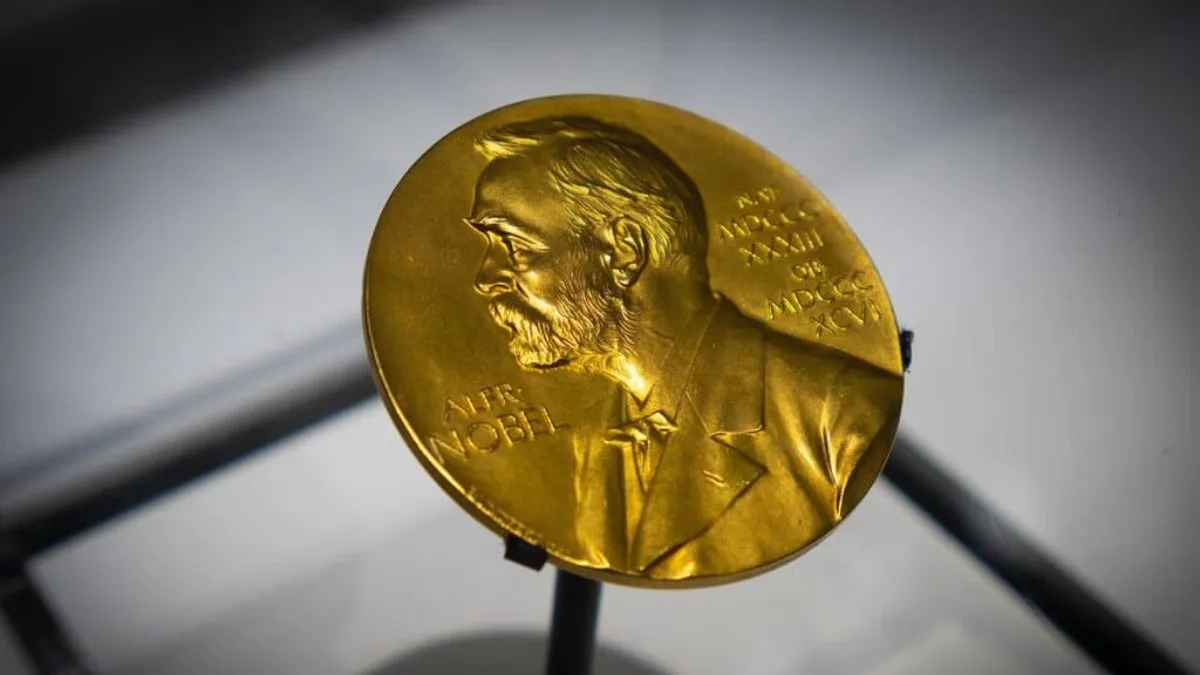
The Nobel Prize was established in 1901 according to the will of Alfred Nobel, the inventor of dynamite. The Nobel Prizes reward individuals whose contributions have provided the greatest benefit to humankind across three scientific disciplines: Physics, Chemistry, and Physiology or Medicine.
Check Out: Which is the Highest Civilian Award in India? Know its Name and History
Which Is the Most Prestigious Prize in Science?
The most prestigious award in science is the Nobel Prize.
This prize was invented by Alfred Nobel in 1901.
This prize is given to an individual in 6 categories and 4 in the science fields, such as physics, chemistry, physiology, or medicine.
It is given to those people who have contributed significant discoveries for the betterment of mankind.
The Nobel Prize is considered the highest award in the field of science because of its worldwide recognition and strict selection process.
Who Receives this Award?
The Nobel Prize is given to individuals or organizations who have made significant discoveries for the betterment of mankind.
In the science field, a maximum of three scientists share the award for a single discovery.
The evaluation process is highly strict and confidential , with nominations from experts and careful review.
The first winners in 1901 included Wilhelm Conrad Röntgen for X-rays, jacobus henricus van’t hoff, and Emil von Behring. Today, it remains a symbol of excellence and innovation in the sciences.
History of the Nobel Prize
Alfred Nobel was a chemist, engineer, inventor, and businessman, and he is remembered for founding the Nobel Prize.
In his will, Alfred Nobel decreed that his wealth should be used to recognise individuals who had “rendered the greatest service to humankind” during the preceding year.
The prizes were to recognise exceptional contributions in the fields closest to his own work, physics, chemistry, physiology or medicine, literature, and peace.
Following his death, it took several years to bring his vision to fruition, with the first Nobel Prizes awarded in 1901.
In 1969, an additional award, the Sveriges Riksbank Prize in Economic Sciences in Memory of Alfred Nobel, was introduced to commemorate the 300th anniversary of Sweden’s central bank.
Why is this award important?
The Nobel Prize is important because it honors discoveries that change the world in a big way.
It was created in 1901 and is given out in major fields like physics, chemistry, and medicine to honor work that makes life better for people.
The prize not only honors great scientific work, but many discoveries that won the Nobel Prize, like X-rays and medicines that save lives, have changed the world.
The award encourages students and researchers to explore science, think outside the box, and come up with new ideas that help people and the world move forward.
Must-Know Facts About Nobel Prize
-
The Nobel Prize was first awarded in 1901; the Economics Prize was NOT in Alfred Nobel’s will, established in 1968 by Sweden’s central bank, and first awarded in 1969.
-
Marie Curie the only person to win Nobel Prizes in two different sciences: Physics (1903) and Chemistry (1911).
-
ICRC (International Committee of the Red Cross) won the Nobel Peace Prize the most times: 3 times (1917, 1944, 1963).
-
Malala Yousafzai (Peace, 2014), the youngest Nobel laureate ever, at age 17.
Conclusion
The Nobel Prize is considered a positive sign of hope and pride. People get honoured in the section who make the world a better place for mankind. It is very relevant these days for bringing attention to important contributions and pushes for positive change. The Nobel Prize makes people learn, work for peace, and make the world a better place for mankind in the future.



Comments
All Comments (0)
Join the conversation