India Added 2 New Ramsar Sites on 15 October 2026: Sukhna Wetland and Sauj Jheel – Check Location and Facts
India added two new Ramsar Sites on October 15, 2026. Check the location, site numbers, important bird species and key facts about Sukhna Wetland and Sauj Jheel as India's total reaches 103.
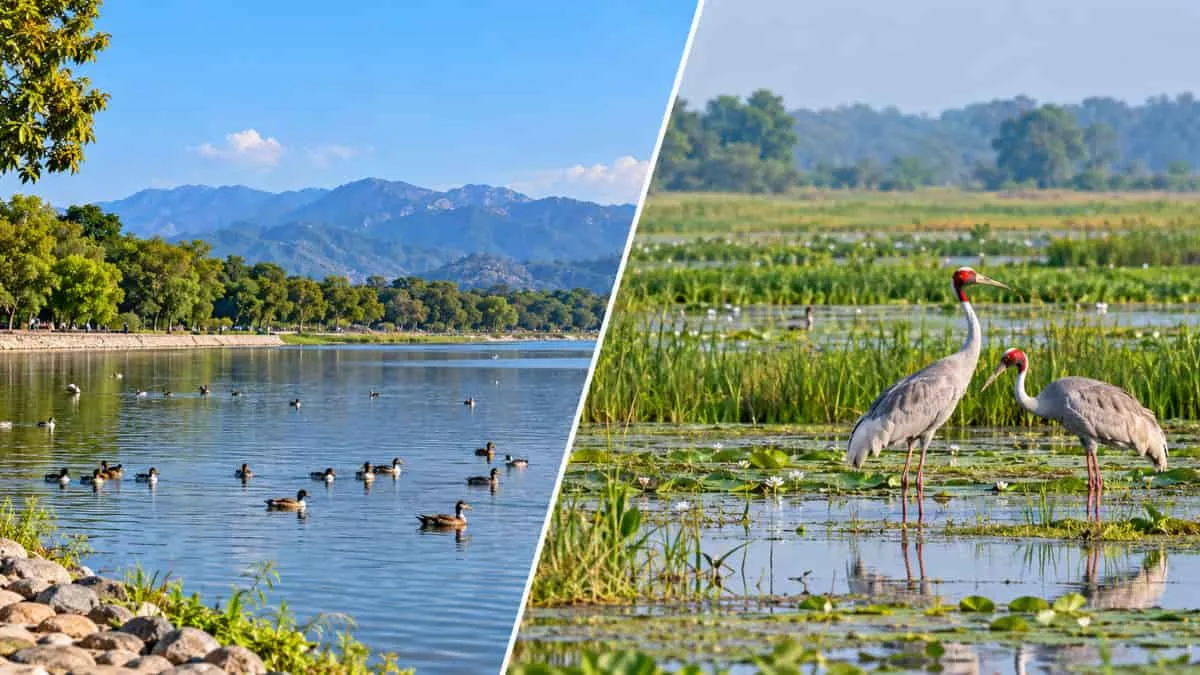
India's New Ramsar Sites 2026: On 15th October, India added two new wetlands, Sukhna Wetland in Chandigarh and Sauj Jheel in Uttar Pradesh to the list of Ramsar Sites in India, and with the addition of these two wetlands, India now has a total of 103 Ramsar Sites.
This announcement was made by the Union Minister for Environment, Forest and Climate Change, Bhupender Yadav.
India’s Ramsar site tally reaches 103 🇮🇳🌿 India continues to strengthen its commitment to wetland conservation, with Sukhna Lake in Chandigarh and Sauj Jheel in Uttar Pradesh becoming the latest additions to the list of Ramsar Sites. This milestone highlights the importance PM Shri @narendramodi ji’s government has been laying on wetlands in conserving biodiversity, enhancing water and climate security, and sustaining local livelihoods. These additions reaffirm India’s ongoing efforts to conserve its rich wetland ecosystems and strengthen the ecological, climatic and livelihood benefits they provide. 🌏💧 I congratulate Uttar Pradesh and Chandigarh for this feat. Dear travellers, do visit Sukhna and Sauj next time you have a couple days at hand. #AmritDharohar
— Bhupender Yadav (@byadavbjp) October 15, 2026
These two Ramsar sites are important for natural biodiversity to conserve birds, plants, and other wildlife. Sukhna Wetland, which is located at the near Chandigarh city at the foothills of the Outer Himalayas is important for conservation of Himalayan biodiversity, while Sauj Jheel, which is a shallow lake, is surrounded by farmland in the floodplain of the Ganga River
Let’s explore these two Ramsar Sites in detail.
India Adds Two New Ramsar Sites in 2026
The Ramsar Convention has recognised Sukhna Wetland and Sauj Jheel for their importance to the environment and biodiversity. These wetlands provide suitable habitats for several species of birds and other animals.
Here are the key details about the two newly added Ramsar Sites:
| Aspects | Sukhna Wetland | Sauj Jheel |
| Date of addition | October 15, 2026 | October 15, 2026 |
| Location | Chandigarh | Uttar Pradesh |
| Ramsar Site number | 2602 | 2603 |
| Type | Reservoir and wetland | Shallow lake |
| Important bird species | Common pochard and Pallas's fish eagle | Sarus crane and greater spotted eagle |
| Major importance | Waterbird habitat, water-flow regulation and recreation | Waterbird habitat and wetland connectivity |
What Is a Ramsar Site?
A Ramsar Site is a wetland recognised as being important at the international level. These sites are included under the Ramsar Convention, an international agreement for the conservation and wise use of wetlands.
The convention was adopted in the Iranian city of Ramsar in 1971. Wetlands include lakes, marshes, ponds and other areas where water plays an important role in supporting plants and animals.
Ramsar Sites are important because they provide food and shelter for wildlife, support biodiversity and help maintain the natural balance of the environment. Many wetlands also support fishing, farming, tourism and the livelihoods of local communities.
1. Sukhna Wetland: Location, Site Number and Important Facts
Location: Chandigarh, India
Ramsar Site Number: 2602
Sukhna Wetland, which is the 102nd Ramsar Site in India, is located at the edge of Chandigarh city, near the foothills of the Outer Himalayas.
It is an important wetland site which helps regulate water flow and sediment coming from the surrounding area.
The wetland has the ability to change its water levels during seasons. It has types of natural habitats, including open water plants growing along the waters edge, scrubland and forest areas. These habitats support a variety of plants, birds and other wildlife.
Why Is Sukhna Wetland Important?
Sukhna Wetland is especially important for waterbirds that live in the area throughout the year and birds that migrate along the Asian Flyway.
The Central Asian Flyway is a route used by migratory birds to travel between their breeding and wintering grounds.
Sukhna provides birds with places to feed, breed, rest and spend the winter.
Some important species found at the wetland include:
-
Common pochard: This is a vulnerable diving duck that depends on wetlands for food and shelter.
-
Pallas's fish eagle: This is an endangered bird of prey associated with wetland habitats.
-
Black pond turtle: This endangered turtle is supported by the shallow habitats along the wetland's edges.
2. Sauj Jheel: Location, Site Number and Important Facts
Location: Uttar Pradesh, India
Ramsar Site Number: 2603
Sauj Jheel is a lake located in Uttar Pradesh. It is surrounded by farmland. Lies, in the floodplain of the Ganga River.
The lake is part of a wider network of wetlands that helps maintain connections between natural habitats. It is also located near Saman Bird Sanctuary, another Ramsar Site in Uttar Pradesh.
The wetland holds kinds of plants such as sacred lotus and wild sugarcane. These plants give food, shelter and good spots for animal species to build nests and raise young.
Why Is Sauj Jheel Important?
Sauj Jheel is particularly important for waterbirds. According to the Ramsar Convention, the wetland regularly supports more than 30,000 waterbirds.
It has also been recognised as an Important Bird and Biodiversity Area (IBA) by BirdLife International. This designation highlights its value for bird conservation and biodiversity.
Some notable bird species found at Sauj Jheel include:
-
Sarus crane: A vulnerable crane species that depends on wetlands and other suitable habitats.
-
Greater spotted eagle: A bird of prey that uses wetland landscapes as part of its habitat.
The wetland's vegetation, shallow water and surrounding landscape provide food, nesting areas and shelter for wildlife. Its connection with nearby wetlands also makes it valuable for maintaining biodiversity across the region.
What Measures Are Proposed to Protect Sauj Jheel?
The conservation of Sauj Jheel requires steps to protect birds, plants and their natural habitat. Proposed management measures include:
-
A seasonal ban on fishing.
-
Restrictions on the use of fine-mesh fishing nets.
-
Control over cattle access to the wetland.
These steps are intended to reduce disturbance and help protect the wetland's ecological value.
Important GK Facts About India's 103 Ramsar Sites
For students preparing for school quizzes and competitive examinations, the following facts are important:
-
Which two wetlands were added to India's Ramsar list on October 15, 2026?
Sukhna Wetland and Sauj Jheel. -
How many Ramsar Sites does India have after the latest additions?
103. -
Where is Sukhna Wetland located?
Chandigarh. -
What is the Ramsar Site number of Sukhna Wetland?
2602. -
Where is Sauj Jheel located?
Uttar Pradesh. -
What is the Ramsar Site number of Sauj Jheel?
2603. -
How many waterbirds does Sauj Jheel regularly support?
More than 30,000 individuals. -
Which nearby bird sanctuary is located close to Sauj Jheel?
Saman Bird Sanctuary. -
Which flyway is important for migratory birds visiting Sukhna Wetland?
The Central Asian Flyway. -
Which international agreement provides the framework for wetland conservation?
The Ramsar Convention.

Prabhat Mishra is a Subject Matter Expert and digital journalist with an extensive background in the competitive exam landscape and over 4 years of experience in education, national and international news, and current affairs. Over his tenure with top knowledge platforms like Mentorship India, IAS BABA, IAS SARTHI, and now Jagran Josh, he has a deep understanding of government exams like UPSC and State PCS, including UP and Bihar, as he has already qualified for the UPPCS 2022 Mains and Bihar 68th Mains. With his core expertise in history, polity, geography & current affairs, he specialises in creating well-researched, aspirant-centric content and simplifying complex topics for competitive examinations.


-1792288684857_t.webp)


![NIOS Hall Ticket 2026 [OUT] LIVE: Download Class 10th, 12th October Theory Admit Card at sdmis.nios.ac.in, Direct link here](https://img.jagranjosh.com/images/2026/October/16102026/NIOS-Hall-Ticket-2026.jpg)

![[OUT] UPSSSC PET Admit Card 2026 LIVE: यूपी पीईटी एडमिट कार्ड जारी, upsssc.gov.in पर Direct Link](https://img.jagranjosh.com/images/2026/October/15102026/UPSSSC-PET-Admit-Card-2026.jpg)


