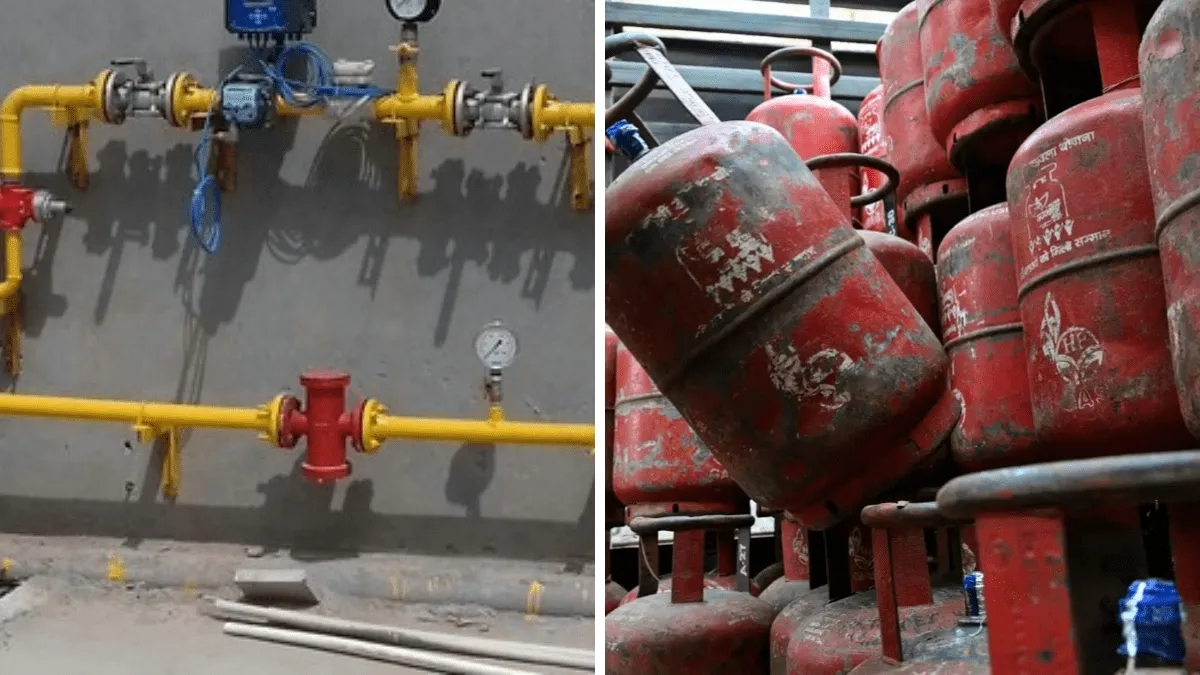
The two main cooking fuels in India are LPG and PNG, which have a certain delivery and use model. With the growth of urban infrastructure, household choices should be informed with knowledge of their differences.
The energy environment in India is becoming more and more conducive to cleaner fuels as the country is rapidly becoming urbanized and the government is introducing such programs as the SATAT scheme.
LPG has more than 33 crore connections through cylinders and PNG has 1.59 crore connections through pipelines, both aiming to deliver 12.63 crore connections by 2034 plans of PNGRB. The shift solves the shortages of LPG and contributes to sustainability.
What is LPG?
LPG or Liquefied Petroleum Gas is composed primarily of propane (C3H8) and butane (C4H10), liquefied under pressure to be stored in portable cylinders. It is a natural gas or crude oil by-product and must be booked in to have refills filled by distributors, with the delivery schedule varying depending on where you are.
It is subsidized under PMUY, and the challenge of managing it includes safety inspections on leakages and expiration.
What is PNG?
PNG, or Piped Natural Gas, is mostly methane (CH4, more than 90 percent), fed into homes through continuously flowing underground pipes.
It requires no storage, is controlled by PNGRB, and works like a metered supply of electricity, where it is billed in prepaid/postpaid form. It is available in 34 states/UTs with a domestic preference over industrial use when in high demand.
Key Differences
| Aspect | LPG | PNG |
| Composition | Propane-butane mix | Methane-dominant (CH4) |
| Supply Method | Cylinder delivery on booking | Pipeline, 24/7 access |
| Storage | Cylinders (9-47.5 kg); space-intensive | Metered; no cylinders needed |
| Availability | Subject to stock/delivery delays | Instant, uninterrupted |
| Cost (Delhi est.) | Rs 912 for 14.2 kg; Rs 800-1000/month equiv. | Rs 700-800/month for similar use |
| Safety | Heavier than air; pooling risk | Lighter; auto-disperses |
| Environmental | Higher CO2/particulates | Lower emissions; cleaner |
| Infrastructure | Portable; rural-friendly | Urban-focused; expanding |
Advantages of PNG Over LPG
PNG ensures easy delivery with no reservation and waiting at the door, which frees the kitchen space of the cylinders. Accuracy in metering that can reduce the costs by 20-30 percent each month and free deposits provides a long-run stabilization of costs.
Such characteristics like excess flow valves and leak detectors are safety-related as well, and they make the products reliable, and lower emissions help to achieve the net-zero goals in India.
Advantages of LPG
LPG is also geographically ideal, as it can be transported to rural or non-piped areas and can be installed in a short period and it can be subject to subsidy in the whole country.
All the infrastructure requirements are not applicable to the road or in times of outage and even the high heat cooking is not applicable to high calorific value (around 11.9 kWh/kg). The 10 crore PMUY connections reiterate its reach.
PNG contains a greater amount of methane which evaporates out of the line outside, in case of a leak through the pipeline controllers and auto shut-off to reduce the chances of an explosion.
The LPG that is heavier than the air can also be deposited indoors which necessitates regular checks and change of hoses with the standing of the LPG, in order to avoid explosives or piracy. PNGRB demands that PNG safety audits should be completed; LPG is governed by PESO.
A typical household burns 1-2 LPG cylinders every month (Rs 1,800-2,600), charges on delivery/deposit. PNG equivalents cost between Rs 700-1,000 including transport cost (e.g. 31-35/SCM in metros) yet excluding transportation.
PNG is more (10.8 kWh/SCM) efficient in the long run and cost-effective, although, initially, it has a connection cost (Rs 5,000-10,000).
IN CASE YOU'RE INTERESTED: Top 10 Countries with the Largest Oil Reserves
What is the Environmental Impact of LPG and PNG?
The unit energy of PNG produces 30-50 percent CO2 as compared to LPG unit energy, minimal SOx/NOx and no residue, and improves urban air quality. LPG that is cleaner when compared to coal/wood contributes to more particulates. The two coincide with cleaner fuel ladders yet the useful efficiency of the pipeline of PNG lessens the losses in the upstream.
PNG is also encompassing 10 percent of the households already in the face of LPG strains and PNGRB approved expansions in 300 plus districts, as of March 2026. Government campaigns encourage urban switches by liberating cylinders used in the rural setting. The leaders in providing gas include the IOAGPL and Gujarat Gas whose growth is 20% per annum.
PNG would suit urban houses in terms of safety, cost and environmental benefits and LPG would suit because of its availability. Utilize the portal at Check PNGRB to bring PNG feasibility on local level and also migrate wherever feasible in order to promote energy security at the national level.
ALSO READ: Top 10 Largest Oil-Producing and Consuming Countries



Comments
All Comments (0)
Join the conversation