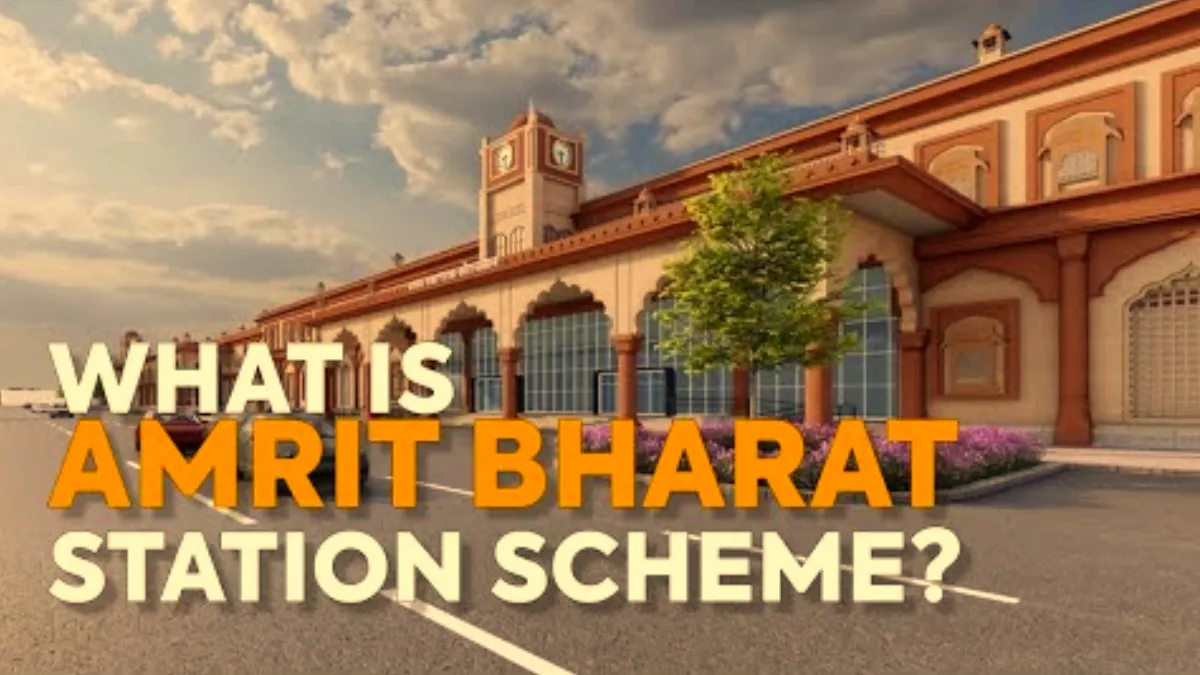
The Amrit Bharat Station Scheme (ABSS) is an initiative undertaken by the Ministry of Railways in India to redevelop more than 1,300 railway stations in the country to form modern passenger-friendly hubs. By March 2026, 1,338 stations are covered with a lot of progress being made by completion of approximately 172 sites.
Amrit Bharat Station Scheme Overview
ABSS has implemented the long-term and gradual master planning strategy in every station that aims at enhancing accessibility, urbanization, and sustainability. The main characteristics include increased foot overbridges, escalators, lifts, executive lounges, and One Station One Product kiosks that advertise the local products.
It is based on previous projects such as Adarsh Stations, in line with the national schemes of BharatNet and Make in India of multimodal connectivity and environment-friendly infrastructure such as ballastless tracks.
Coverage of the Scheme
It covers 1,338 stations in India, 13 of which are located in Delhi: Adarsh Nagar, Anand Vihar, Bijwasan, Delhi Junction, Delhi Cantt, Delhi Sarai Rohilla, Delhi Shahdara, Hazrat Nizamuddin, Narela, New Delhi, Sabzi Mandi, Safdarjung and Tilak Bridge.
What has been built nationwide is an example of completed stations, such as Alnavar, Ayodhya Dham and so on, adding up to 172 according to February 2026 statements on social media by the Railway Minister Ashwini Vaishnaw.
What is the Progress Till Date?
Delhi stations are highly developed: Safdarjung has already completed such large objects as station buildings and canopies; Bijwasan finished sewage systems; Delhi Cantt made progress on high roads.
By early 2026 there were 172 stations which had been redeveloped in full, and works on many others continued despite such challenges as continuity of operations and clearances; funding totaled ₹7,253 crore of the ₹ 12,118 crore 2025-26 allocation.
The modern amenities are improved waiting rooms, Divyangjan rooms, passenger information systems, and high traffic station visions of the city centers. The implementation has hurdles such as utility changes and safety during the live operations, which are solved through priority-based phasing without set deadlines.



Comments
All Comments (0)
Join the conversation