Who is Known as the Father of the Indian Nuclear Program?
India’s rise in nuclear science has a fascinating story. Meet the man known as the Father of the Indian Nuclear Program.
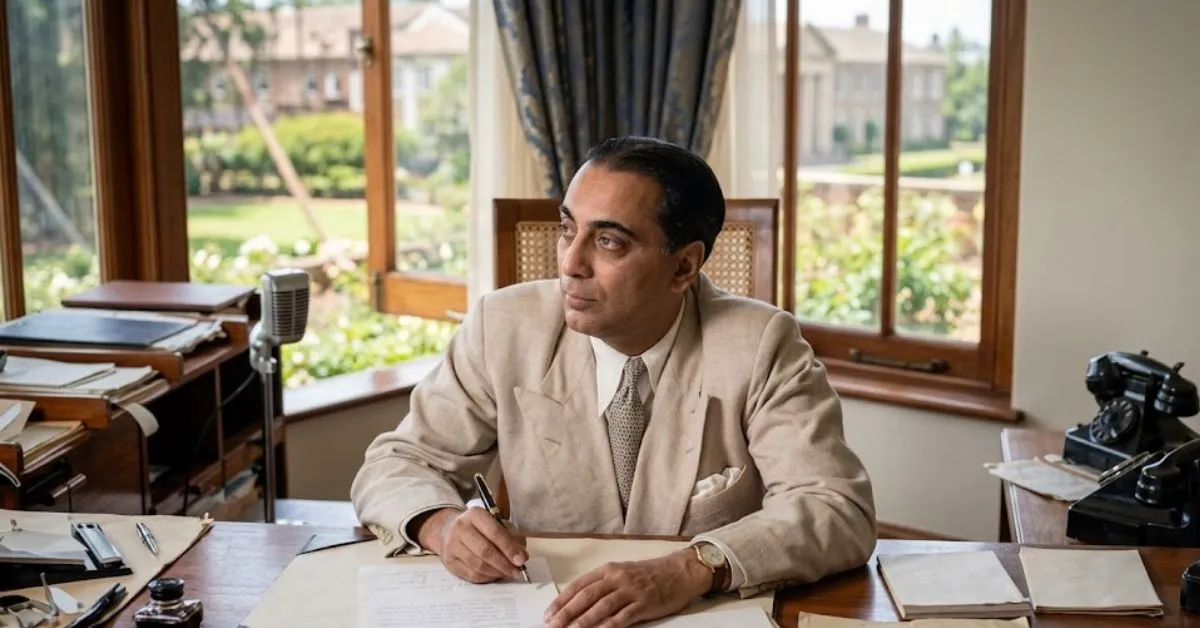
Every time India stands tall on the world stage as a nuclear power, there is one name that deserves all the credit. Long before India conducted its first nuclear test, one man had already laid the entire foundation for it.
Who is Known as the Father of the Indian Nuclear Program?
Dr. Homi Jehangir Bhabha was an Indian nuclear physicist who is widely credited as the "Father of the Indian Nuclear Programme." Just like Vikram Sarabhai built India's space dream from the ground up, Bhabha built India's nuclear future brick by brick, at a time when the country had just become independent.
Bhabha was born in Mumbai in 1909. In 1927, he went to England to study at Cambridge University. Although he started with engineering, he was quickly drawn to physics. He earned a PhD in nuclear physics in 1934 and returned to India before World War II to join the Indian Institute of Science, where he founded the Cosmic Ray Research Institute.
READ| Who is Known as the Father of the Indian Space Program?
How He Built India's Nuclear Program?
The real story begins in 1945. In March 1944, even before nuclear chain reactions became publicly known, Bhabha wrote a proposal to the Tata Trust that led to the establishment of the Tata Institute of Fundamental Research (TIFR), created on 19 December 1945 in Mumbai, with Dr. Bhabha as its Director.
This was just the beginning. To further push the nuclear mission forward, Bhabha established the Atomic Energy Establishment, Trombay (AEET) in January 1954 for multidisciplinary research essential for India's ambitious nuclear program. After his death in 1966, AEET was renamed Bhabha Atomic Research Centre (BARC) in his honour.
The Government of India Department of Atomic Energy mentions: “Dr. Homi Jehangir Bhabha conceived the Nuclear Program in India. Dr Bhabha established the Tata Institute of Fundamental Research (TIFR) for carrying out nuclear science research in 1945. To intensify the effort to exploit nuclear energy for the benefit of the nation, Dr Bhabha established the Atomic Energy Establishment, Trombay (AEET) in January 1954 for multidisciplinary research program essential for the ambitious nuclear program of India. After the sad demise of Bhabha in 1966, AEET was renamed Bhabha Atomic Research Centre (BARC).”
He also served as the first Chairman of the Indian Atomic Energy Commission (AEC) and as the Secretary of the Department of Atomic Energy (DAE).
His Unique Vision for India
What made Bhabha truly special was not just his scientific work but his strategic thinking. He is credited with formulating a strategy of focusing on extracting power from India's vast thorium reserves rather than its limited uranium reserves, a plan that stood in contrast to every other country in the world at that time.
It was formally adopted by the Indian government in 1958 as India's three-stage nuclear power programme which is still in progress.
Bhabha was also a strong advocate of nuclear energy for peaceful purposes and organized the first UN Conference on the Peaceful Uses of Atomic Energy in 1955.
The PIB mentions: “With this achievement, India has officially entered the second stage of its three-stage nuclear power programme, a vision first conceived by Dr. Homi Jehangir Bhabha, the architect of India's nuclear programme. The milestone carries substantial global significance. Once fully operational, India will become only the second country in the world after Russia to operate a commercial fast breeder reactor.”
Homi Bhabha passed away in a plane crash on 24 January 1966, while travelling to Geneva. He was only 56 years old. His sudden passing left a massive void in India's scientific community.
But the institutions he built continued his legacy. India's first nuclear test which was called the Smiling Buddha, happened in 1974, years after he was gone, but it was built entirely on the foundation he had laid.
Dr. Homi Jehangir Bhabha saw nuclear energy not as a weapon of fear but as a tool of progress for India. That vision, started in a small institute in Mumbai in 1945, is what powers India's nuclear future even today.
READ| Who is Known as the Grand Old Man of India?

Nikhil is a dedicated content writer with more than five years of experience, and works for the Jagran Josh General Knowledge section. He likes to create engaging and easy-to-read general knowledge content. He has spent years working on brain teasers, optical illusions, trending stories, and informative listicles that simplify facts for readers. His approach focuses on clarity, creativity, and making information feel effortless to understand.


