Key Points
- The Indus River originates from the Bokhar Chu glacier in Tibet, China.
- It flows through China, India, and Pakistan before reaching the Arabian Sea.
- The river is approximately 3,180 km long and supports diverse ecosystems.
The Indus River is essential for millions of people. It begins high in the mountains of Tibet and travels through three countries before emptying into the Arabian Sea.
This powerful river helped ancient civilisations and is still important for agriculture today. But do you know which glacier is the source of the Indus?
It is one of the longest rivers in Asia, stretching over 3,000 kilometres. In this article, we will explore the amazing origin of this great river.
ALSO READ| Which River Is Known As The River Of Nine Dragons?
Which Glacier Is The Source Of The Indus River?
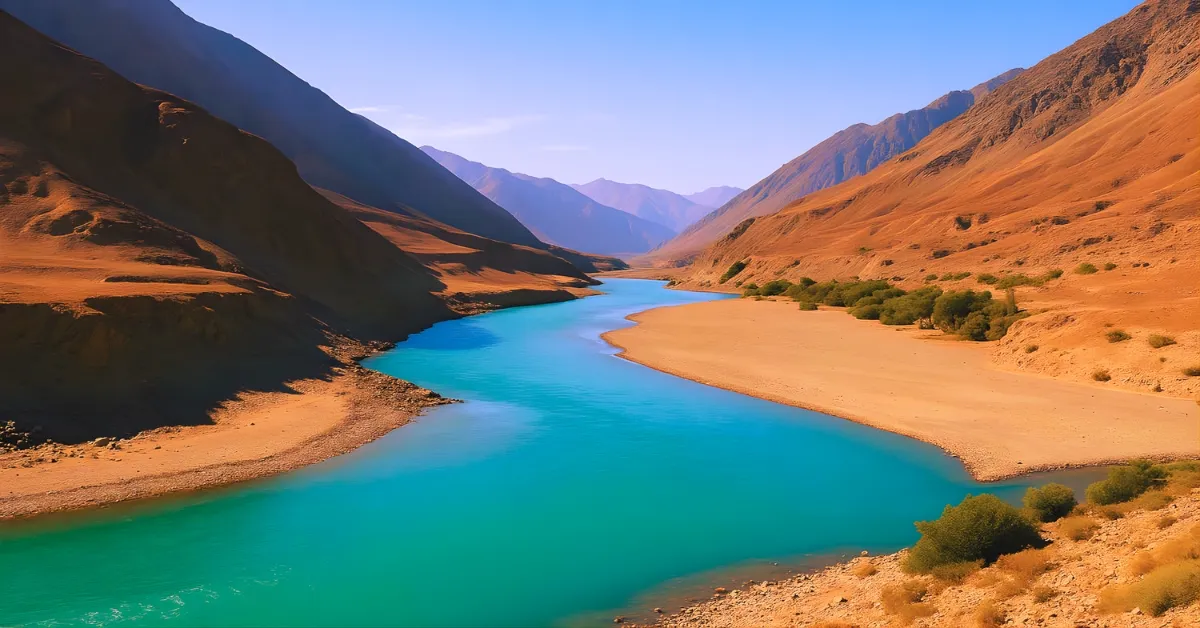
The Bokhar Chu glacier is the main source of the Indus River. It is located on the Tibetan Plateau close to Mount Kailash and sits at an elevation of around 5,180 metres.
The river starts its journey in China, specifically in Tibet. There, it is called the Senge Zangbo, which means "Lion's River".
From there, it flows northwest into India, through the cold desert of Ladakh. It then enters Pakistan and passes through the rugged mountains of Gilgit-Baltistan and the Khyber Pakhtunkhwa province.
After crossing the rich plains of Punjab and Sindh, the river ends by flowing into the Arabian Sea close to Karachi.
Key Details for Students
- Source Glacier: Bokhar Chu (Tibetan Plateau).
- Starting Point: Near Mount Kailash, China.
- Total Length: Approximately 3,180 kilometres.
- States/Regions: Tibet (China), Ladakh (India), Gilgit-Baltistan, Khyber Pakhtunkhwa, Punjab, and Sindh (Pakistan).
- Endpoint: The Arabian Sea.
IN CASE YOU'RE INTERESTED| Which Glacier Is The Source Of The Brahmaputra River?
5 Lesser-Known Facts About the Indus River
- The name "India" is derived from the Indus River.
- In Tibet, the river's source is called Senge Khabab, which translates to "Out of the Lion's Mouth".
- It is home to the Indus River Dolphin, one of the world's few species of blind freshwater dolphins.
- The annual flow of the Indus is nearly double that of the Nile River.
- It supported the Indus Valley Civilisation, one of the oldest urban cultures in human history.
- It is one of the few major rivers to flow through a high-altitude cold desert (Ladakh).
- It flows between the massive Karakoram and Himalayan mountain ranges.
What are the Tributaries of the Indus River?
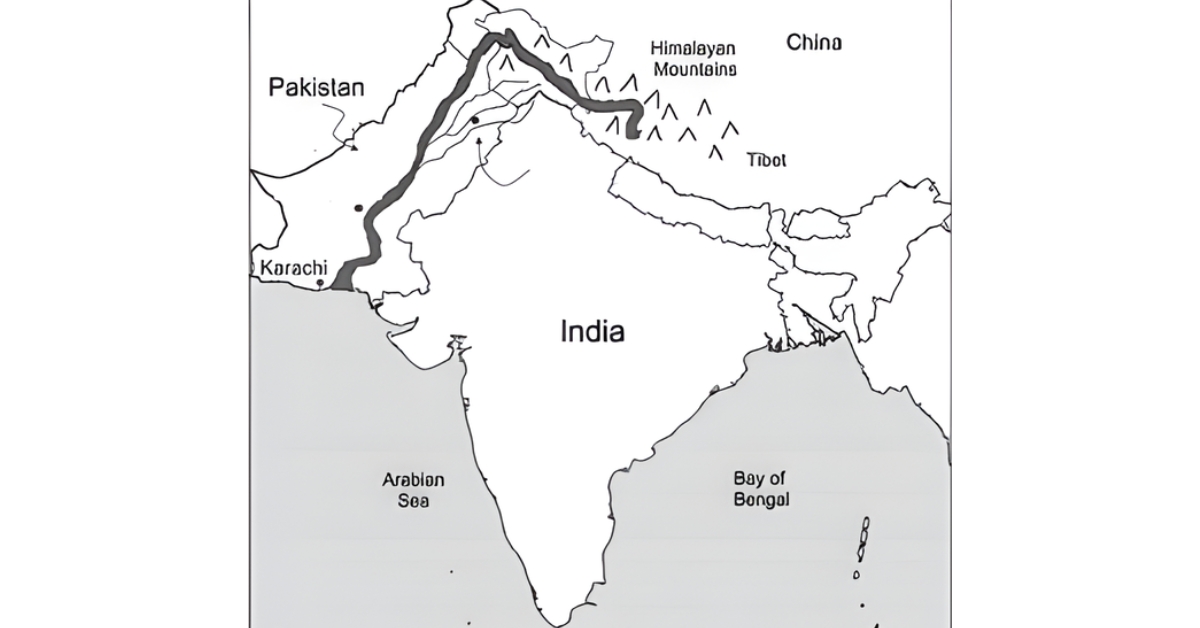
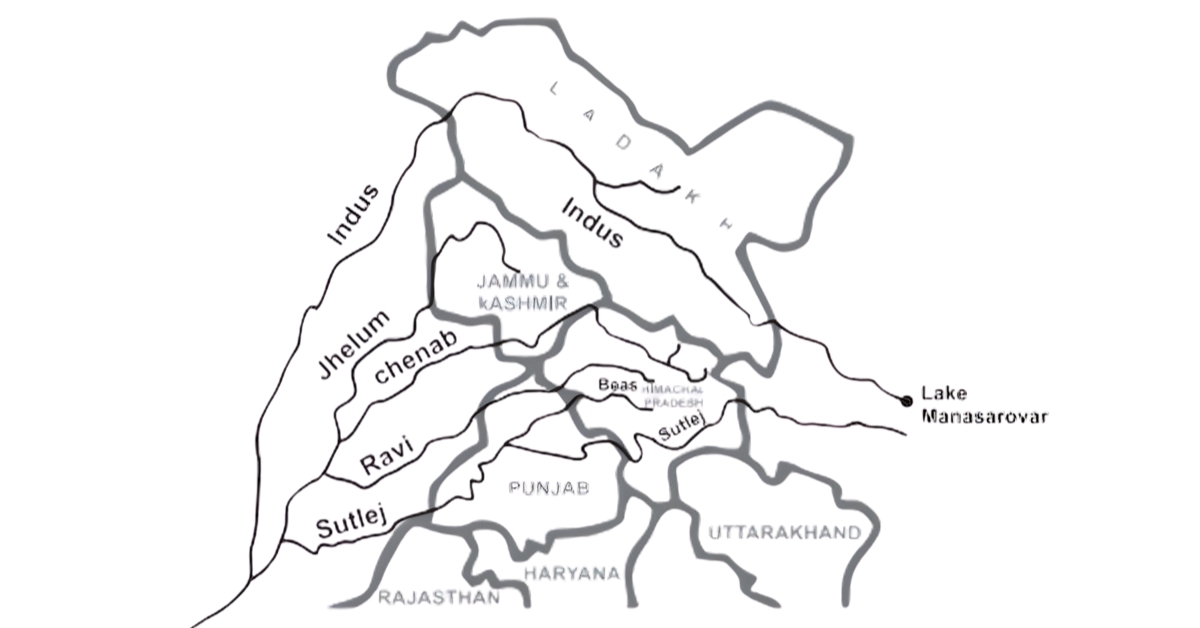
The Indus has many tributaries (smaller rivers that join it). They are usually divided into two groups:
- The Five Eastern Tributaries (The Panjnad): 1. Jhelum 2. Chenab 3. Ravi 4. Beas 5. Sutlej
- The Western Tributaries: Kabul (from Afghanistan)
- Shyok
- Gilgit
- Gomal
- Kurram
In Which Countries/Regions Indus River Flow Through?
The Indus is an international river that flows through three main countries:
- China: Starts in the Tibet Autonomous Region.
- India: Flows through the Union Territory of Ladakh.
- Pakistan: The river's longest stretch. It passes through:
- Gilgit-Baltistan (Mountainous north)
- Khyber Pakhtunkhwa (Hilly terrain)
- Punjab (Agricultural heartland)
- Sindh (Southern plains and delta)
What Are the Different Names of the Indus River?
Throughout history and across different cultures, the river has been known by several names:
- Sindhu: Its ancient Sanskrit name, meaning "ocean" or "large body of water."
- Senge Zangbo: Its Tibetan name, which means "Lion River."
- Indos: The name given by the ancient Greeks.
- Mehran: A local name often used in the Sindh region of Pakistan.
What is the Ecological Importance of the Indus River?
The Indus is not just water; it is a complex ecosystem that supports unique life:
- The Indus River Dolphin: One of the world's rarest mammals; it is functionally blind and uses echolocation to swim.
- Mangrove Forests: The Indus Delta is home to one of the largest arid-climate mangrove forests in the world.
- Migratory Birds: The river serves as a major flyway for birds travelling from Siberia to warmer climates.
- Soil Fertility: The river carries nutrient-rich silt that creates fertile land for millions of farmers.
- Marine Life: The delta provides a breeding ground for various species of fish and shrimp, which are vital for the economy.
Quick Revision: The Indus River
i) Origin and Journey
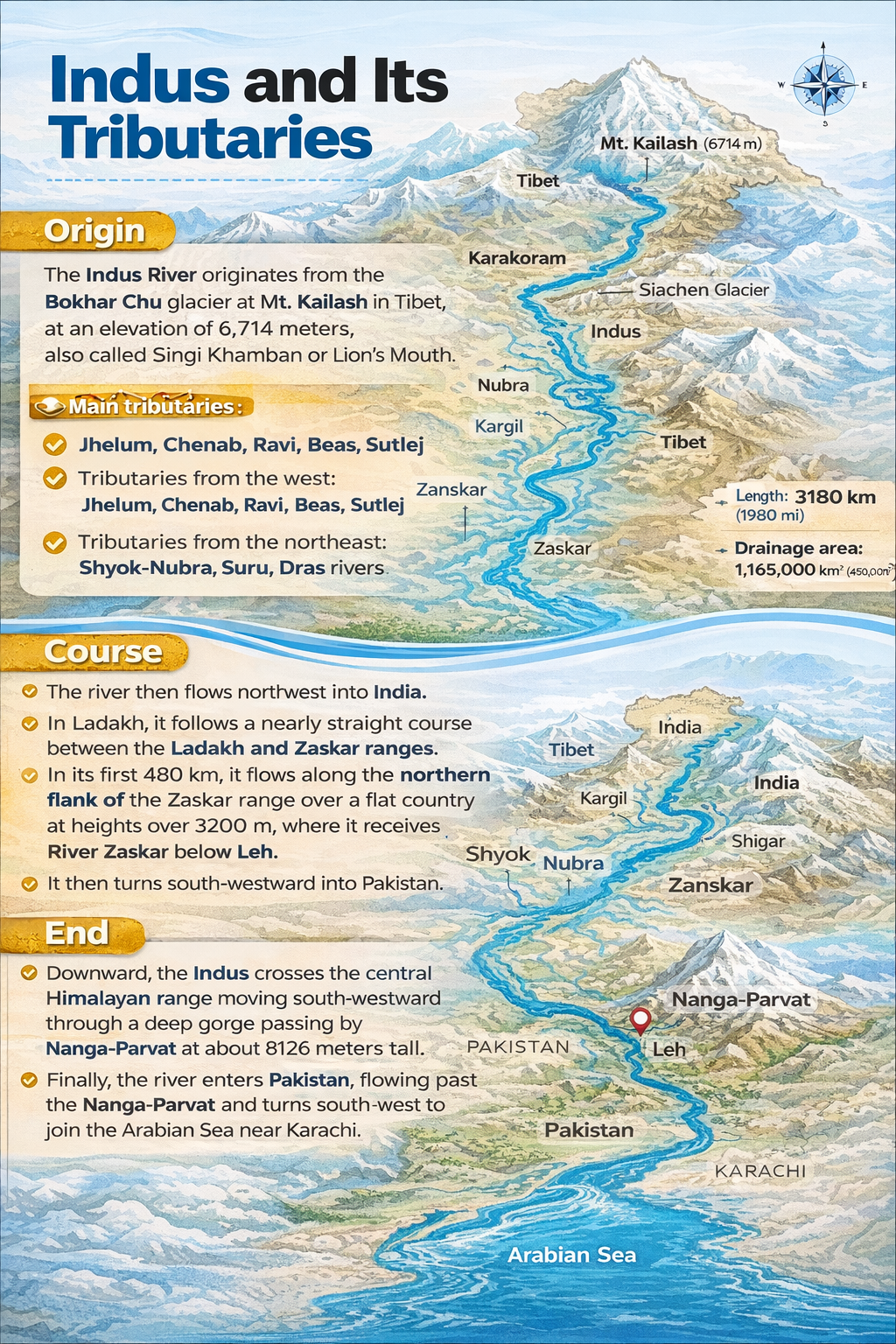
- Source Glacier: Bokhar Chu (Tibet, China).
- Elevation: ~5,180 metres near Mount Kailash.
- Path: Tibet → Ladakh (India) → Pakistan → Arabian Sea.
- Total Length: Approx. 3,180 km.
- End Point: Emptying into the Arabian Sea near Karachi.
ii) The Tributaries (Helper Rivers)
- Eastern (The Five Rivers): Jhelum, Chenab, Ravi, Beas, and Sutlej.
- Western: Kabul, Shyok, Gilgit, Gomal, and Kurram.
iii) Famous Names
- Sindhu: An Ancient Sanskrit name (means "Ocean").
- Senge Zangbo: Tibetan name (means "Lion's River").
- Indos: Greek name (where the name "India" comes from).
iv) Eco & Fun Facts
- The Dolphin: Home to the blind Indus River Dolphin (uses sound to see).
- Civilisation: Home to the Indus Valley Civilisation (one of the world's oldest).
- Irrigation: Powers the world's largest connected irrigation network.
- Delta: Famous for Mangrove forests near the sea.
WHAT'S NEXT| Which Glacier Is The Source Of the Ganga River?
Which specific glacier is considered the primary source of the Indus River?
Bokhar Chu
Yamunotri Glacier
Siachen Glacier
Gangotri Glacier
In which country or region does the Indus River begin its journey?
India
Tibet (China)
Pakistan
Afghanistan
The Tibetan name for the Indus is 'Senge Zangbo'. What does this name mean?
Golden River
Snow River
Lion River
Dragon River
When the Indus River enters India, which Union Territory does it flow through?
Puducherry
Jammu & Kashmir
Chandigarh
Ladakh
Which of these is one of the 'Five Eastern Tributaries' (Panjnad) of the Indus?
Shyok River
Chenab River
Gilgit River
Kabul River




-1769183599112.jpg)
Comments
All Comments (0)
Join the conversation