What is the Scientific Name of Lotus?
The scientific name of the lotus plant is a major focus for botany students and nature lovers. As a symbol of purity across Asia, understanding this aquatic perennial's true classification reveals how it thrives in muddy wetlands while its blossoms remain perfectly clean.
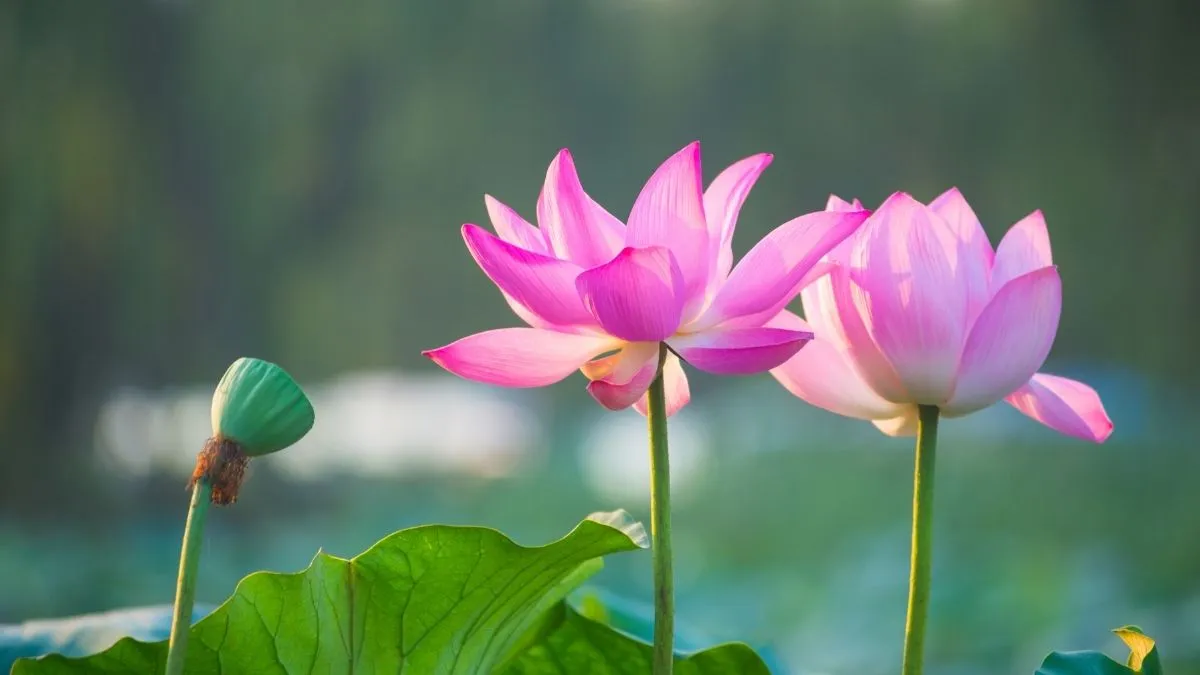
Imagine a plant that can look at a muddy, stagnant swamp and decide it is the perfect place to build a masterpiece. Long before it became the national flower of India or a sacred icon painted on temple walls, the lotus was busy pulling off one of nature’s greatest engineering marvels. Its leaves are so incredibly water-repellent that dirt simply rolls off them, a phenomenon scientists call the lotus effect.
But if you want to look it up in a global botanical database, searching for a lotus might leave you lost in a sea of water lilies. To really know this tough little survivor, you have to know the exact scientific name of the lotus that distinguishes it from every other wannabe water plant.
What is the Scientific Name of Lotus?
Lotus’s scientific name is Nelumbo nucifera. The Integrated Taxonomic Information System (ITIS) recognizes this as the accepted name for: Sacred Lotus, Indian Lotus, Asian Lotus.
The term Nelumbo comes from the Sinhalese word for the plant, while nucifera is a Latin phrase meaning "nut-bearing," which points directly to the large, distinctive seed pods found at the center of the blossom.
Curiously, while many people mistakenly call it a water lily, the scientific name of the lotus plant places it in an entirely different evolutionary category. A key difference is that true lotus flowers emerge high above the water on thick stems, whereas water lilies tend to float directly on the surface.
What is the Family of Lotus?
The botanical name of lotus fits into a surprisingly small family tree. The lotus belongs to the family Nelumbonaceae. Data from the Royal Botanic Gardens, Kew, highlights that this is a monogeneric family, meaning it contains only one single genus: Nelumbo.
Because of this special status, the lotus plant has very few close relatives living on the Earth today. It is a solitary evolutionary miracle, perfectly adapted to its niche habitat of the lands, like lotus flowers, usually in shallow ponds, calm river deltas, and muddy marshes throughout Asia and northern Australia, where its long rhizomes are firmly anchored in the submerged mud.
What are the 4 Main Types of Lotus Flower?
There are thousands of cultivated varieties of water gardens all over the world, but botanists classify major types of lotus by their natural species and structural bloom styles:
-
Asiatic Lotus (Nelumbo nucifera): The quintessential pink or white sacred lotus native to Asia, famous for its cultural significance and edible roots.
-
American Lotus (Nelumbo lutea): The only other true wild species, native to North America, is easily recognized by its striking pale-yellow blossoms.
-
Single-Petal Lotus: A structural type closest to wild ancestral forms, featuring fewer than 25 petals arranged around the central seed pod.
-
Multi-Petal (Thousand-Petal) Lotus: Highly bred ornamental varieties that pack over 50 to 100 petals into a dense, dramatic, spherical shape.
Unlocking the scientific name of the lotus shows that this plant is much more than a pretty flower. Nelumbo nucifera represents a unique branch of plant evolution that balances exquisite beauty with intense survival skills, proving that nature's finest designs often start deep in the mud.

Harshita Singh specializes in US affairs and general knowledge, simplifying intricate geopolitical and historical subjects into clear, digestible insights for learners. Holding a BA (Hons) in English from the University of Delhi and with over three years of experience in educational writing, she produces authoritative, thoroughly researched content that empowers readers to engage confidently with global current affairs. For inquiries, you can reach out to her at harshita.singh@jagrannewmedia.com.


