What Does the 5-Digit Number on Indian Trains Actually Mean?
Understand the structure of Indian Railways' 5-digit numbering system, including first-digit service classifications, zonal coding schemes, and historical background.
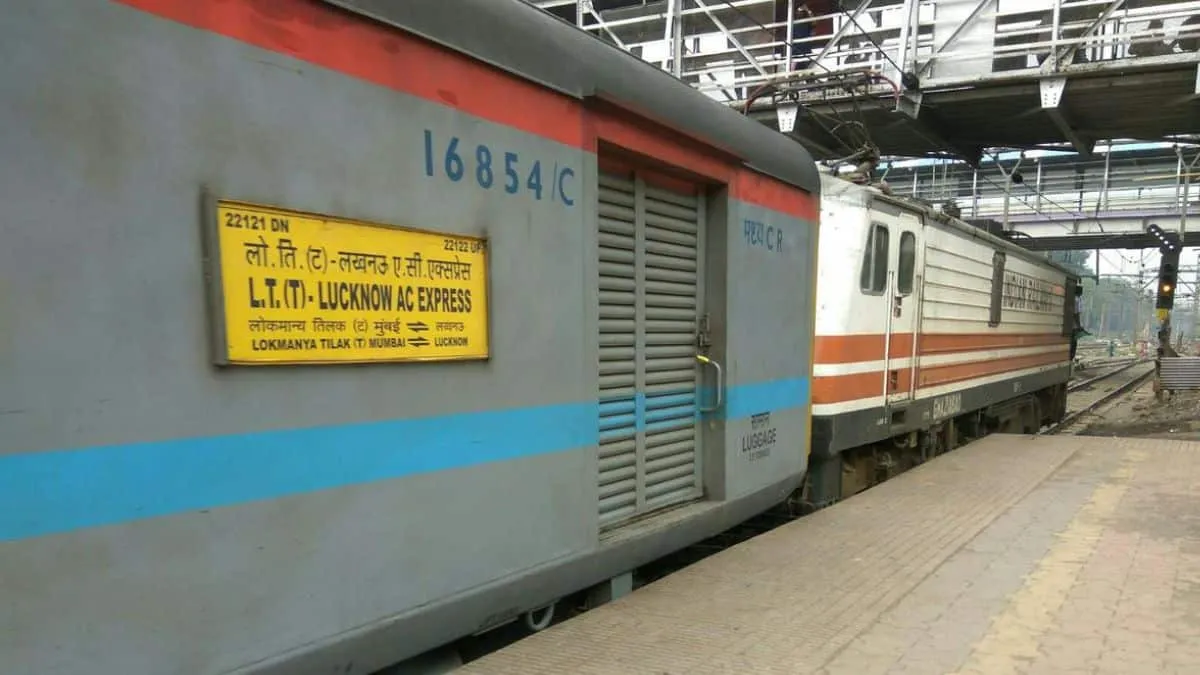
When you are travelling on a train, you will almost always see a 5-digit number on your ticket, on the display board at the railway station and on the front and sides of the train.
For example, you may see numbers such as 12001, 12951 or 12627.
These numbers are not selected in a random fashion. They are used by Indian Railways to identify different train services.
There is an interesting story behind these five-digit numbers, however. The first number may provide some clues as to the kind of train and the second number or numbers used to identify the train.
When Did Indian Railways Start Using Five-Digit Train Numbers?
Previously, Indian Railways had a four-digit numbering system for long-distance passenger trains. This system was used since 1989.
However, with the coming of more and more trains, the four-digit system was no longer adequate. Hence, as of December 20, 2010 Indian Railways introduced a 5-digit train numbering system.
The new system would enable the realisation of the vision of capturing all train services like suburban, special train etc. in the railway computer system, and would facilitate monitoring and providing train information.
What Does the First Digit of a Train Number Mean?
The first digit is the easiest part to understand. It broadly tells us what type of train service it is.
| First Digit | Type of Train |
| 0 | Special trains, such as holiday and festival specials |
| 1 | Long-distance Express, Mail and Superfast services |
| 2 | Long-distance trains when the 1-series numbers are exhausted |
| 3 | Kolkata suburban trains |
| 4 | Suburban trains in areas such as Chennai, Delhi and other metropolitan areas |
| 5 | Passenger trains with conventional coaches |
| 6 | MEMU trains |
| 7 | DMU/DEMU and railcar services |
| 8 | Reserved in the original numbering scheme |
| 9 | Mumbai-area suburban trains |
This classification is based on the system of 5 digit numbering of the Railway Board. If you see a train number starting with 0, then it's a good clue that it is a special service.
Likewise a series of 6 is indicative of a MEMU service and 7 represents a DMU/DEMU or railcar service.
What Do the Other Digits Mean?
For long-distance trains, especially those beginning with 0, 1 or 2, the remaining digits are connected with the railway zone, division and train's numbering series.
The second digit, in particular, is used as a zonal identifier in these series.
| Digit | Railway Zone/Group Used in the Numbering Scheme |
| 0 | Konkan Railway |
| 1 | Central, West Central and North Central Railway |
| 2 | Used for Superfast and certain other categories; the next digit generally gives the zone |
| 3 | Eastern and East Central Railway |
| 4 | Northern, North Central and North Western Railway |
| 5 | North Eastern and Northeast Frontier Railway |
| 6 | Southern and South Western Railway |
| 7 | South Central and South Western Railway |
| 8 | South Eastern and East Coast Railway |
| 9 | Western, North Western and West Central Railway |
Why Was the Five-Digit System Needed?
The main reason was simple: Indian Railways needed more numbers. The old four-digit system had become insufficient for the growing number of passenger services.
The new five-digit system was designed to cover different types of trains, including:
-
Regular passenger trains
-
Long-distance trains
-
Suburban trains
-
Holiday and festival specials
-
MEMU services
-
DMU/DEMU services
-
Other passenger-carrying services
It also helped railway computer systems such as the Passenger Reservation System and other information systems handle train numbers more efficiently.
Why Did Many Old Train Numbers Get a '1' in Front?
Indian Railways wanted the transition to be as seamless as possible when the new system was introduced. The Railways just appended the '1' to the old four-digit number for many of the old long-distance services.
For instance, an old train number can be made into a 5-digit number by placing a 1 in front of it. Special trains received a special treatment. Typically, they were assigned the "0" at the beginning.
This allowed passengers to not have to learn a new numbering system of the world from scratch.
What About Special Trains?
Indian Railways often runs extra trains when there is a large increase in passengers.
These may be introduced during:
-
Summer holidays
-
Diwali
-
Holi
-
Durga Puja
-
Christmas
-
Other festivals
-
Periods of heavy passenger demand
Such trains are generally given numbers beginning with 0.
For example, a number in the 0XXXX pattern can indicate a special train service.
Easy GK Facts About Indian Train Numbers
| GK Fact | Information |
| Train numbering system | Five-digit system |
| Earlier system | Four-digit system |
| Five-digit system introduced | December 20, 2010 |
| Main reason for the change | To handle the growing number of train services |
| First digit 0 | Special trains |
| First digit 1 | Long-distance Express, Mail and Superfast services |
| First digit 5 | Passenger trains with conventional coaches |
| First digit 6 | MEMU trains |
| First digit 7 | DMU/DEMU and railcar services |
| First digit 9 | Mumbai-area suburban trains |
| Train number | Identifies a train service |
| Coach number | Identifies an individual coach |
| Numbering system introduced by | Ministry of Railways, Government of India |

Prabhat Mishra is a Subject Matter Expert and digital journalist with an extensive background in the competitive exam landscape and over 4 years of experience in education, national and international news, and current affairs. Over his tenure with top knowledge platforms like Mentorship India, IAS BABA, IAS SARTHI, and now Jagran Josh, he has a deep understanding of government exams like UPSC and State PCS, including UP and Bihar, as he has already qualified for the UPPCS 2022 Mains and Bihar 68th Mains. With his core expertise in history, polity, geography & current affairs, he specialises in creating well-researched, aspirant-centric content and simplifying complex topics for competitive examinations.