Show Key Points
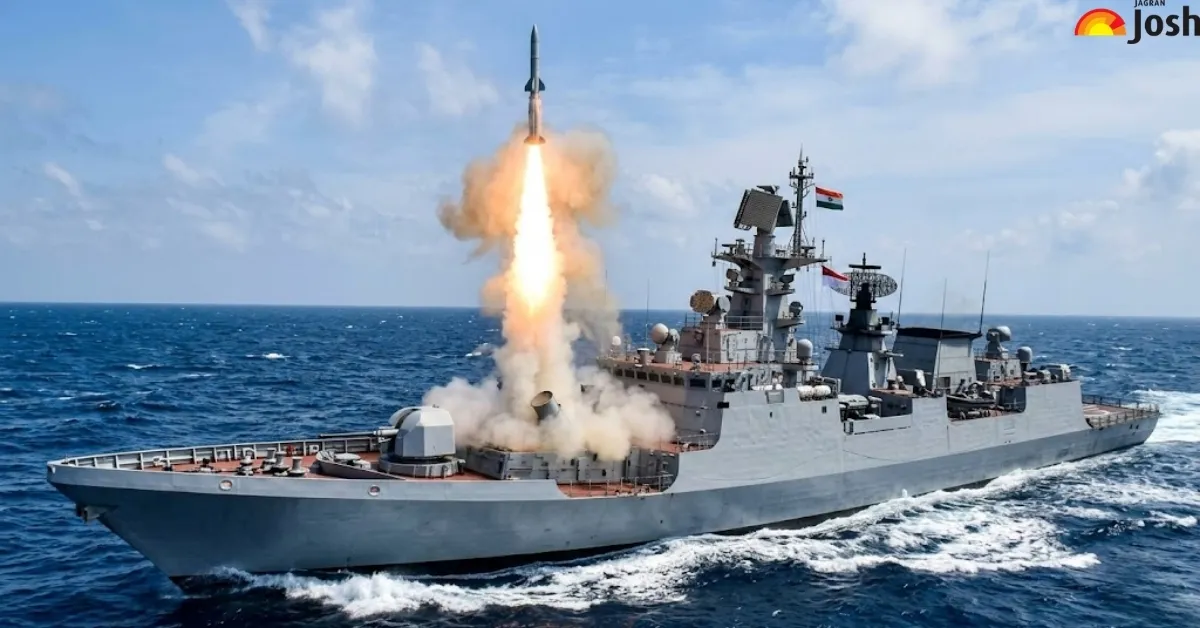
VL-Shtil Missiles: The Indian Ministry of Defence recently formalized a contract valued at Rs 2,182 crore with JSC Rosoboronexport, Russia, procurement of Surface-to-Air Vertical Launch Shtil (VL-Shtil) missiles. A significant move to bolster India's maritime security. The integration of the VL-Shtil system ensures that Indian frontline warships remain shielded against the most sophisticated aerial challenges.
A landmark milestone in national security by signing contracts totaling Rs 5,083 crore. These agreements focus on two critical pillars of maritime strength: the acquisition of six Advanced Light Helicopters (ALH) Mk-IIIMaritime Role for the Indian Coast Guard and Surface-to-Air Vertical Launch - Shtil missiles for the Indian Navy.
ALH Mk-III will enhance search-and-rescue and surveillance and VL-Shtil missiles from Russia’s JSC Rosoboronexport ensures that India’s frontline warships are equipped with a high-speed, 360-degree defensive shield against sophisticated aerial threats.
What are VL-Shtil Missiles?
The Shtil Missile is a multi-channel, medium-range shipborne surface-to-air missile (SAM) system developed by Russia. It is the modernized, vertical-launch evolution of the older "Shtil" (SA-N-7) system.
The VL-Shtil utilizes a Vertical Launch System (VLS), allows for a 360-degree defense perimeter, as the missile is launched upward and then pitches toward its target, eliminating the need to rotate a heavy launcher toward the threat. In the Indian Navy, this system is a primary air defense component for the Talwar-class and Shivalik-class frigates.
Key Features of the VL-Shtil Missiles:
-
Types: Surface-to-Air Vertical Missile Launch system Medium-range naval system,
-
Vertical Launch Capability: The move from rail-arm launchers to VLS significantly reduces the ship's radar cross-section and allows for a higher rate of fire (one missile every 1–2 seconds).
-
Target Engagement: It is designed to intercept a wide array of threats, including tactical aircraft, helicopters, cruise missiles, and unmanned aerial vehicles (UAVs).
-
Guidance System: The missile utilizes an inertial guidance system with mid-course updates and semi-active radar homing for the terminal phase, ensuring high precision.
-
Range: The VL-Shtil typically offers a combat range of up to 50 kilometers, providing a robust "medium-range" umbrella for naval task forces.
-
Speed: highly supersonic, reaching speeds of approximately Mach 3.5 to Mach 4.5, making it extremely difficult for incoming enemy projectiles to outmaneuver them.
-
Operational Altitude: It can engage targets flying as low as 5 meters (sea-skimming missiles) up to an altitude of 15,000 meters.
Significance for the Indian Navy:
The acquisition of the VL-Shtil system carries immense strategic weight for India’s maritime doctrine:
-
Modernization of the Fleet: By replacing older launcher variants with vertical launch technology, the Indian Navy improves the survivability and reaction time of its frigates.
-
Countering Anti-Ship Missiles: With the proliferation of supersonic anti-ship cruise missiles in the Indian Ocean Region (IOR), having a high-speed interceptor like the Shtil is critical for "Point Defense" and "Area Defense."
-
Strengthening Indo-Russian Defense Ties: This Rs 2,182 crore deal underscores the enduring military-technical cooperation between New Delhi and Moscow, ensuring a steady supply of spares and technical support for the Navy's Russian-origin platforms.
-
Multi-Target Capability: The system’s ability to engage up to 12 targets simultaneously (depending on the ship's radar configuration) provides a crucial layer of defense against "saturation attacks" where multiple missiles are fired at once.
The VL-Shtil missile system represents a lethal blend of Russian engineering and Indian operational requirements. As the Indian Navy continues to transition into a "Blue Water" force, investments in high-speed, vertical-launch surface-to-air missiles are paramount. With its impressive speed of Mach 4.5 and a reliable 50km range, the Shtil missile remains a cornerstone of India’s naval shield.
Also Read: International Day for Disarmament and Non-Proliferation Awareness 2026


-1771070464065.jpg)


Comments
All Comments (0)
Join the conversation