List of 8 Longest Expressway Corridors Operating in India
Spanning over 1,300 kilometres across six states, India’s longest operational expressway corridor significantly slashes regional travel times. Designed with 8-lane access-controlled infrastructure and expandable capacity, it supports high-speed freight and passenger transit.
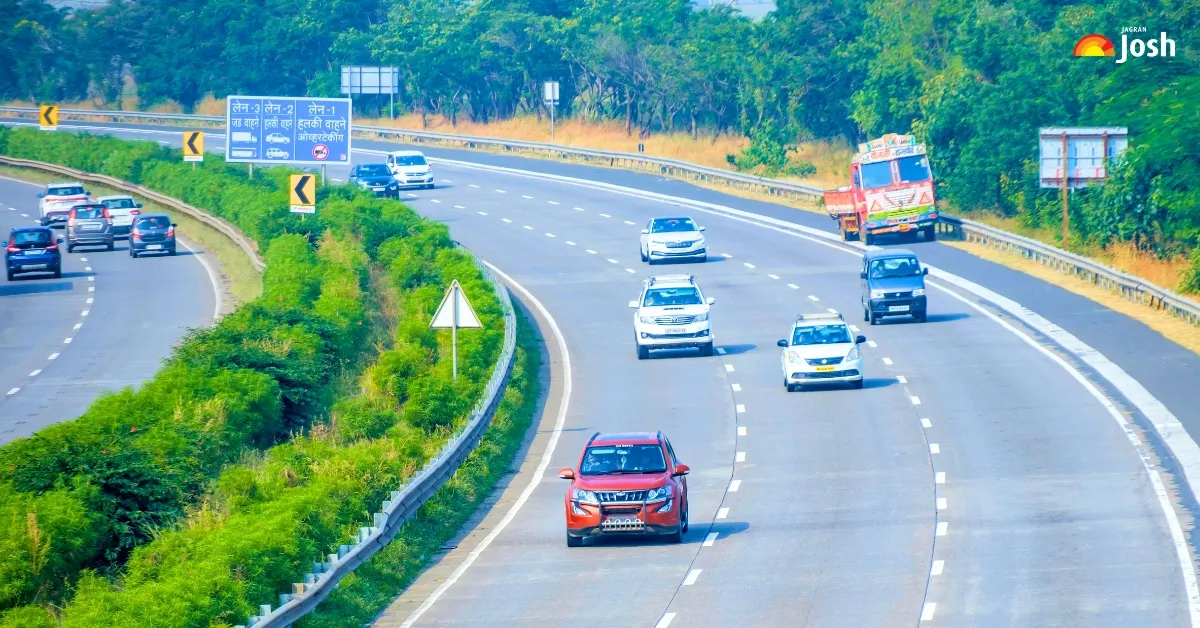
Have you ever wondered why some roads in India allow you to drive without ever encountering a traffic signal along the way? That's because such roads are known as expressways. These are roads constructed solely for speedy journeys, with defined points of access and exit. There are currently 40-plus expressways in operation in India, with another 11,127 km worth under construction. The first expressway in India, the Mumbai-Pune Expressway, was launched way back in April 2002. However, did you know that one of the longest expressways in India has a length of more than 1,300 km, while the other connects two of the busiest metros? Want to know more about these expressways? Let's discuss the 8 longest expressway routes in India.
List of 8 Longest Expressway Corridors Operating in India
The expressways in India have been evolving very quickly in the past couple of years. Some of the states such as Uttar Pradesh and Maharashtra have built extensive expressways that connect small towns and cities to major metropolitan cities.
Below is a quick overview of the eight longest expressways, their lengths, cities connected, and what is special about each.
| Expressway | From/To | Length (km) | Description |
| Delhi-Mumbai Expressway | Delhi to Mumbai (JNPT) | 1,386 km | India's longest expressway, opening in phases since 2023; full completion is expected by 2026-27. |
| Mumbai-Nagpur Expressway (Samruddhi Mahamarg) | Mumbai to Nagpur | 701 km | Maharashtra's own mega-corridor, fully operational since 2025, cuts travel time between the two cities almost in half. |
| Ganga Expressway | Meerut to Prayagraj | 594 km | UP's newest greenfield expressway, inaugurated in April 2026; it eases pilgrim traffic and freight movement across 12 districts. |
| Purvanchal Expressway | Lucknow to Ghazipur | 341 km | It opened up long-neglected eastern UP districts when it launched in 2021, boosting local trade and industry. |
| Agra-Lucknow Expressway | Agra to Lucknow | 302 km | One of UP's earlier big motorways, operational since November 2016, linking two major cultural and business hubs. |
| Bundelkhand Expressway | Chitrakoot to Etawah | 296 km | Also called the Atal Path, it links the historically underdeveloped Bundelkhand region to Delhi-NCR in just a few hours. |
| Yamuna Expressway | Greater Noida to Agra | 165.5 km | Popularly known as the Taj Motorway, it has been running smoothly since August 2012, cutting Delhi-Agra travel to about 2.5 hours. |
| Eastern Peripheral Expressway | Kundli to Palwal | 135 km | Circles around Delhi, keeping heavy trucks and pollution out of the capital since its 2018 launch. |
1. Delhi-Mumbai Expressway
With a total length of about 1,386 km, the Delhi-Mumbai Expressway is the longest expressway in India. The expressway connects the capital city to the financial capital of India, traversing states such as Haryana, Rajasthan, Madhya Pradesh, Gujarat, and Maharashtra.
After completion, the distance that one will take to cover the two cities should reduce from about 24 hours to only 12 hours. It is an 8-lane expressway constructed to have a capacity of expanding to 12 lanes at a speed of 120 km/h. Some parts of the expressway are open for use, while some are still under construction in Gujarat.
2. Mumbai-Nagpur Expressway (Samruddhi Mahamarg)
This expressway was officially called the Hindu Hrudaysamrat Balasaheb Thackeray Maharashtra Samruddhi Mahamarg, and this 701-kilometre-long expressway is India's longest expressway which is completely constructed.
The expressway stretches from the state capital, Mumbai, to Nagpur by cutting through ten districts, including Nashik, Chhatrapati Sambhajinagar, and Amravati. Costing about Rs 55,000 crore, this expressway became operational phase by phase, and the final phase came into use in 2025.
This road permits a speed of 150 kilometres per hour, and there are hundreds of underpasses constructed especially for the movement of animals and cattle. This expressway cuts the journey time between Mumbai and Nagpur from 16 to around 8 hours.
Conclusion
And so that's it – these are the top 8 expressways of India at present. Ranging from the ongoing project between Delhi and Mumbai to the relatively smaller but just as significant expressways such as the Eastern Peripheral Expressway, all of these expressways are changing the way people and goods travel around the country.
But it won't stop here.
With more than 11,000 km of other expressways being built, including the Amritsar-Jamnagar Corridor, Surat-Chennai Corridor and many others, India's expressway network can only grow in the future. What about you? Have you travelled on any of these expressways?
Have you ever wondered why some roads in India allow you to drive without ever encountering a traffic signal along the way? That's because such roads are known as expressways. These are roads constructed solely for speedy journeys, with defined points of access and exit. There are currently 40-plus expressways in operation in India, with another 11,127 km worth under construction. The first expressway in India, the Mumbai-Pune Expressway, was launched way back in April 2002. However, did you know that one of the longest expressways in India has a length of more than 1,300 km, while the other connects two of the busiest metros? Want to know more about these expressways? Let's discuss the 8 longest expressway routes in India.
List of 8 Longest Expressway Corridors Operating in India
The expressways in India have been evolving very quickly in the past couple of years. Some of the states such as Uttar Pradesh and Maharashtra have built extensive expressways that connect small towns and cities to major metropolitan cities.
Below is a quick overview of the eight longest expressways, their lengths, cities connected, and what is special about each.
| Expressway | From/To | Length (km) | Description |
| Delhi-Mumbai Expressway | Delhi to Mumbai (JNPT) | 1,386 km | India's longest expressway, opening in phases since 2023; full completion is expected by 2026-27. |
| Mumbai-Nagpur Expressway (Samruddhi Mahamarg) | Mumbai to Nagpur | 701 km | Maharashtra's own mega-corridor, fully operational since 2025, cuts travel time between the two cities almost in half. |
| Ganga Expressway | Meerut to Prayagraj | 594 km | UP's newest greenfield expressway, inaugurated in April 2026; it eases pilgrim traffic and freight movement across 12 districts. |
| Purvanchal Expressway | Lucknow to Ghazipur | 341 km | It opened up long-neglected eastern UP districts when it launched in 2021, boosting local trade and industry. |
| Agra-Lucknow Expressway | Agra to Lucknow | 302 km | One of UP's earlier big motorways, operational since November 2016, linking two major cultural and business hubs. |
| Bundelkhand Expressway | Chitrakoot to Etawah | 296 km | Also called the Atal Path, it links the historically underdeveloped Bundelkhand region to Delhi-NCR in just a few hours. |
| Yamuna Expressway | Greater Noida to Agra | 165.5 km | Popularly known as the Taj Motorway, it has been running smoothly since August 2012, cutting Delhi-Agra travel to about 2.5 hours. |
| Eastern Peripheral Expressway | Kundli to Palwal | 135 km | Circles around Delhi, keeping heavy trucks and pollution out of the capital since its 2018 launch. |
Delhi-Mumbai Expressway
With a total length of about 1,386 km, the Delhi-Mumbai Expressway is the longest expressway in India. The expressway connects the capital city to the financial capital of India, traversing states such as Haryana, Rajasthan, Madhya Pradesh, Gujarat, and Maharashtra.
After completion, the distance that one will take to cover the two cities should reduce from about 24 hours to only 12 hours. It is an 8-lane expressway constructed to have a capacity of expanding to 12 lanes at a speed of 120 km/h. Some parts of the expressway are open for use, while some are still under construction in Gujarat.
Mumbai-Nagpur Expressway (Samruddhi Mahamarg)
This expressway was officially called the Hindu Hrudaysamrat Balasaheb Thackeray Maharashtra Samruddhi Mahamarg, and this 701-kilometre-long expressway is India's longest expressway which is completely constructed.
The expressway stretches from the state capital, Mumbai, to Nagpur by cutting through ten districts, including Nashik, Chhatrapati Sambhajinagar, and Amravati. Costing about Rs 55,000 crore, this expressway became operational phase by phase, and the final phase came into use in 2025.
This road permits a speed of 150 kilometres per hour, and there are hundreds of underpasses constructed especially for the movement of animals and cattle. This expressway cuts the journey time between Mumbai and Nagpur from 16 to around 8 hours.
Conclusion
And so that's it – these are the top 8 expressways of India at present. Ranging from the ongoing project between Delhi and Mumbai to the relatively smaller but just as significant expressways such as the Eastern Peripheral Expressway, all of these expressways are changing the way people and goods travel around the country. But it won't stop here. With more than 11,000 km of other expressways being built, including the Amritsar-Jamnagar Corridor, Surat-Chennai Corridor and many others, India's expressway network can only grow in the future. What about you? Have you travelled on any of these expressways?

Kriti Barua is a skilled digital journalist and communications professional with 4+ years of experience, currently writing for the General Knowledge section at Jagran New Media. She has established herself as a subject matter expert in History, Geography, Trending National and International News, Sports, Science, and Defence, producing clear, reliable, and search-optimised content that connects with readers worldwide.
Kriti holds a BA degree from Delhi University and a one-year diploma in TV Production and Journalism, an academic background that adds research depth and strong storytelling instincts to her writing. Her experience spans brand writing, content marketing, and digital media, giving her a sharp understanding of what makes content both helpful to readers and visible in search.
At Jagran New Media, she applies this expertise to national and international news coverage, query-based articles, and in-depth pieces across her specialist subject areas. Her content is defined by easy language, factual accuracy, strong keyword strategy, and reader-friendly storytelling.


-(1)-1786532371487_t.webp)