ndia is one of the richest countries in the world when it comes to wetlands. These water bodies are home to thousands of bird, animal and plant species. To protect these important habitats, some are listed as Ramsar sites - wetlands of international importance as per the Ramsar Convention, an intergovernmental agreement for the conservation and sustainable use of wetlands.
As of April 2026, there are 99 Ramsar Sites in 28 states and union territories, covering over 13,60,805 hectares of land in India. These range from the mountain wetlands in the Himalaya to mangrove forests in coastal areas. And one is the biggest.
Which is the Largest Ramsar Site in India?
The Sundarban Wetland in West Bengal is the biggest Ramsar Site in India with a total area of 4,23,000 ha (4,230 sq km. It was listed as a Ramsar Site on 30 January 2019, and was India's 27th Ramsar Site.
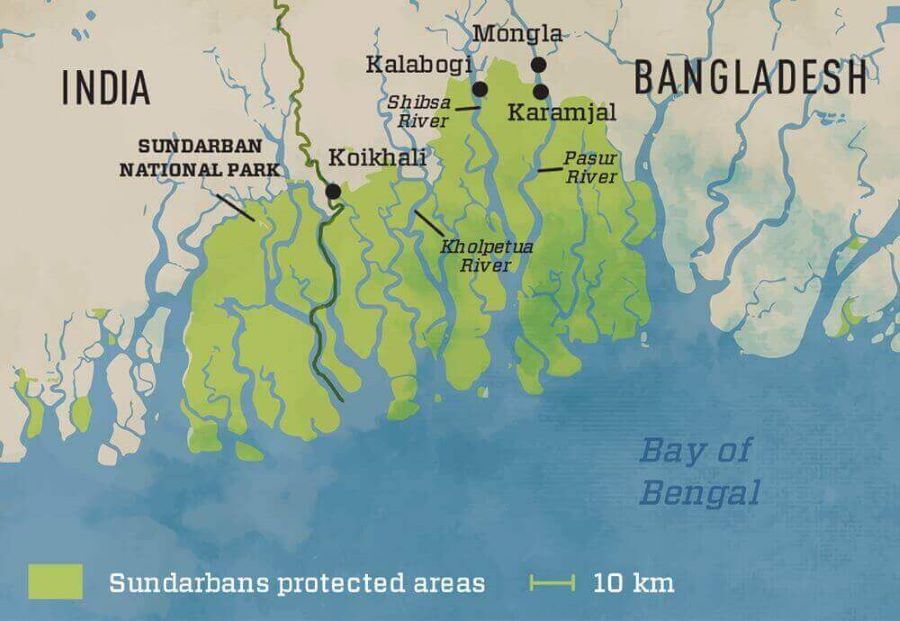
Source: greatersundarbans
Where is the Sundarban Wetland Located?
The Sundarban Wetland is in the South 24 Parganas district of West Bengal in the Ganges-Brahmaputra delta on the Bay of Bengal. The Sundarbans are shared by India and Bangladesh - 40% of the Sundarbans are in India and 60% in Bangladesh.
The Indian Sundarbans consist of numerous islands intersected by rivers, channels and creeks.
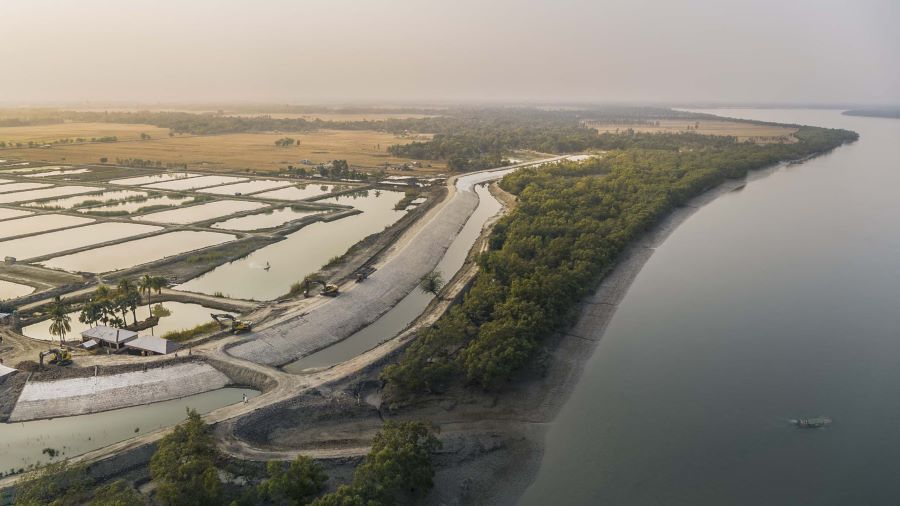
Source: National Geographic
Why is the Sundarban Wetland So Special?
The Sundarban Wetland is not only India's largest Ramsar Site - it's also part of the world's largest mangrove forest. Here are a few highlights:
-
The Indian Sundarbans has over 60% of the total mangrove forest cover of India and 90% of the mangrove species of India.
-
The Sundarbans is the only mangrove forest in the world to host tigers. This is also home to the Royal Bengal Tiger.
-
The forest protects millions of people from storms, cyclones and tidal waves.
-
It's home to the fisheries of the entire eastern coast of India, housing fish and shellfish.
-
It is home to rare and endangered species like the Irrawaddy Dolphin, Northern River Terrapin and Fishing Cat.
Key Facts About the Largest Ramsar Site in India
| Detail | Information |
|---|---|
| Name | Sundarban Wetland |
| State | West Bengal, India |
| Area | ~4,23,000 hectares (4,230 sq. km) |
| Ramsar Designation | 30 January 2019 |
| UNESCO World Heritage Site | 1987 (India) |
| Tiger Reserve Established | 1973 |
| Biosphere Reserve | 1989 |
| Ecosystem Type | Mangrove / Tidal Wetland |
Other Honours and Recognitions
The Sundarban Wetland has received multiple international recognitions:
-
UNESCO World Heritage Site: Designated in 1987 for its outstanding natural value.
-
Biosphere Reserve: Recognised as a UNESCO Man and Biosphere Reserve in 2001.
-
Tiger Conservation Landscape — Declared a critical tiger habitat under Indian national law.
-
Project Tiger: The Sundarban Tiger Reserve is one of the original Project Tiger reserves, launched in 1973.
Threats Facing the Largest Ramsar Site in India
Despite its protected status, the Sundarban Wetland faces serious challenges:
-
Rising sea levels — Sea levels in this region are rising at nearly twice the global average.
-
Cyclones — The region has been hit by over 15 major cyclones since 2010.
-
Climate change — Changing weather patterns are affecting the health of the mangroves.
-
Human pressure — Fishing, logging, and agricultural activities continue to stress the ecosystem.
Quick Comparison: Largest vs Smallest Ramsar Sites in India
-
Largest: Sundarban Wetland, West Bengal — 4,23,000 hectares
-
Second Largest: Vembanad-Kol Wetland, Kerala — over 1,500 sq. km
-
Smallest: Renuka Wetland, Himachal Pradesh — just 20 hectares (0.2 sq. km)
West Bengal's Sundarban Wetland is India's largest Ramsar Site, and a globally significant wetland habitat. It is home to the Royal Bengal Tiger, and saves millions of lives from natural calamities. The Sundarbans are the jewel in India's wetland conservation crown, and as India grows its Ramsar estate, the Sundarbans will remain a leader.
The Sundarbans are not only important to India - they are important to the world.