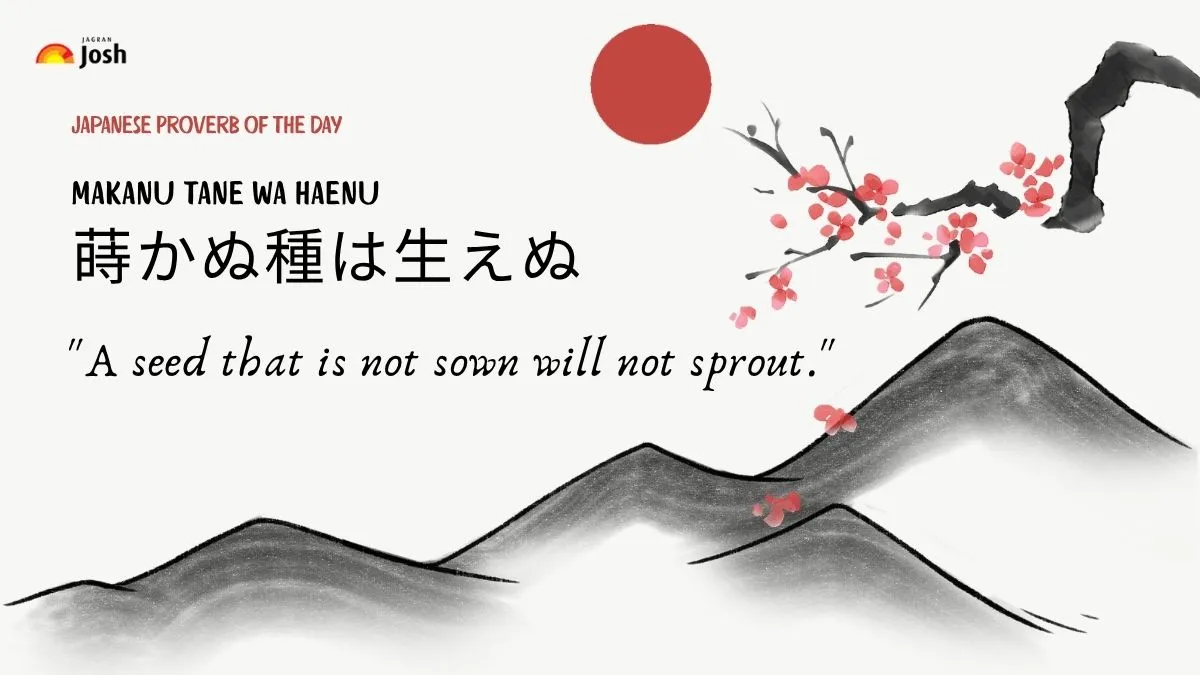
You often find yourself waiting for the perfect moment to launch a project, apply for a promotion, or learn a new skill. However, the Japanese proverb of the day, "A seed that is not sown will not sprout" (Makanu tane wa haenu), serves as a blunt reminder that inaction is the only guaranteed failure.
In the volatile landscape of 2026, where digital opportunities vanish as quickly as they appear, you cannot afford to be a spectator. This proverb isn't just about farming; it's a strategic mandate for your life. If you don't plant the effort today, you'll have nothing to harvest tomorrow.
Japanese Proverb of the Day
Japanese Proverb: Makanu tane wa haenu (蒔かぬ種は生えぬ)
Literal English Translation: "A seed that is not sown will not sprout."
Meaning of "A seed that is not sown will not sprout" Japanese Proverb
At its core, this proverb emphasizes the law of causality (cause and effect). In Japanese philosophy, success is never viewed as a stroke of random luck, but as the inevitable result of a specific action.
-
The Necessity of Initiative: You cannot expect a result (the sprout) without the preceding action (sowing).
-
Zero Multiplied by Anything is Zero: No matter how fertile the soil of your environment is, be it a prestigious university or a booming tech market, without your seed of effort, the output remains zero.
-
The Hidden Potential: Every seed contains a forest, but that potential remains locked away until it meets the earth. Similarly, your talents are latent until you choose to apply them.
Everyday Lessons from this Japanese Proverb in Modern-Day?
| Context | The Un-sown State (Inaction) | The Sown Seed (Action) |
| Upskilling | Complaining about AI replacing jobs while not learning new tools. | Enrolling in a prompt engineering or ethical AI course today. |
| Networking | Waiting for a recruiter to find your inactive LinkedIn profile. | Reaching out to three industry leaders for a 10-minute coffee chat. |
| Health | Desiring physical fitness but never stepping into the gym. | Committing to a 15-minute walk every morning, rain or shine. |
| Finance | Hoping for wealth while leaving savings in a zero-interest account. | Sowing small, consistent investments into a diversified portfolio. |
What is the Origin History of this Japanese Proverb?
While the exact date of its coinage is obscure, Makanu tane wa haenu is deeply rooted in the agrarian foundations of Japanese society. For centuries, the survival of a village depended on the disciplined timing of the planting season.
"To expect a harvest without the labor of sowing is to mock the heavens. Nature does not provide for the idle; she only reflects the sweat of the brow." — Traditional Folk Interpretation.
This wisdom also mirrors Buddhist teachings on Karma (In-ga), where every action is a seed (In) that bears fruit (Ka). It transitioned from a literal agricultural warning to a secular mantra for the Chonin (townspeople) during the Edo period, reinforcing the value of diligence over entitlement.
Also Read - Chinese Proverb of the Day: "Crooked trees live out their full lives; straight trees are cut down first."
How does this Japanese Proverb Combat Analysis Paralysis in 2026?
In 2026, we are often overwhelmed by choice overload. You might spend weeks researching the best way to start, only to never start at all. This proverb acts as a psychological circuit-breaker.
It suggests that a suboptimal seed planted today is infinitely more valuable than the perfect seed left in the bag.
The act of sowing creates data; it tells you if the soil is good or if the weather is right. Without that first step, you are operating in a vacuum of theory.
Did You Know?
The word "Nu" (ぬ) in Makanu is a classical Japanese negative suffix. In modern Japanese, you would likely say Makanai. By using the older Nu form, the proverb takes on a universal law tone, similar to how "thou shalt not" sounds more authoritative in English than "don't."
The Kanji for "Seed" (種 - Tane) combines the radicals for "grain" and "heavy/important," signifying that the seed is the most vital, weight-bearing part of the process.
Read More Japanese Proverbs and Their Meanings Here!
"Dumplings Rather Than Flowers."
“Fall Seven Times, Stand Up Eight.”
"The Nail That Sticks Out Gets Hammered Down."
“Tomorrow’s Wind will Blow Tomorrow."
"Even monkeys fall from trees."
Stop waiting for the wind to change and start planting. Whether it's a small habit or a major career pivot, remember: a seed that is not sown will not sprout. What single seed will you plant before the sun sets today? Join us tomorrow for more life-changing wisdom from the Japanese proverb of the day.