Show Key Points
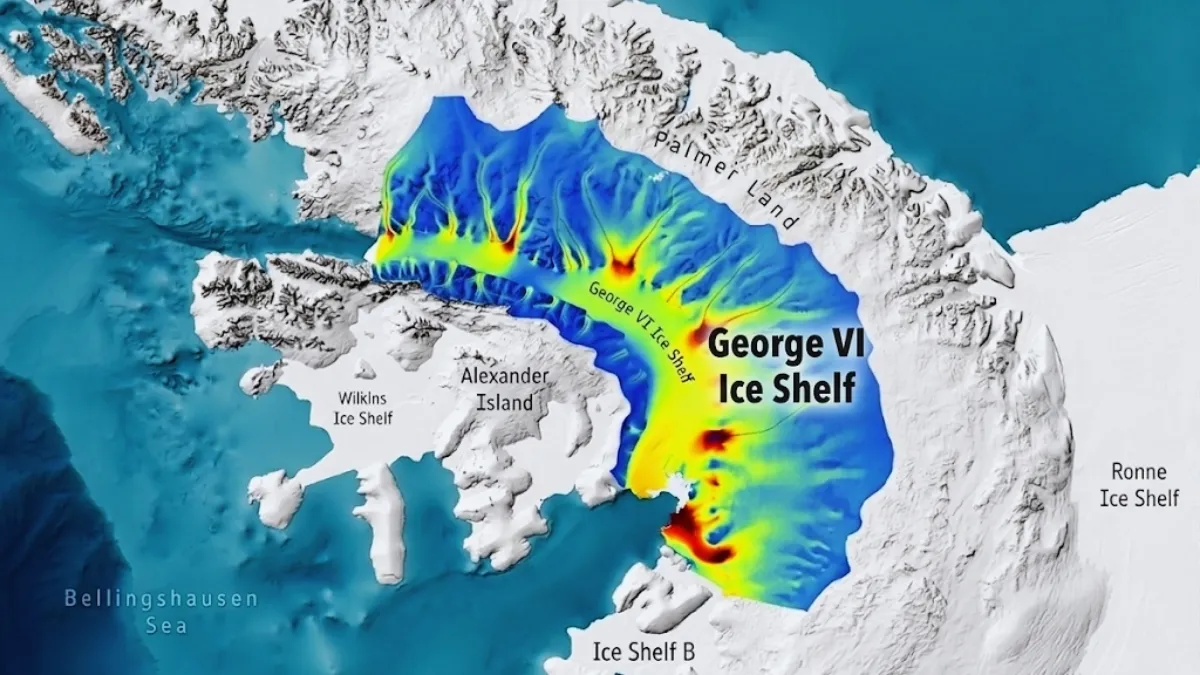
George VI Ice Shelf is a massive floating ice platform located between Alexander Island and Palmer Land in Antarctica as the largest ice shelf on the west side of the Antarctic Peninsula.
The George VI Ice Shelf serves as a natural laboratory to observe the effects of ocean-driven melting and the structural mechanics of polar ice for glaciologists. Recent events such as the calving of Iceberg A-84, highlight the shelf's vulnerability to warming ocean temperatures and its role in regulating glacial flow.
George VI Ice Shelf Location:
The George VI Ice Shelf is situated in West Antarctica, specifically occupying the George VI Sound. This sound is a long, curved trench that separates Alexander Island from the Palmer Land coast of the Antarctic Peninsula.
-
Geographic Coordinates: 71°45′S 68°00′W.
-
Dimensions: It stretches for approximately 450 kilometers (280 miles) in length.
-
Unique Feature: It is constrained meaning it is hemmed in by land on both sides, which creates unique pressure patterns within the ice.
George VI Ice Shelf Map:

The George VI Ice Shelf appears as a white corridor between rugged mountains of Palmer Land to the east and mountains of Alexander Island to the west. It has two "fronts" where ice meets the sea:
-
The Northern Front: Opening into Marguerite Bay.
-
The Southern Front: Opening into the Ronne Entrance and the Bellingshausen Sea.
George VI Ice Shelf Iceberg Split:
The George VI Ice Shelf is pushed by glaciers from the mainland, the ice is constantly moving toward these northern and southern exits. When the ice extends too far or becomes weakened by warm water, it fractures.
Scientists monitor these splits closely because they indicate the "health" of the shelf; a rapid increase in splitting suggests the ice is thinning which is known as Calving (Iceberg splits from ice shelf)
A-84 George VI Ice Shelf:
A-84 George VI Ice Shelf is a massive block of ice that broke away from the northing margin of the shelf and is named after the quadrant where they are first sighted. "A" represents the Bellingshausen/Weddell Sea sector.
Tracking A-84 helps researchers understand how freshwater input from melting icebergs affects local marine ecosystems and ocean salinity.
The George VI Ice Shelf is vital for Environmental Stability. It acts as a dam or buttress without this ice shelf, the glaciers on the Antarctic Peninsula would flow much faster into the ocean.
Key Features
| Feature | Description |
| Primary Base | Alexander Island & Palmer Land |
| Ice Thickness | Ranging from 100m to over 600m |
| Primary Threat | Warm Circumpolar Deep Water (CDW) |
| Research Tools | Satellite Imagery, Radar, and Underwater Drills |
The George VI Ice Shelf were to disappear entirely, the resulting "glacier acceleration" would lead to a measurable rise in global sea levels. This makes it a primary focus for international climate research teams.
Also Read: What are Anthurium Flowers? Mizoram Became the First State to Export



Comments
All Comments (0)
Join the conversation