-1777352294805.webp)
Modern art refers to art produced between the late 1800s and mid-1900s and did not stick to a realistic approach to its art pieces. It created room for new art styles such as Abstract Art, Cubism, and Surrealism.
Modern art impacts all aspects, from museum collections to mural paintings in streets, attracting millions of people each year.
In 2023, for instance, nearly eight million individuals visited the exhibitions of modern and post-impressionists, at the Louvre Museum.
So Who is known as the Father of Modern Art? This French artist shifted his perspective away from the traditional school of realism and introduced new perspectives in the art scene by painting in innovative forms and colors.
In this article, learn who is known as the Father of Modern Art, his innovative style, famous works and lasting impact on Cubism and modern artists.
Who is Known as the Father of Modern Art?
Paul Cézanne is famous for being referred to as the Father of Modern Art. This nickname is attributed to the innovative method of painting he pioneered at the end of the 19th century, connecting realism and abstraction.
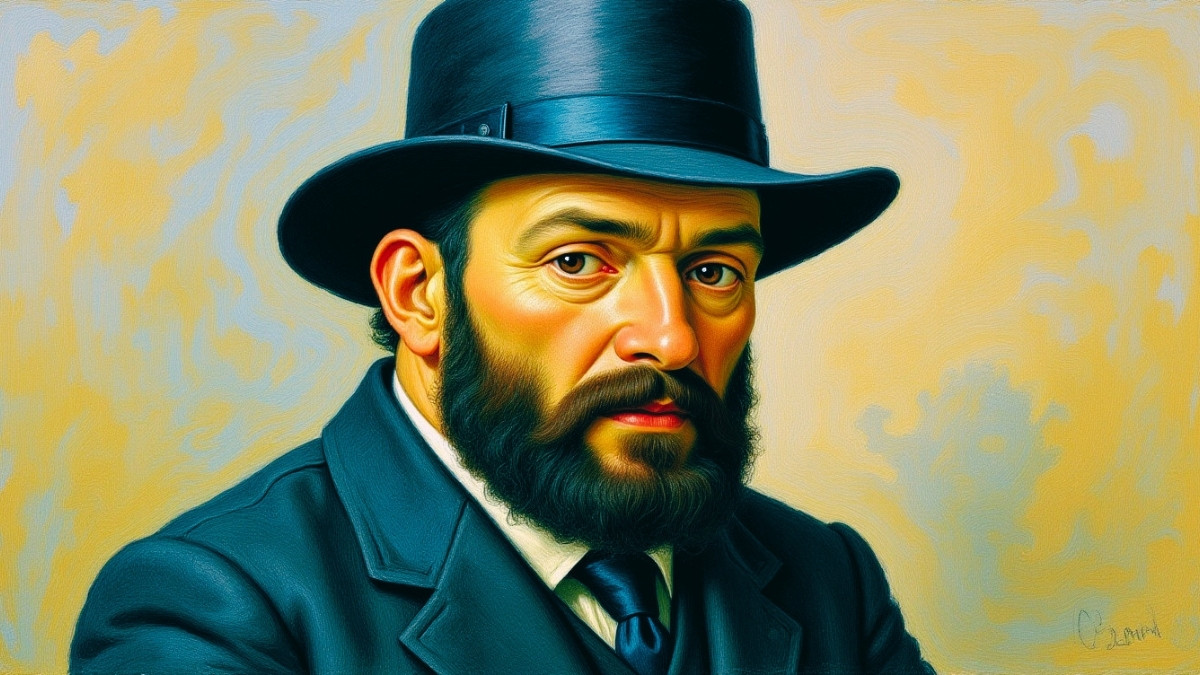
He portrayed ordinary objects such as apples, mountain ranges, and humans in unique ways.
Art historians agree that his work motivated renowned artists such as Pablo Picasso and Henri Matisse.
Cézanne did not strive for perfection in his works but used rough strokes and different perspectives.
Why is Paul Cézanne Known as the Father of Modern Art?
The French painter Paul Cézanne became the Father of Modern Art for developing methods to liberate painting from rigid traditions.
He is still recognized by art historians. In New York’s Museum of Modern Art (MoMA), his paintings are considered foundation stones. A 2021 MoMA exhibition displaying his work, attracted 500,000 people, according to the museum’s records.
His legacy extends to graphic design as well. Today’s logos and advertisements take cues from his geometric aesthetics. From iPhones to high fashion, the influence of Cézanne's vision endures.
How did he achieve such an impact? Through perseverance. He refined his paintings repeatedly, using layers of paint to create depth. This gave rise to the vocabulary of abstract art.
Who was Paul Cézanne?
Paul Cézanne was born in Aix-en-Provence, France, where he faced initial hardships. His critics found his art crude and unfinished. However, prophets like Émile Zola recognized genius in the use of vivid colors and forms.
In the 1870s, Cézanne became part of the Impressionists. He quickly moved beyond Impressionism by constructing his paintings like architects do buildings. He used a method called the "constructive stroke," where he used colors to represent solid objects.
For example, Cézanne became obsessed with painting Mont Sainte-Victoire from different angles between 1882 and 1906. In each painting, he represented the mountain's lights and shapes uniquely. It proved that art was a vehicle for change and transformation of nature.
Also, Cézanne created iconic still life paintings. His 1893 painting titled The Basket of Apples, fruits appear tilted on a table. This technique, called cubist distortion, greatly influenced the development of Cubism.
Pablo Picasso referred to Paul Cézanne as "the father of us all." In 1907, Picasso developed his painting style based on Cézanne's work.
Picasso’s painting titled Les Demoiselles d'Avignon borrowed heavily from Cézanne's fragmented spaces. Matisse appreciated Cézanne's sense of color as a new order.
However, his death occurred in 1906. Since then his paintings have become more popular. Sotheby's auctioned one of Cézanne's works entitled Rideau, Cruchon et Compotier for $60.5 million in 1999.
Paul Cézanne's Lasting Legacy in Modern Art
Paul Cézanne being known as the Father of Modern Art is evident in his transition from mimicking nature to creating art inspired by nature. The artist taught other painters to find geometric shapes such as cylinders, spheres, and cones in all things.
Such thinking gave rise to Cubism, Fauvism, and Abstract Expressionism. Without him, Pablo Picasso would not have achieved much.
Paul Cézanne’s personal history also serves as an inspiration in itself.
Conclusion
Paul Cézanne is often referred to as the “Father of Modern Art” due to his revolutionary work regarding form, color, and perspective.
This artist is the foundation on which Picasso was able to build his art. Explore the artwork of Paul Cézanne to get a sense of what he started; after all, art history begins here!



-1777356426869_t.webp)
