Which 11 Countries are Banned from the FIFA World Cup?
FIFA has a long history of disqualifying nations from the World Cup due to geopolitical conflicts or government interference. While some face active bans, other massive nations like India continue to miss out entirely due to structural and grassroots challenges.
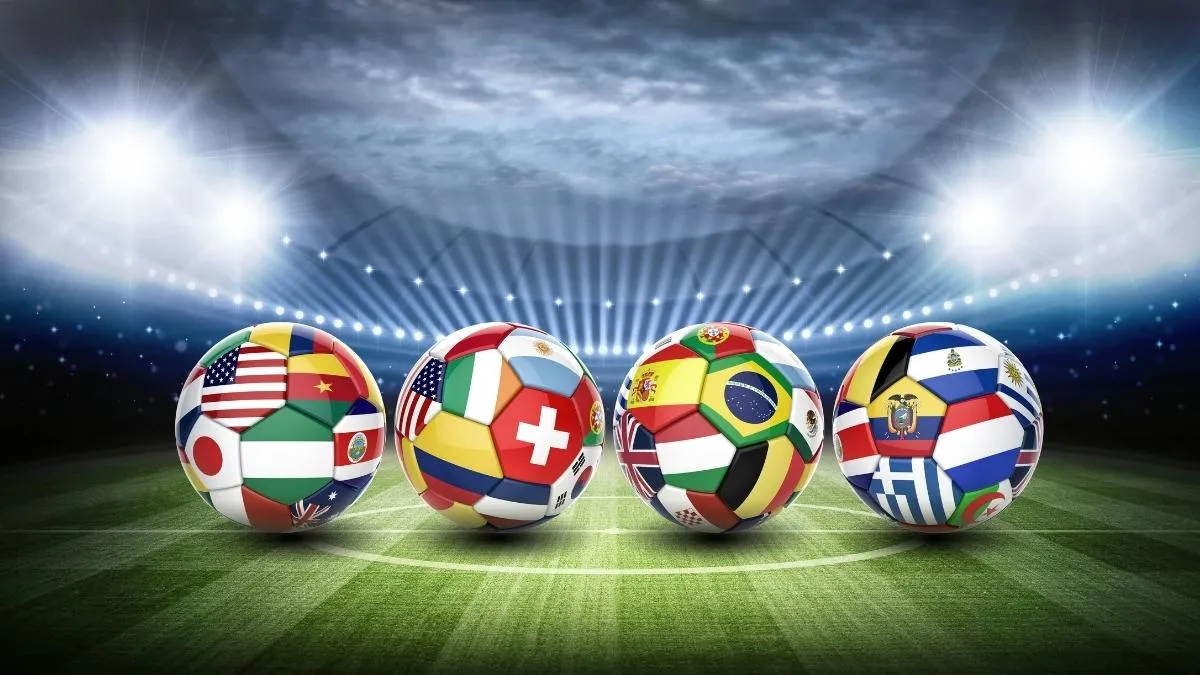
Watching your country walk onto the pitch at a FIFA tournament is a dream shared by millions. But not all nations get a chance to play the qualifying round or even to be a part of FIFA. There are some countries banned from participating in World Cup.
FIFA has enforced a few strict rules against political interference armed conflict and integrity violations which can potentially turn the World Cup selection process into a difficult geopolitical situation throughout its football history.
So to understand which country can be excluded from the soccer tournament it is important to note that international sports too are deeply connected with world politics.
Why Countries Face World Cup Disqualifications
Soccer governing bodies for ages have been issuing formal exclusions under three main categories:
-
Geopolitical conflicts
-
Direct government overreach in local football associations, or
-
Several sporting misconducts.
The most epic and active example of a country with a World Cup ban is Russia. The ban on Russia has been applicable to all FIFA and UEFA tournaments since its 2022 invasion of Ukraine. This effectively barred Russia from competing in both the 2022 and 2026 qualification rounds.
Other nations like Congo-Brazzaville and Pakistan also face intense provisional suspensions during qualifications due to administrative and election interference. Their bans were eventually lifted and both countries were allowed to continue their participation.
List of Countries Banned from FIFA World Cup
The history of banning teams in the football tournament stretches back across eight decades.
| S.No. | Country/Team | World Cup Year(s) Affected | Primary Reason for FIFA Ban |
| 1 | Germany | 1950 | Post World War II global sports exclusion and sanctions. |
| 2 | Japan | 1950 | Post-World War II global sports exclusion and sanctions. |
| 3 | South Africa | 1970–1990 | Prolonged expulsion due to state sanctioned Apartheid segregation. |
| 4 | Mexico | 1990 | The Cachirules age falsification scandal in a youth tournament. |
| 5 | Yugoslavia | 1994 | United Nations security sanctions during the Balkan Wars. |
| 6 | Libya | 1994 | United Nations international sanctions preventing tournament travel. |
| 7 | Chile | 1994 | Disqualified after goalkeeper Roberto Rojas faked an on pitch injury. |
| 8 | Myanmar | 2006 | Strict penalty for refusing to play a scheduled qualifying match. |
| 9 | Brunei | 2014 | Heavy government interference in the national football association. |
| 10 | Zimbabwe | 2018 | Disciplinary expulsion due to an unpaid financial debt to a former coach. |
| 11 | Russia | 2022, 2026 | Ongoing suspension following the geopolitical invasion of Ukraine. |
Why India does not Qualify for FIFA World Cup?
Some nations cannot participate in the tournament due to strict regulations but the most populous countries of the world like India miss out on the tournament purely on sporting merit.
But there is also a popular urban legend that claims India cannot qualify for the FIFA World Cup.
As per the legends India withdrew from the 1950 World Cup because FIFA refused to let them play barefoot. But historical records clarify that travel costs and valuing the Olympics over the World Cup were the real reasons.
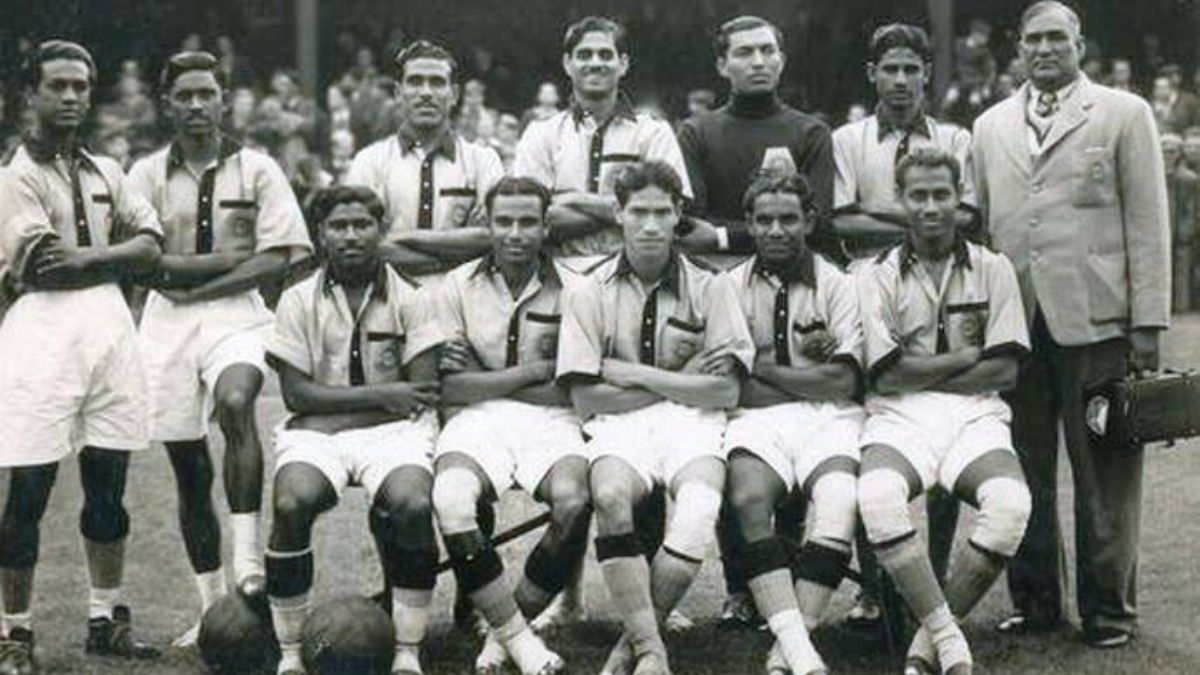
Indian Football Team at the Olympics in 1948 (Image Credit: Wikimedia)
Fast forward to the present day, India at times struggles to even qualify for the Asian Football Confederation (AFC). The Indian football team is currently at 139th place in the world rankings under Coach Khalid Jamil.
Another reason for their exclusion from FIFA is a lack of uniform grassroots youth development, a later maturing domestic league pyramid ISL, and minimal exposure to top level international opponents.

Harshita Singh is an education and general knowledge journalist with over 5 years of experience in educational writing. Specializing in US affairs and GK, Harshita has a track record of breaking down intricate geopolitical and historical subjects into clear, digestible insights for learners. Her strong background in text analysis, coupled with a Bachelor of Arts (Hons) in English from the University of Delhi, helps her produce authoritative, thoroughly researched content that empowers readers to engage confidently with global current affairs. For inquiries or academic insights, you can reach out to her directly at harshita.singh@jagrannewmedia.com.



![RPSC 2nd Grade Teacher Admit Card 2026 OUT [LIVE]: सेकंड ग्रेड एडमिट कार्ड लिंक recruitment.rajasthan.gov.in पर जारी, SSO ID से डाउनलोड करें सीनियर टीचर हॉल टिकट PDF](https://img.jagranjosh.com/images/2026/July/972026/RPSC-2nd-Grade-Teacher-Admit-Card-2026.jpg)