Government Allocates ₹95,692 Crore For Transition To VB-G RAM G From MNREGA: Know What is Scheme History
The Central Government has announced a historic interim allocation of ₹95,692.31 crore for the rollout of the VB-G RAM G scheme starting July 1, 2026. This mega funding ensures a seamless transition from MNREGA, boosting rural employment guarantees across India.
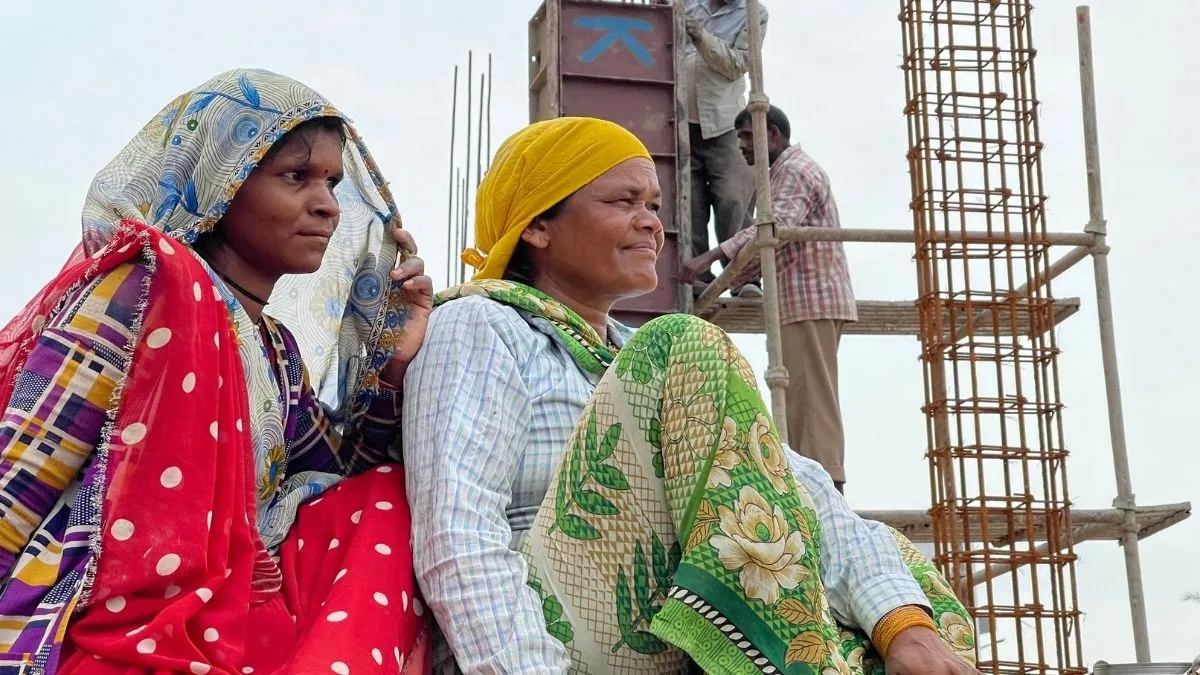
In a historic revamp of India’s social welfare architecture, the Union Ministry of Rural Development has announced an interim budgetary allocation of ₹95,692.31 crore under the newly launched VB-G RAM G scheme. This massive financial outlay is in response to a strategic government proposal to make a seamless, uninterrupted shift for millions of rural workers moving away from the two-decade-old MNREGA framework.
Union Rural Development Minister Shivraj Singh Chouhan assured specifically that there will be no funding cuts or delay in functioning by any state during this structural handover. The legislative transition, which will be in effect July 1, 2026, is designed to change the way public assets are created and to shore up the financial security net for rural families across the country.
How will the ₹95,692 Crore Government Proposal Reshape Rural Labour?
The newly announced allocation represents the highest-ever funding sanctioned at the initial implementation stage for any rural livelihood program in India. The Central Government has prioritised absolute continuity, meaning that existing e-KYC verified job cards will remain functional, and ongoing field projects will seamlessly carry over into the new architecture without a single day's disruption.
Unlike the earlier demand-driven funding model of MNREGA, the financial architecture under the VB-G RAM G framework introduces a central-to-state structural partnership.
| Strategic Feature | Old Framework (MNREGA) | New Framework (VB-G RAM G) |
| Guaranteed Work Days | 100 days per household yearly | 125 days per household yearly |
| Funding Ratio | 100% Central funding for unskilled labour | 60% Central funding / 40% State funding split |
| Payment Mechanism | Direct Benefit Transfer (DBT) | Mandatory Direct Benefit Transfer (DBT) within 7–15 days |
| Core Planning Source | Bottom-up Gram Sabha Labor Budgets | Block and District-level Viksit Gram Panchayat Plans |
What is VB-G RAM G Scheme?
The Viksit Bharat – Guarantee for Rozgar and Ajeevika Mission (Gramin), abbreviated as VB-G RAM G, is a comprehensive statutory reset enacted by the Parliament of India under the Viksit Bharat @2047 national vision. Moving beyond the pure safety-net principle of providing basic manual wage labour, this mission upgrades the legal individual employment entitlement to 125 days per financial year.
The program is based on the principle of “Rozgar Bhi, Samman Bhi” (Employment with Dignity) and connects the daily human labour to the high-yield infrastructure growth. The scheme classifies public works into four specialised, high-priority asset verticals:
-
Water Security: Intense rejuvenation of local aquifers, canals, and traditional water-harvesting reservoirs.
-
Core Rural Infrastructure: Asset creation, including robust Gram Panchayat Bhavans, rural clinics, and school structures.
-
Livelihood-Linked Assets: Construction of community storage facilities, cold rooms, and livestock shelters.
-
Climate-Resilient Works: Target-oriented projects designed locally to counter adverse weather extremities.
What is the History of MNREGA and the Legislative Path to this Change?
The idea of statutory rural employment guarantees in India took formal shape with the passage of the landmark Mahatma Gandhi National Rural Employment Guarantee Act (MGNREGA) in September 2005. For more than two decades, MNREGA was a legal safety valve for vulnerable agrarian populations during economic downturns and lean agricultural seasons by legally guaranteeing 100 days of manual work.
But changing demographic expectations, greater financial inclusion and more digital connectivity highlighted a number of fundamental systemic needs for structural modernisation. Hence, the Viksit Bharat – Guarantee for Rozgar and Ajeevika Mission (Gramin) Bill was introduced in the Lok Sabha on 16 December 2025. The bill was debated fiercely in the Parliament, and finally it was passed by both houses and signed by the President on 21st December 2025. This legislative milestone paved the way for the official repeal of the 2005 Act and the coordinated national roll-out of the improved structure.
This shift to an improved framework is a significant inflexion point in rural economic policy in India. The country shifts away from the traditional safety-net paradigm to a progressive infrastructure stack, combining instant economic security with the construction of perpetual public assets. Rural communities are guided to sustainable development.

Harshita Singh is an education and general knowledge journalist with over 5 years of experience in educational writing. Specializing in US affairs and GK, Harshita has a track record of breaking down intricate geopolitical and historical subjects into clear, digestible insights for learners. Her strong background in text analysis, coupled with a Bachelor of Arts (Hons) in English from the University of Delhi, helps her produce authoritative, thoroughly researched content that empowers readers to engage confidently with global current affairs. For inquiries or academic insights, you can reach out to her directly at harshita.singh@jagrannewmedia.com.


