How 13 Modern British Prime Ministers Took Power Without an Election
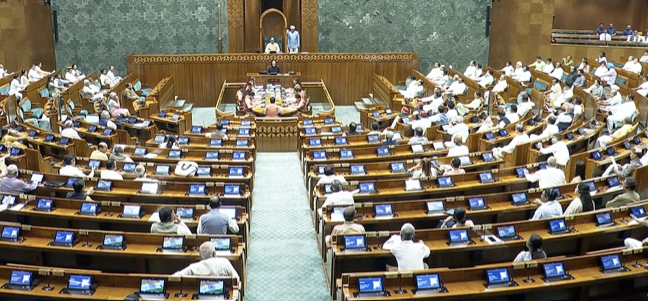
UK voters choose local MPs, not the prime minister directly. Because of this rule, 12 out of 19 British prime ministers since 1945 got the top job through party votes or resignations, rather than by winning a national election first.

UK general elections are meant for people to vote and pick their local Member of Parliament and not the Prime Minister of the country. But the official House of Commons Library records show that 12 of the 19 British prime ministers since World War II actually took office midway through a term after the previous leader quit.
This means party members and not the general public chose recent Prime Ministers like Rishi Sunak and Theresa May before any voter got a say.
In this article we will learn more about all the unelected prime ministers in the history of UK for general knowledge.
Recent Unelected Prime Ministers Who Took Office Mid Term in the UK
The ruling party has picked the following leaders as a replacement when a prime minister quits to finish the government’s term without calling an election right away.
| S. No. | Unelected Prime Minister | Year Took Office | Took Over From | Next General Election |
| 1 | Gordon Brown | 2007 | Tony Blair | 2010 |
| 2 | Theresa May | 2016 | David Cameron | 2017 |
| 3 | Boris Johnson | 2019 | Theresa May | 2019 |
| 4 | Liz Truss | 2022 (Served only 49 days ) | Boris Johnson | 2024 |
| 5 | Rishi Sunak | 2022 | Liz Truss | 2024 |
| 6 | Andy Burnham | 2026 | Keir Starmer | 2029 |
List of British Prime Ministers without General Elections in History
The UK Parliament research states that 15 prime ministers in history never faced a general election at all while leading the country. They served their entire time based on party support alone.
Many famous leaders moved into Downing Street mid term before they ever ran in an election due to wartime crises or political pressure as prime minister since World War II.
| S. No. | British Prime Minister | Year Took Office | Succeeded From |
| 1 | H.H. Asquith | 1908 | Henry Campbell-Bannerman |
| 2 | David Lloyd George | 1916 | H.H. Asquith |
| 3 | Winston Churchill | 1940 | Neville Chamberlain |
| 4 | Anthony Eden | 1955 | Winston Churchill |
| 5 | Harold Macmillan | 1957 | Anthony Eden |
| 6 | James Callaghan | 1976 | Harold Wilson |
| 7 | John Major | 1990 | Margaret Thatcher |
Why Britain Allows Prime Ministers without General Elections?
The system works this way because the monarch simply appoints whichever politician can control a majority of votes in Parliament. As long as the winning party keeps its majority in the House of Commons it has the legal right to swap leaders whenever it wants.

Harshita Singh is an education and general knowledge journalist with over 5 years of experience in educational writing. Specializing in US affairs and GK, Harshita has a track record of breaking down intricate geopolitical and historical subjects into clear, digestible insights for learners. Her strong background in text analysis, coupled with a Bachelor of Arts (Hons) in English from the University of Delhi, helps her produce authoritative, thoroughly researched content that empowers readers to engage confidently with global current affairs. For inquiries or academic insights, you can reach out to her directly at harshita.singh@jagrannewmedia.com.